
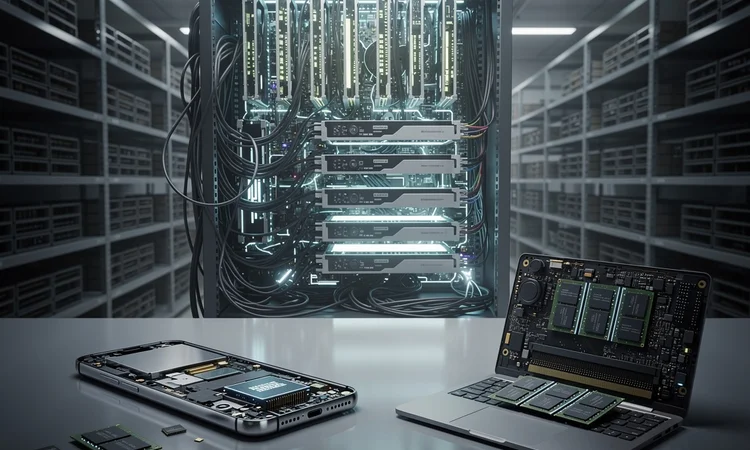
The Memory Crunch: How AI’s Insatiable Hunger is Reshaping Consumer Tech in 2026
The global technology sector is bracing for a seismic shift as a severe memory shortage looms over the smartphone and PC markets in 2026. Driven primarily by the explosive growth in artificial intelligence applications, demand for high-bandwidth memory chips has surged, diverting production away from consumer devices. This imbalance is poised to elevate prices, force specification downgrades, and stifle market growth, according to recent analyses from industry experts.
At the heart of this crisis is the competition for dynamic random-access memory (DRAM) and NAND flash, essential components in everything from smartphones to servers. As AI data centers gobble up advanced memory like high-bandwidth memory (HBM), manufacturers are prioritizing lucrative enterprise contracts over consumer-grade supplies. This shift has led to dwindling inventories and skyrocketing costs, with some reports indicating DRAM prices have tripled since September.
Industry watchers, including analysts at IDC, have been sounding the alarm. In a detailed blog post, IDC outlines how rising DRAM and NAND costs could threaten pricing structures, device specifications, and overall market expansion across consumer electronics.
AI’s Role in Fueling the Shortage
The AI boom has transformed memory production priorities. Companies like Samsung and Micron are ramping up output of specialized chips for AI training and inference, leaving less capacity for standard DRAM used in phones and laptops. Posts on X from users in the tech community highlight this tension, with one noting that inventory levels for DRAM have plummeted 80% year-over-year, down to just three weeks of supply.
This diversion is not just a temporary blip. According to a report from IntuitionLabs , the massive demand for HBM in AI applications is straining the entire DRAM supply chain, affecting PCs, gaming rigs, and servers alike. The result? A ripple effect that hits consumer markets hardest, where margins are thinner and competition is fierce.
Furthermore, NAND flash, crucial for storage in devices, faces similar pressures. Analysts predict shortages exceeding 80% for certain types, as manufacturers chase higher profits in the AI sector. This has prompted warnings from insiders that 2026 could mark a turning point, with everyday tech becoming slower and more expensive.
Impact on the PC Market
For the PC industry, the forecast is particularly grim. IDC anticipates average PC prices could jump by up to 8% in 2026 due to these “crushing memory shortages,” as detailed in coverage from Tom’s Hardware . Some vendors are already resorting to extreme measures, such as selling pre-built systems without RAM, forcing buyers to source it separately at inflated prices.
This price hike comes at a time when the PC market was hoping for recovery post-pandemic. Instead, IDC’s updated forecasts suggest a contraction of 2.4% in shipments, with worse scenarios projecting declines up to 8.9% if shortages intensify. Dell, for instance, is preparing for massive price increases of up to 30%, citing memory costs as “out of our control.”
Beyond pricing, specifications are under threat. Laptops that once shipped with 16GB of RAM might downgrade to 8GB, impacting performance for multitasking and creative work. Posts on X echo this concern, with tech enthusiasts predicting a return to budget configurations reminiscent of a decade ago, where 4GB RAM becomes the norm for entry-level devices.
Ripples in the Smartphone Sector
Smartphones, the lifeblood of modern connectivity, are not immune. Global shipments are expected to dip by 0.9% in 2026, driven by record-high average selling prices, as per Reuters reporting on IDC data. The generative AI rush is consuming memory production, leaving phone makers to either raise prices or cut back on RAM and storage.
Analysts at CNET suggest that manufacturers like Samsung and Apple may have to reduce RAM specs—dropping from 16GB to 12GB in flagships, or even lower in mid-range models—to manage costs. This could mean consumers paying more for less capable devices, potentially slowing adoption of new features like on-device AI processing.
In China, where competition is cutthroat, brands like Xiaomi are already adjusting. Recent X posts discuss how the Xiaomi 17 Ultra has seen price hikes and spec tweaks due to the shortage, a trend that could spread globally. TrendForce, in its analysis, notes that memory prices are set to surge again in the first quarter of 2026, compelling brands to concentrate resources on premium lines while sidelining budget options.
Broader Economic and Supply Chain Implications
The crisis extends beyond individual devices, affecting the entire supply chain. Chipmakers are investing heavily in AI-focused production, with sales of semiconductor equipment projected to reach $156 billion by 2027, fueled by DRAM demand, as mentioned in Tom’s Hardware. However, this leaves consumer segments underserved, creating a bifurcated market where enterprise thrives while retail struggles.
Geopolitical factors add complexity. Tensions in global trade, particularly around Taiwan and South Korea—key memory production hubs—could exacerbate shortages. If disruptions occur, as hinted in various X discussions, the impact might persist into 2027, delaying recovery.
Moreover, smaller manufacturers may exit the market altogether, leading to consolidation among giants like Samsung, SK Hynix, and Micron. This concentration could stifle innovation in consumer tech, as resources flow toward AI rather than iterative improvements in phones and PCs.
Strategies for Mitigation and Adaptation
Industry players are scrambling to adapt. Some are locking in long-term contracts with suppliers to secure memory at current rates, though this is becoming costlier. Others, like Lenovo and HP, are exploring alternative components or redesigning products to use less memory-intensive architectures.
On the consumer side, advice from tech forums on X suggests buying now to avoid 2026 price spikes. For businesses, upgrading fleets ahead of the crunch could prevent productivity hits from underpowered machines.
Looking ahead, analysts from TrendForce predict that market resources will increasingly favor leading brands, potentially widening the gap between premium and budget offerings. This could accelerate the shift toward cloud-based computing, where device specs matter less than connectivity.
Voices from the Industry and Market Sentiment
Insider perspectives paint a picture of urgency. A post on X from a tech analyst warns that 2026 might be “the worst year for smartphones,” with widespread RAM reductions across segments. Similarly, financial observers like those at The Kobeissi Letter highlight the drastic drop in DRAM inventories, underscoring the severity.
Media outlets are amplifying these concerns. Moneycontrol reports that the shortage, stemming from late 2025, could linger until 2027, affecting upgrades and sales. WebProNews echoes this, noting AI’s role in diverting production and forecasting sales declines for both PCs and smartphones.
Sentiment on X reflects consumer anxiety, with users lamenting potential returns to outdated specs. One post details how basic office PCs might add nearly $100 just for memory, illustrating the tangible costs to everyday users.
Long-Term Outlook and Potential Resolutions
While the immediate future looks challenging, there are glimmers of hope. Increased investment in memory fabrication plants, spurred by government incentives in the U.S. and Europe, could boost capacity by 2027. IDC’s scenarios include optimistic outlooks where supply catches up if AI demand plateaus.
Innovation in memory technology, such as more efficient DRAM variants or emerging alternatives like MRAM, might alleviate pressures. Companies are also pushing for recycling programs to reclaim materials from e-waste, though this is a long-term fix.
Ultimately, the memory shortage underscores the interconnectedness of tech sectors. As AI continues to evolve, balancing its needs with consumer demands will be crucial to prevent recurring crises. Stakeholders must collaborate to ensure equitable distribution, or risk alienating the very users who drive technological adoption.
Navigating the New Reality
For industry insiders, this crisis presents both risks and opportunities. Supply chain managers should diversify suppliers and explore synthetic alternatives. Product designers might innovate around constraints, perhaps by optimizing software to require less hardware.
Investors, meanwhile, could find upside in memory producers like Micron, whose stocks have surged amid the shortage. However, volatility remains, as any easing in AI hype could flood the market with excess capacity.
As 2026 approaches, the tech world watches closely. The decisions made now—by manufacturers, regulators, and consumers—will shape not just device prices, but the trajectory of innovation in an AI-dominated era. With careful planning, the industry can emerge stronger, turning scarcity into a catalyst for efficiency and creativity.


Leave a Reply
Your email address will not be published.