
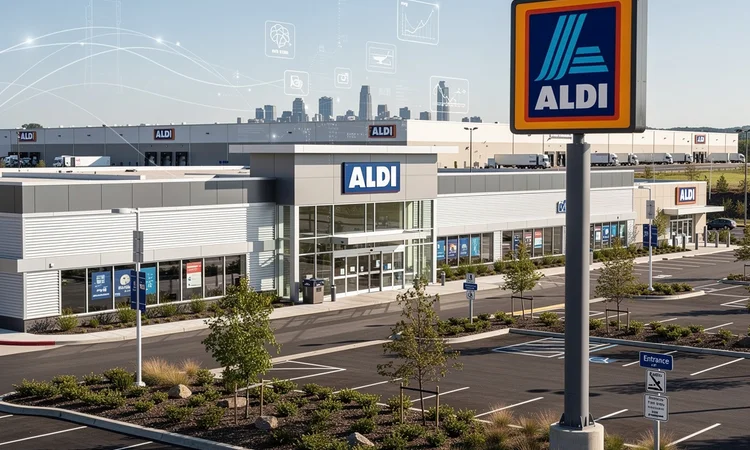
In a move signaling confidence amid persistent inflationary pressures, Aldi Inc. unveiled plans to open more than 180 new stores across the U.S. in 2026, accelerating its aggressive growth trajectory as it marks its 50th anniversary in the American market. The German discount grocer, known for its no-frills approach, aims to expand its footprint to nearly 2,800 locations by year’s end, with ambitions stretching to 3,200 stores by 2028. This expansion comes as budget-conscious shoppers flock to value-oriented retailers.
The announcement, detailed in a company release and covered widely, underscores Aldi’s response to surging demand for affordable groceries. ‘We’re thrilled to bring more ALDI stores to communities across the country,’ said Fox Business , quoting company executives on the initiative spanning 31 states. Specific markets like Florida, Texas, and California will see significant additions, alongside entries into new territories.
Aldi’s strategy hinges on its lean operational model—fewer SKUs, private labels dominating shelves, and quarter carts that double as ad displays—allowing it to undercut competitors by up to 50% on staples. This efficiency, refined over decades, positions the chain to capture market share from traditional supermarkets struggling with higher costs.
Aldi’s Long-Term Growth Blueprint
Building on prior commitments, Aldi first revealed in 2024 a goal of 800 new stores by 2028, a pledge it’s now executing with vigor. The 2026 slate represents over 20% of that target, supported by three new distribution centers in Georgia, Kentucky, and Missouri to streamline logistics. ‘The discounter will also debut three distribution centers, enter new states and launch a redesigned store website,’ reported Grocery Dive .
These facilities will enhance supply chain resilience, critical as Aldi sources 90% of its products from private labels manufactured domestically or nearby. Executives emphasize sustainability, with expansions incorporating energy-efficient designs and reduced packaging. Posts on X from industry observers highlight the chain’s momentum, noting its status as America’s fastest-growing grocer.
The company’s U.S. odyssey began in 1976 with twin brothers opening stores in Iowa and Illinois. Today, Aldi Süd’s U.S. arm operates distinctly from Aldi Nord, focusing on Southern and Midwestern markets initially before broadening nationwide. This 2026 push builds on recent remodels of 500 stores, introducing fresh produce sections and self-checkout.
Navigating Economic Headwinds
As consumers ‘trade down’ to economize, Aldi’s timing is prescient. Inflation has eroded purchasing power, driving traffic to discounters; Nielsen data shows Aldi’s sales grew 11% in 2025, outpacing the sector. ‘Aldi announces massive expansion with more than 180 new stores by 2026, reaching nearly 2,800 locations nationwide as the budget grocery chain meets growing demand,’ echoed Newsweek .
Competitors like Walmart and Kroger face merger scrutiny and labor challenges, while regional players like Publix expand more modestly. Aldi’s model sidesteps these issues with union-free operations and minimal staffing—typically 4-5 employees per store. Yet, challenges loom: real estate acquisition in saturated markets and potential supply disruptions from weather or geopolitics.
Analysts point to Aldi’s digital pivot, including a revamped website for online ordering and curbside pickup in select areas, as key to retaining younger demographics. Integration with apps for weekly ads and coupons aims to boost basket sizes without diluting its low-price ethos.
Store Format Innovations
New outlets will feature Aldi’s ‘next-generation’ layout: wider aisles, expanded organic selections under Simply Nature, and interactive kiosks for product info. In high-growth states like North Carolina and Ohio, stores will average 18,000 square feet, optimized for high-velocity items. ‘ALDI has a goal of 3,200 stores by the end of 2028,’ noted MLive .
Remodels emphasize sustainability—LED lighting, solar panels, and EV charging stations—aligning with consumer preferences. Aldi invests $1.5 billion annually in U.S. operations, funding this via robust cash flows from 2,600+ existing stores generating over $20 billion in sales.
Sourcing remains a competitive edge: 80% U.S.-produced goods reduce import risks, with partnerships like those with Taylor Farms for salads. This localization cuts costs and appeals to ‘shop local’ sentiments.
Workforce and Community Impact
Aldi plans to hire 20,000 associates for the expansion, offering starting wages above $18/hour in many regions, with benefits from day one. Training emphasizes efficiency, enabling quick store openings—often within six months of site selection. Community engagement includes food bank donations equaling 200 million pounds since 2017.
In new markets like Mississippi and West Virginia, stores will anchor economic development, creating jobs in underserved areas. ‘Aldi is rapidly increasing its nationwide presence as more Americans skip dining out and choose to eat at home due to economic concerns,’ per NBC Chicago .
Rivals watch closely; Lidl, another discounter, trails with fewer U.S. stores, while dollar stores like Dollar General pivot toward perishables. Aldi’s scale provides pricing power suppliers envy.
Strategic Market Entries
The 31 targeted states include expansions in the Sun Belt and Midwest, where population growth fuels demand. Florida alone could gain 40 stores, capitalizing on retiree migrations seeking value. Texas and Arizona follow, with urban infills challenging Costco and Whole Foods.
Site selection leverages data analytics for traffic patterns and demographics, partnering with brokers for former big-box sites. ‘The grocer will also construct three new distribution centers and update its website,’ added Supermarket News .
This measured aggression balances risk, with capex controlled at 3-4% of sales. Equity financing from parent Aldi International bolsters the effort without debt overhang.
Digital and Loyalty Evolution
A redesigned website launches in tandem, featuring ALDIgo for delivery via Instacart and enhanced e-commerce. Token programs reward repeat visits, subtly building loyalty without traditional cards. Mobile app scans track savings, gamifying thrift.
Private label expansions include premium tiers like Elevation for fitness foods, capturing aspirational spenders. Quality tests blind against national brands ensure parity, fostering trust.
Social media buzz on X amplifies the news, with users praising low prices amid rising eggs and milk costs. Aldi’s restraint—no flashy ads—relies on word-of-mouth.
Supply Chain Fortifications
New DCs in Macon, Georgia; Loxley, Alabama; and Jefferson City, Missouri, total 1 million square feet, serving 200+ stores each. Automation like high-bay racking and AI forecasting minimizes shrinkage. ‘America’s fastest-growing grocery chain, Aldi, wants to open 180 new stores this year,’ highlighted Sherwood News .
These hubs reduce truck miles by 20%, cutting emissions and costs. Vendor consolidation favors large-scale producers, passing savings to shoppers.
Risk mitigation includes diversified sourcing post-2022 disruptions, with buffer inventories for staples.
Competitive Pressures Ahead
Walmart’s scale and Sam’s Club challenge Aldi, yet the discounter’s density in neighborhoods steals convenience share. Amazon Fresh and Instacart erode online edges, prompting Aldi’s hybrid response. Regulatory hurdles for sites remain minimal, unlike peers’ antitrust battles.
Long-term, Aldi’s 10% U.S. market share goal by 2030 seems feasible if execution holds. Investor eyes track comp sales and EBITDA margins above 5%.
For industry insiders, Aldi’s blueprint offers lessons in disciplined scaling amid volatility.


Leave a Reply
Your email address will not be published.