
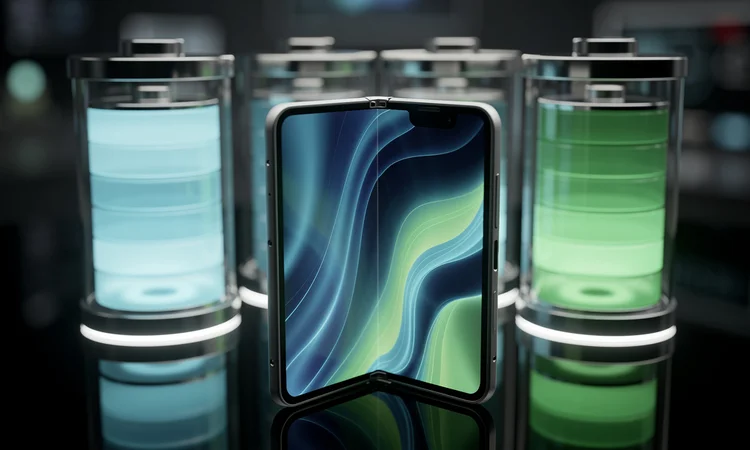
Apple’s long-anticipated entry into the foldable smartphone market appears poised to redefine expectations for the category, with new intelligence suggesting the company’s first folding iPhone will feature battery technology that dwarfs anything previously seen in its product lineup. According to recent reports, the device will pack unprecedented power capacity, potentially addressing one of the most persistent criticisms leveled at competitors’ foldable offerings while simultaneously establishing new benchmarks for mobile device endurance.
The revelation comes from industry sources tracking Apple’s supply chain movements and patent filings, indicating the Cupertino giant has been working methodically to solve the engineering challenges that have plagued early foldable devices. While Samsung, Motorola, and other manufacturers have rushed to market with flexible-screen phones that often sacrifice battery life for form factor innovation, Apple’s characteristically deliberate approach suggests a device that refuses to compromise on power management—a hallmark of the company’s design philosophy since the original iPhone’s introduction in 2007.
According to 9to5Mac , credible leakers have indicated that Apple’s foldable iPhone will incorporate “the largest battery yet, by a lot,” representing a significant departure from the incremental capacity increases that have characterized recent iPhone generations. This development signals Apple’s recognition that foldable devices demand substantially more power than traditional smartphones, given their larger display real estate, additional hinge mechanisms, and the computational requirements of managing flexible screen technology.
The battery capacity revelation aligns with broader industry trends suggesting that power management remains the critical bottleneck in foldable device adoption. Current market leaders in the foldable space have struggled to deliver all-day battery performance, with users frequently reporting that their devices require midday charging—an inconvenience that runs counter to the premium positioning and price points these products command. Apple’s apparent solution involves not merely incremental improvements but a fundamental rethinking of battery architecture within the constraints of a folding form factor.
Engineering Challenges and Apple’s Strategic Patience
The technical obstacles inherent in designing a foldable device with exceptional battery capacity cannot be overstated. Traditional smartphone batteries occupy rectangular spaces within rigid chassis, allowing for relatively straightforward optimization of internal volume. Foldable devices, by contrast, must accommodate complex hinge mechanisms, dual display layers, and reinforced structural elements that significantly reduce available space for power cells. Industry observers have long speculated that Apple’s delay in entering the foldable market stemmed not from lack of interest but from unwillingness to compromise on core performance metrics.
Apple’s patent portfolio reveals years of research into flexible battery technologies, including designs for segmented power cells that can bend without degrading performance or safety. These innovations suggest the company has been developing proprietary battery architectures specifically engineered for foldable applications, rather than attempting to retrofit existing iPhone battery designs into a folding chassis. Such an approach would be consistent with Apple’s historical pattern of entering established product categories only after developing technology that provides clear differentiation from existing market offerings.
The timing of Apple’s foldable iPhone launch also reflects strategic calculation regarding display technology maturation. Early foldable devices suffered from visible creases, durability concerns, and display failures that generated negative publicity and eroded consumer confidence. By waiting until flexible OLED technology has evolved through multiple generations, Apple positions itself to avoid the pioneering pitfalls that damaged competitors’ reputations while benefiting from supply chain efficiencies and manufacturing expertise that have accumulated across the industry.
Market Positioning and Competitive Dynamics
Apple’s entry into the foldable market carries implications that extend far beyond product specifications. The company’s massive installed base of iPhone users represents a potential catalyst for mainstream foldable adoption, transforming what has remained a niche category into a significant market segment. Analysts estimate that even modest conversion rates from Apple’s existing customer base could generate foldable device sales that exceed the combined current output of all Android manufacturers in the category.
The battery capacity advantage, if substantiated by the eventual product launch, would provide Apple with a compelling marketing narrative. While competitors have emphasized screen size, multitasking capabilities, and form factor innovation, these features have proven insufficient to drive mass-market adoption. Battery life, by contrast, remains among the top considerations for smartphone purchasers across all market segments and demographics. A foldable iPhone that delivers battery performance exceeding traditional iPhone models would eliminate a primary objection to foldable adoption.
Pricing strategy will prove critical to Apple’s foldable ambitions. Current foldable devices command premium prices that position them as luxury items rather than mainstream products, with flagship models from Samsung and others regularly exceeding $1,800. Apple’s pricing decisions will signal whether the company views foldables as a new flagship tier above the iPhone Pro Max or as a parallel product line serving specific use cases. The substantial battery capacity suggests Apple intends to position the device as a no-compromise flagship rather than an experimental offering.
Supply Chain Implications and Manufacturing Scale
The battery revelations raise questions about Apple’s supply chain preparations and manufacturing partnerships. Producing batteries of unprecedented capacity for a foldable form factor at Apple’s customary volumes requires supply chain coordination that typically spans multiple years. Industry sources indicate Apple has been working with multiple battery suppliers to develop custom cells, suggesting the company has been laying groundwork for this product launch far longer than public speculation might indicate.
Apple’s manufacturing partners face significant challenges in scaling production of foldable devices with complex battery systems. The company’s quality control standards and volume requirements exceed those of any other smartphone manufacturer, creating unique pressures on suppliers who must meet Apple’s specifications while ramping production to millions of units. The battery system alone likely requires new assembly processes, testing protocols, and quality assurance measures that differ substantially from traditional iPhone manufacturing.
The environmental implications of larger battery capacity also warrant consideration. Apple has positioned itself as an industry leader in environmental responsibility, committing to carbon neutrality across its product lifecycle. A foldable iPhone with significantly larger battery capacity presents challenges for this commitment, as battery production remains among the most environmentally intensive aspects of smartphone manufacturing. How Apple addresses these concerns—through recycled materials, improved battery longevity, or other innovations—will influence both the product’s environmental impact and the company’s credibility on sustainability issues.
Software Optimization and User Experience Considerations
Battery capacity represents only one dimension of power management; software optimization plays an equally critical role in determining real-world battery life. Apple’s vertical integration of hardware and software provides advantages in this regard, as iOS can be optimized specifically for the power characteristics and usage patterns of foldable devices. The company’s track record of extracting exceptional battery life from relatively modest battery capacities through software efficiency suggests the foldable iPhone’s large battery will translate into genuinely transformative endurance.
The user experience implications of a foldable form factor with exceptional battery life extend beyond simple longevity. Users might engage differently with a device that can remain unfolded for extended periods without power anxiety, potentially validating use cases—such as extended video consumption, gaming, or productivity applications—that have remained theoretical with current foldable offerings. Apple’s app ecosystem, with its emphasis on tablet-optimized applications, positions the company well to capitalize on these opportunities.
Developer response to Apple’s foldable iPhone will significantly influence the device’s success. While Android foldables have struggled with app optimization—many applications simply scale up smartphone interfaces rather than taking advantage of additional screen space—Apple’s developer community has demonstrated greater willingness to optimize for different form factors, as evidenced by iPad app quality. A foldable iPhone with battery capacity that enables prolonged use in unfolded configurations could accelerate developer investment in optimized experiences.
Broader Industry Impact and Future Trajectories
Apple’s foldable iPhone launch will inevitably reshape competitive dynamics across the smartphone industry. Competitors who have invested heavily in foldable technology may find their differentiation eroded if Apple’s device delivers superior battery life alongside the company’s traditional advantages in ecosystem integration, build quality, and customer service. This could accelerate a new round of innovation as manufacturers scramble to match Apple’s battery capabilities while defending their existing market positions.
The success or failure of Apple’s foldable iPhone will also influence the company’s broader product strategy. A successful launch could validate foldable technology as the next major form factor evolution, potentially leading to foldable iPads or other devices. Conversely, if the product fails to gain traction despite its technical capabilities, it might indicate fundamental limitations in consumer appetite for foldable devices regardless of how well-executed they are—a scenario that would have implications for the entire industry’s investment in flexible display technology.
Looking forward, the battery technology Apple develops for its foldable iPhone may find applications across the company’s product portfolio. Innovations in flexible battery design, power management, and charging technology rarely remain confined to single product categories. The engineering advances required to pack unprecedented battery capacity into a foldable form factor could eventually benefit traditional iPhones, iPads, and even MacBooks, representing a long-term return on investment that extends far beyond the foldable device itself.
As Apple prepares to enter the foldable market with what appears to be a device that addresses the category’s most significant weakness, the company once again demonstrates its ability to redefine product categories through patient development and uncompromising execution. Whether the foldable iPhone lives up to the emerging reports remains to be seen, but the battery capacity revelations suggest Apple has invested the time and resources necessary to deliver a device that could finally make foldable smartphones a mainstream reality rather than a niche curiosity.





Leave a Reply
Your email address will not be published.