Breaking In: Data Science Jobs in 2026 Demand Precision Over Persistence

Zoe Wright
Zoe Wright

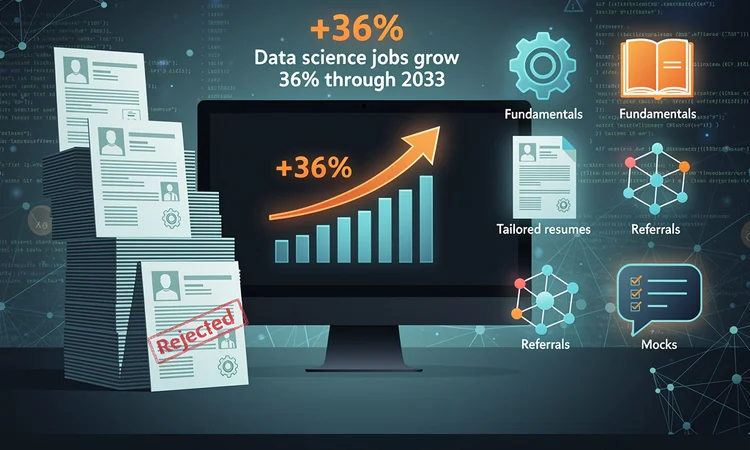
Data science jobs grow 36% through 2033, yet rejections pile up. This deep dive reveals targeted strategies—fundamentals, tailored resumes, referrals, mocks—from experts like Egor Howell, beating scattershot failures in 2026's competitive arena.

Breaking In: Data Science Jobs in 2026 Demand Precision Over Persistence

In a year when data science roles promise 36% growth through 2033, according to the U.S. Bureau of Labor Statistics , job seekers face a paradox: surging demand amid mounting rejections. Egor Howell, writing in Towards Data Science , captures the frustration: “How many job rejections are you sitting on right now? 10? 50? Maybe you’ve crossed 100 and you’re starting to wonder if you’ll ever break in.” His own path—over 400 applications before landing $100k+ offers at Gousto, Deliveroo, DoorDash, Wise, and startups—highlights why scattershot strategies fail in 2026.

The market rewards targeted execution. Andres Vourakis, analyzing 700+ postings in Data Science Collective , notes AI’s reshaping effect: fewer entry-level spots but rising needs for generative AI skills. Meanwhile, Spiceworks reports steady hiring, with Matthew Baden emphasizing, “Every new AI model creates a bigger data mess to clean up – data governance and architecture will be the quiet heroes of 2026.”

Rejection Realities and Market Pressures

Reddit threads echo the grind: one user in r/datascience tallied 500 rejections by September 2025 before pivoting to internal networking. Indeed data shows tech hiring down 36%, yet data scientist postings held steady. A Jobvite study cited by Howell reveals employee referrals—only 7% of applicants—yield 40% of hires, four times the success rate of job board submissions.

Entry barriers thicken with AI automation. Data Science Collective warns juniors face shrinking roles, urging production-ready skills like PyTorch over outdated Keras. BLS projects 245,900 data scientist jobs in 2024, but competition favors those blending technical prowess with business impact, per IABAC : “Technical skill gets you noticed. Business understanding gets you hired.”

Mastering Core Fundamentals First

Howell urges ruthless focus: probability theory, supervised/unsupervised algorithms, LeetCode easy-to-medium, gradient descent, bias-variance, cross-validation. Skip rarely-tested topics like AWS or Docker early. Cobloom ranks deep learning, NLP (up from 5% to 19% in postings), SQL, Python, visualization tops for 2026. Coursera’s guide aligns, stressing statistics, programming, and math amid 36% growth.

Hands-on roadmaps proliferate. Analytics Vidhya outlines beginner-to-job-ready: Python/SQL/ML projects, culminating in cloud-hosted RAG systems. X user @HarunMbaabu sequences: Excel > SQL > Python > Power BI/Tableau > statistics, then apply aggressively. Ezekiel @ezekiel_aleke adds soft skills: “Technical skills get you hired. Soft skills keep you in the Job.”

Resume Overhaul for ATS Survival

Howell’s first resume? “Complete dogwater.” Fix: one-page, metrics-driven (e.g., financial impact), action verbs (“led,” “developed”), expertise-led. Tailor every application with job description keywords to beat ATS filters. Jobright echoes for analysts: >80% keyword match, clear SQL proficiency (joins, windows). Avoid tech spam; prove value.

365 Data Science notes data science degrees in 70% of 2025 postings (up 23%), but statistics/computer science suffice. Build portfolios on GitHub; NB-Data recommends Medium posts for visibility.

Networking and Referrals Unlock Doors

“Everyone has an advantage; you just haven’t found it yet,” Howell writes. Leverage university ties, side projects matching company pains, or lower-competition locales/smaller firms over FAANG. Target 50 personalized LinkedIn invites weekly to employees at dream companies. X’s @ibn_wittig advises Upwork for foreigners, niche focuses like financial analysis.

Referrals dominate. Post-application, message recruiters: tailor Howell’s template highlighting experience domains. Alexander Technology Group prioritizes Python/Java, ML frameworks, MLOps for 2026 machine learning roles.

Interview Prep: Mock It Till You Make It

Data science interviews remain the “wild west.” Practice ML theory, pair programming, behavioral, case studies. Howell: “Walking into an interview without preparation is like taking a driving test without ever getting behind the wheel.” @ujjwalscript on X shifts emphasis: 30% DSA, 50% system design, 20% communication—explain trade-offs, not just code.

Towards Data Science stresses production-readiness: Git, PyTorch, GenAI. Qubit Labs forecasts AI/ML, data science demand amid skill-based hiring.

Emerging Trends and Future-Proofing

GenAI rewires roles; PangaeaX cites WEF: analytical thinking, AI/big data top skills by 2030. Cloud (AWS/GCP/Azure), governance rise, per 365 Data Science . Freelance thrives; build via Upwork, per X advice.

Salaries hold strong: $156k+ average US, per Edureka . @thedatavidhya pushes ETL pipelines (S3/Glue/Athena) for resumes. Follow structured paths like Medium’s zero-to-hired guide.

Execution Roadmap for 2026 Breakthrough

Synthesize: 1) Fundamentals (3-6 months). 2) Optimized/tailored resume + portfolio. 3) Sniper applications (10-20/week, advantages-aligned). 4) Network/referrals/follow-ups. 5) Mock interviews. Track via newsletters like Howell’s. As Interview Query states, specialize (role + domain) for hireability: “I build product analytics systems to reduce trial churn in SaaS by 15%.” Persistence with precision breaks through.


About the Author

Zoe Wright
Zoe Wright

As a writer, Zoe Wright covers retail operations with an eye for detail. Their approach combines field reporting paired with technical explainers. They write about both the promise and the cost of transformation, including risks that are easy to overlook. They explore how policies, markets, and infrastructure intersect to create second‑order effects. Their perspective is shaped by interviews across engineering, operations, and leadership roles. They examine how customer expectations evolve and how organizations adapt to meet them. A recurring theme in their writing is how teams build repeatable systems and measure impact over time. They look for overlooked details that differentiate sustainable success from short‑term wins. Their coverage includes guidance for teams under resource or time constraints. They believe good analysis should be specific, testable, and useful to practitioners. They maintain a balanced tone, separating speculation from evidence. They value transparency, practical advice, and honest uncertainty. They avoid buzzwords, focusing instead on outcomes, incentives, and the human side of technology.

Comments

Join the discussion and share your thoughts.

No comments yet. Be the first to comment.

Leave a Reply

Your email address will not be published.

Related Posts

Formae’s Multi-Cloud Leap: Platform Engineering Labs Arms Builders Against IaC Gridlock

Formae’s Multi-Cloud Leap: Platform Engineering Labs Arms Builders Against IaC Gridlock

Platform Engineering Labs' formae surges to multi-cloud with GCP, Azure, OCI, and OVH beta support plus a Plugin SDK, empowering infrastructure builders to extend IaC without vendor delays. This upgrade redefines extensibility in a fragmented cloud era.

Posted on: by Ivy Bailey
Sky47’s Sovereign Surge: Pakistan’s Massive AI Cloud Bet

Sky47’s Sovereign Surge: Pakistan’s Massive AI Cloud Bet

Sky47's January 2026 launch marks Pakistan's boldest sovereign cloud move, with 3,000 racks and 50MW for AI workloads. Backed by Mari Energies and Fauji Foundation, it eyes hyperscalers amid rising data sovereignty demands.

Posted on: by Zoe Patel
Cloud’s Complexity Trap: How Tool Overload and AI-Wielding Attackers Are Fracturing Security Defenses

Cloud’s Complexity Trap: How Tool Overload and AI-Wielding Attackers Are Fracturing Security Defenses

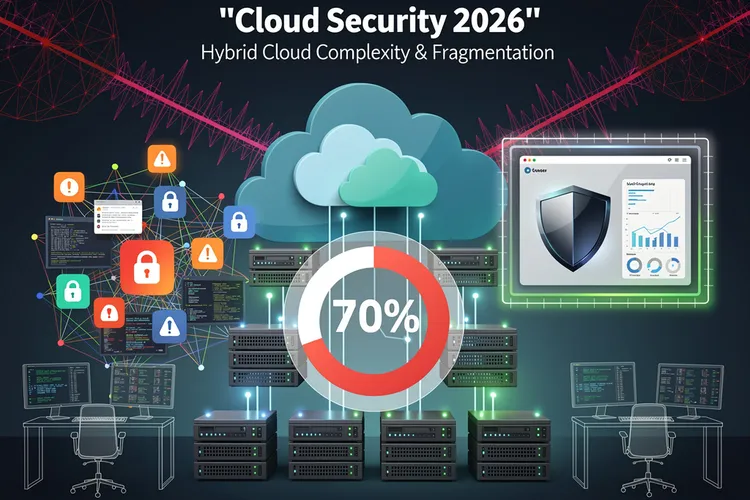
Fortinet's 2026 Cloud Security Report exposes a widening complexity gap in hybrid clouds, where tool sprawl, AI-driven attacks, and skills shortages overwhelm teams despite rising budgets. Nearly 70% cite fragmentation as the top barrier, urging platform shifts and MSSP aid.

IT Management
NordVPN’s Sixth Consecutive Audit Validates Zero-Logs Promise as Privacy Scrutiny Intensifies

NordVPN’s Sixth Consecutive Audit Validates Zero-Logs Promise as Privacy Scrutiny Intensifies

NordVPN completes its sixth consecutive independent audit by Deloitte, confirming its zero-logs policy amid intensifying privacy scrutiny. The verification highlights industry trends toward verifiable transparency as regulatory pressure mounts and consumer skepticism grows regarding VPN privacy claims.

IT Management
Upwind’s Runtime Revolution: $250M Fuels $1.5B Cloud Security Unicorn

Upwind’s Runtime Revolution: $250M Fuels $1.5B Cloud Security Unicorn

Upwind's $250 million Series B catapults it to $1.5 billion valuation, powering runtime-first cloud security amid 900% revenue surge. Backed by Bessemer and all-stars, the ex-Spot.io team targets AI-era threats for giants like Siemens and Roku.

IT Management
Mesh Security’s $12M Bet: Unifying Cyber Chaos into Enterprise Powerhouse

Mesh Security’s $12M Bet: Unifying Cyber Chaos into Enterprise Powerhouse

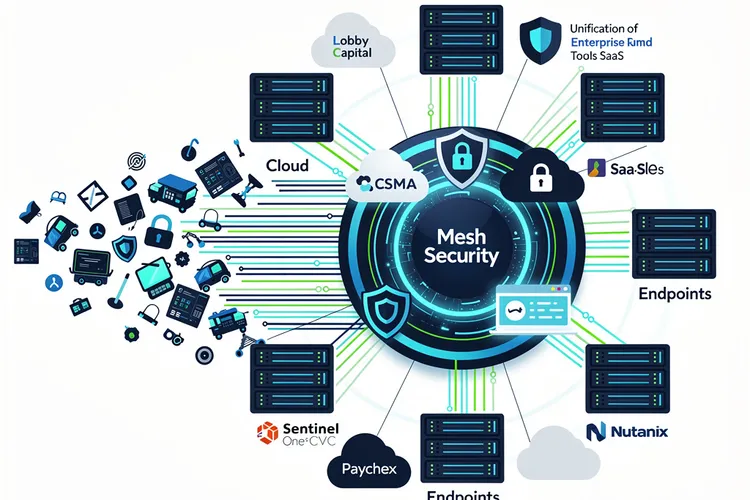
Mesh Security's $12M Series A funds its CSMA platform to unify enterprise cyber tools across clouds and SaaS, eliminating silos agentlessly. Backed by Lobby Capital and SentinelOne's CVC, it gains traction with Paychex and Nutanix amid tool sprawl crisis.

IT Management
Abstract Security and Netskope Forge Real-Time Threat Pipeline, Slicing Through Data Delays

Abstract Security and Netskope Forge Real-Time Threat Pipeline, Slicing Through Data Delays

Abstract Security and Netskope's new partnership embeds real-time detection into security data streams, eliminating indexing delays and slashing costs for joint customers. By processing Netskope telemetry in motion, it boosts threat response while preserving data control.

IT Management
Nationwide’s AI Fortress: AWS Bolsters Fraud Defenses for 17 Million Clients

Nationwide’s AI Fortress: AWS Bolsters Fraud Defenses for 17 Million Clients

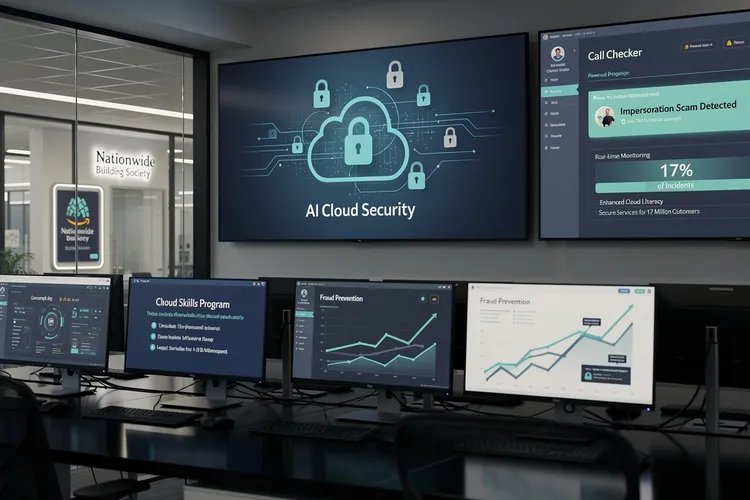
Nationwide Building Society expands its AWS partnership to deploy AI-driven cloud security and fraud prevention, powering tools like Call Checker against impersonation scams affecting 17% of incidents. Workforce training boosts cloud literacy for enhanced service to 17 million customers.

IT Management
CISOs’ Hidden Roadblocks: Why 58% See Their Firms Unready for Cyber Onslaught

CISOs’ Hidden Roadblocks: Why 58% See Their Firms Unready for Cyber Onslaught

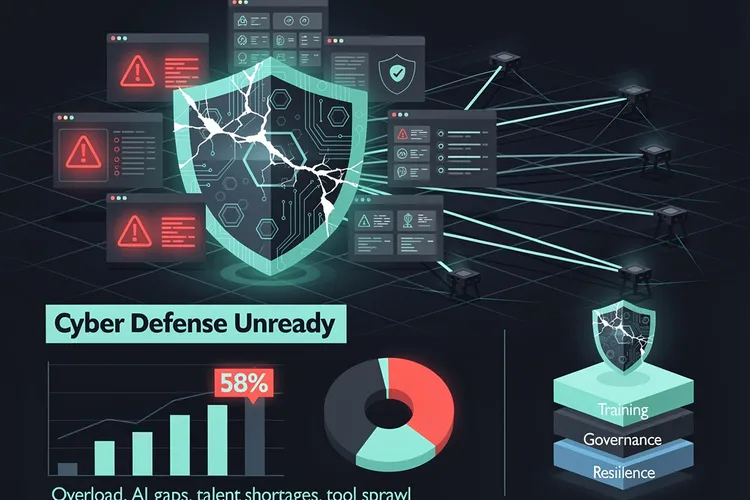
Despite rising budgets, 58% of CISOs deem their organizations unready for cyberattacks, hindered by team overload, AI gaps, talent shortages, and tool sprawl. Experts urge prioritization training, governance, and resilience focus.

IT Management
Security Chiefs Gear Up for AI Agents and Poly-Threats in 2026

Security Chiefs Gear Up for AI Agents and Poly-Threats in 2026

Security leaders brace for 2026's AI agents, poly-threats, and quantum risks, shifting from reactive defenses to governance, identity controls, and resilient architectures amid record attacks and regulatory mandates.

IT Management