
Venezuela’s Oil Quagmire: Exxon’s Stark Warning in a Post-Maduro Era
In the wake of dramatic geopolitical shifts, Exxon Mobil Corp.’s Chief Executive Darren Woods has delivered a sobering assessment of Venezuela’s potential as an investment destination for the oil industry. During a high-stakes White House meeting on January 9, 2026, Woods bluntly described the country as “uninvestable” under its current legal and commercial structures, even as President Donald Trump urged major U.S. energy firms to inject at least $100 billion into revitalizing its beleaguered oil sector. This declaration comes amid a rapidly evolving situation following the U.S. capture of former Venezuelan President Nicolás Maduro on drug charges and subsequent military actions that have reshaped the nation’s political terrain.
The meeting, attended by executives from Exxon, Chevron Corp., and other industry heavyweights, was intended to rally support for Trump’s ambitious plan to harness Venezuela’s vast oil reserves—the world’s largest at over 300 billion barrels—to bolster global energy supplies and U.S. economic interests. However, Woods emphasized the need for “significant changes” to Venezuela’s hydrocarbon laws, legal protections, and commercial frameworks before any substantial commitments could be made. According to reports from Business Insider , Woods highlighted past grievances, including the nationalization of Exxon’s assets in 2007 under Hugo Chávez, which led to a prolonged arbitration battle culminating in a $1.6 billion award to the company in 2014—far less than the $10 billion initially sought.
This cautionary stance reflects deeper concerns within the energy sector about the risks of re-entering a market plagued by decades of mismanagement, corruption, and infrastructure decay. Venezuela’s oil production has plummeted from a peak of about 3 million barrels per day in the late 1990s to roughly 1 million barrels today, hampered by U.S. sanctions, equipment shortages, and a lack of maintenance. Trump’s vision includes lifting sanctions and encouraging private investment to ramp up output, potentially flooding global markets with heavy crude and stabilizing prices, but industry insiders remain skeptical about the timeline and feasibility.
Historical Baggage and Legal Hurdles
Exxon’s history in Venezuela is a cautionary tale of expropriation and legal wrangling. The company was forced out in 2007 when Chávez’s government seized control of the Cerro Negro project in the Orinoco Belt, a move that echoed earlier nationalizations in the 1970s. Woods, in his White House remarks, alluded to these incidents, stressing that without “durable protections” for investments, shareholders would balk at the risks. As detailed in a Reuters article, Exxon is now “prepared to evaluate” a return but only if sweeping reforms address property rights and contract sanctity.
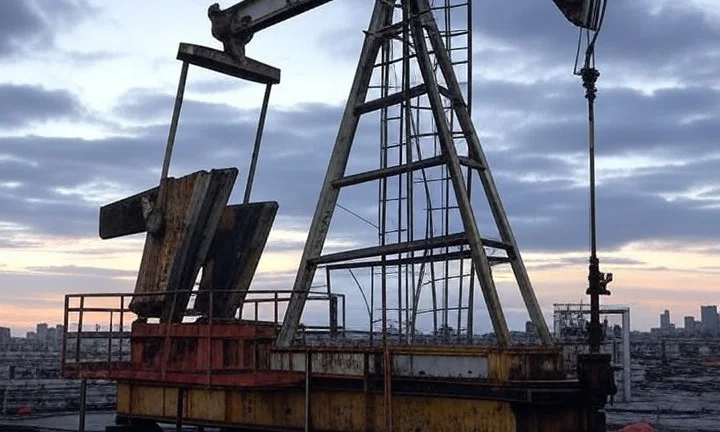
Beyond legal reforms, the physical state of Venezuela’s oil infrastructure poses formidable challenges. Pipelines, many dating back half a century, are in disrepair, and the heavy, tar-like crude from the Orinoco region requires specialized processing that has been neglected under Maduro’s regime. Posts on X from energy analysts highlight the enormity of the task, with estimates suggesting that restoring production to 3 million barrels per day could require up to $60 billion in capital expenditures over a decade. One such post noted the suppression of exports due to recent tanker seizures, underscoring the logistical nightmares ahead.
Chevron, unlike Exxon, has maintained a foothold in Venezuela through joint ventures with state-owned PDVSA, allowing it to plan an immediate production increase if conditions improve. According to POLITICO , Chevron’s executives expressed readiness to “quickly ramp up” output, potentially adding hundreds of thousands of barrels daily in the short term. This contrast illustrates the varying risk appetites among U.S. majors: Chevron’s ongoing operations provide a buffer, while Exxon’s complete exit in 2007 leaves it more exposed to re-entry uncertainties.
Trump’s Push Meets Industry Realism
President Trump’s enthusiasm for Venezuelan oil as a strategic asset is evident in his post-meeting statements, where he suggested he might “keep Exxon out” if the company doesn’t align with his goals. A recent Reuters update from January 12, 2026, quotes Trump emphasizing the need for bold action, even as executives praised his intervention in capturing Maduro but stopped short of firm commitments. The administration envisions U.S. firms leading a reconstruction effort that could generate billions in revenue, offset domestic energy costs, and counterbalance OPEC’s influence.
Yet, the industry’s response has been measured. In a Washington Post account of the meeting, executives voiced concerns over return on investment, with Woods questioning, “What will returns look like?” Venezuela’s heavy oil requires breakeven prices around $65 per barrel to match the profitability of U.S. shale plays like the Permian Basin, a threshold that current market dynamics may not consistently support. Moreover, the human and environmental toll of recent U.S. bombings, which reportedly killed around 100 people, adds layers of reputational risk for companies wary of associating with controversial interventions.
Discussions on X reflect a mix of optimism and skepticism among market watchers. Some posts celebrate the potential for a “oil revival” under U.S. oversight, pointing to Chevron’s advantageous position, while others warn of long-term bearish pressures on global prices if Venezuelan supply surges prematurely. Energy experts posting on the platform emphasize that even with political stability, technical hurdles like reservoir maintenance and sludge processing could delay meaningful output gains for years.
Geopolitical Ripples and Market Implications
The broader implications of Woods’ “uninvestable” label extend to global energy dynamics. Venezuela’s reserves, if fully exploited, could disrupt markets dominated by Russia, Saudi Arabia, and other producers. However, as outlined in a Mint analysis, the country’s history of asset seizures—twice for Exxon alone—creates a chilling effect on foreign investment. Trump’s meeting, held just days after Maduro’s capture on January 3, 2026, aimed to project unity, but the lack of concrete pledges underscores the gap between political ambition and corporate prudence.
Industry insiders note that legal reforms must include revisions to the Organic Hydrocarbons Law, which currently favors state control and limits foreign ownership. ExxonMobil’s own statement on its corporate website reiterates Woods’ call for a stable framework, echoing sentiments from the White House gathering. Without such changes, companies risk repeating past mistakes, where billions in investments evaporated amid political upheaval.
Furthermore, the environmental and social dimensions cannot be ignored. Venezuela’s oil operations have long been criticized for pollution in the Orinoco region, and any revival must navigate stricter global standards on emissions and sustainability. Posts on X from environmental advocates highlight these concerns, suggesting that rushed investments could lead to ecological disasters, compounding the challenges for firms like Exxon, which has been pivoting toward lower-carbon initiatives.
Path Forward: Reforms and Realities
For Exxon and its peers, the path to re-engagement hinges on Venezuela’s interim government—likely influenced by U.S. backing—implementing investor-friendly policies swiftly. As reported in BBC , oil executives at the meeting expressed caution, with one noting the dual seizures of assets as a red flag. Trump’s administration has signaled willingness to facilitate these changes, potentially through bilateral agreements that guarantee arbitration rights and profit repatriation.
Chevron’s model offers a blueprint: its exemptions from some U.S. sanctions have allowed modest operations, and plans for an “immediate production bump” could serve as a test case. Yet, for Exxon, the calculus is different; Woods’ emphasis on shareholder returns reflects a broader industry shift toward disciplined capital allocation, prioritizing high-margin projects over high-risk ventures.
Looking ahead, the energy sector’s response will shape Venezuela’s recovery. If reforms materialize, the influx of technology and expertise could transform the nation’s oil industry, benefiting global supplies. However, as Woods’ warning underscores, without fundamental overhauls, Venezuela risks remaining a mirage for investors—a land of untapped potential mired in uncertainty.
Investor Sentiment and Strategic Shifts
Sentiment among investors, as gauged from recent market reactions, mirrors the executives’ hesitance. Stock prices for U.S. oil majors dipped slightly following the White House meeting, reflecting doubts about near-term gains from Venezuela. An Axios piece highlights how companies are noncommittal, prioritizing domestic opportunities amid volatile oil prices.
Strategic considerations also play a role. Exxon’s focus on Guyana, where it has discovered massive reserves just offshore from Venezuela, provides a safer alternative with similar geological promise but stronger legal safeguards. This diversification strategy reduces the urgency to rush back into Venezuelan waters, despite territorial disputes that have occasionally flared between the two nations.
Ultimately, the interplay between Trump’s geopolitical maneuvering and corporate risk assessment will determine the outcome. While the capture of Maduro opens a window for change, Woods’ declaration serves as a reality check, reminding stakeholders that rebuilding trust in Venezuela’s oil sector demands more than rhetoric—it requires ironclad reforms to turn potential into profit.


Leave a Reply
Your email address will not be published.