Fortifying Code: Security’s Pivot in Web App Development

Emily Chen
Emily Chen

Security now defines excellence in web app development, driving DevSecOps adoption amid rising AI threats and OWASP risks. Breaches cost $4.44 million on average, per IBM, demanding encryption, zero trust, and vigilant practices from design to deployment.

Fortifying Code: Security’s Pivot in Web App Development

In the high-stakes arena of digital transformation, security has eclipsed aesthetics and speed as the defining metric for web application quality. Cyber threats, growing in sophistication, have elevated protection from a technical footnote to a boardroom imperative. The worldwide average cost of a data breach dipped to $4.44 million in 2025, down 9% from $4.88 million the prior year, yet the financial and reputational toll remains staggering, as detailed in IBM’s Cost of a Data Breach Report 2025 .

Philadelphia’s tech firms exemplify this shift, where providers like OpenSource Technologies integrate safeguards from inception. “The key determinant of quality in web application development services is no longer its design or its speedy performance, but its impenetrable security,” writes Chris Bates in NorthPennNow . Traditional bolt-on defenses prove inadequate against evolving attacks, demanding a proactive ‘Security by Design’ ethos.

Threat Evolution Reshapes Priorities

Attackers exploit vulnerabilities like SQL injection and cross-site scripting (XSS) with AI-enhanced precision, targeting APIs and cloud-native stacks. OWASP’s Top 10 for 2025 lists Broken Access Control as the foremost risk, followed by Security Misconfiguration and Software Supply Chain Failures, per TryHackMe on X . Developers must now anticipate these in every commit, as rapid deployment cycles amplify exposure.

DevSecOps emerges as the antidote, embedding security into CI/CD pipelines via ‘shift-left’ practices. This continuous testing catches flaws early, slashing remediation costs. Yehuda Raz notes in Security Boulevard that OWASP ASVS provides structured benchmarks, from opportunistic Level 1 controls for low-risk apps to advanced Level 3 for critical infrastructure.

In 2026, AI dual-role intensifies: attackers craft adaptive phishing, while defenders leverage it for anomaly detection. Novas Arc highlights in its trends report that “integrating generative AI features into production applications expands the application attack surface,” urging OWASP adherence and zero-trust enforcement.

DevSecOps: The New Development Standard

Teams adopting DevSecOps integrate static application security testing (SAST) and software composition analysis (SCA) into workflows, prioritizing exploitable flaws. SANS Institute’s SEC522 course emphasizes securing Infrastructure as Code (IaC) against misconfigurations, a top OWASP risk, through hands-on labs on OWASP Top 10 defenses.

Dependency management proves pivotal; a vulnerable open-source package can unravel secure code. “A single vulnerable third-party package can compromise an otherwise secure application,” warns Techloy . Tools like Snyk generate Software Bills of Materials (SBOMs) for transparency, essential for compliance and rapid patching.

Encryption anchors data defense: TLS 1.3 for transit, AES-256 at rest, and HTTPS enforcement. NorthPennNow stresses database encryption and hashing, extending to APIs via schema validation and rate limiting to thwart abuse.

Zero Trust and API Fortification

Zero Trust Application Access (ZTAA) verifies every request, decoupling from networks. Novas Arc cites Cisco’s success: “Application access was decoupled from the network, improving security.” OAuth 2.1 and OpenID Connect, backed by providers like Auth0, enforce MFA and scoped tokens, mitigating 95% of API breaches reported by Techloy.

Web Application Firewalls (WAFs) and Runtime Application Self-Protection (RASP) block OWASP threats in real-time. Cloudflare advocates DDoS mitigation and bot management, noting shadow APIs as hidden risks where “development teams work quickly… without informing security teams.” Unified WAAP platforms consolidate defenses amid cloud sprawl.

Mobile endpoints demand device attestation and secure enclaves, as 2026 trends per Novas Arc extend app security to tampered hardware.

Open-Source Edge and Vendor Scrutiny

Open-source frameworks, vetted by global communities, outpace proprietary in patching speed when tracked via SBOMs. Bates affirms their strategic value for Philadelphia developers, provided meticulous management.

Procuring services requires grilling vendors on ASVS levels and DevSecOps maturity. Raz recommends evidence trails—test results, remediation logs—for audits. X users like @alexcooldev echo: “Escape & sanitize user input to prevent XSS… Implement JWT/OAuth + RBAC,” underscoring practical checklists.

Post-launch vigilance—monitoring, patching, logging—sustains resilience. SANS labs teach defending external inputs from browsers and services, including AI components.

2026 Imperatives for Resilience

“In 2026 and beyond, successful application security relies on treating security as a core engineering discipline, rather than an afterthought,” per Techloy. AI governance curbs shadow AI risks, adding $670,000 to breaches without controls, IBM reports.

Organizations automating security save $1.9 million per incident, trimming lifecycles by 80 days. As threats like injection and cryptographic failures persist, OWASP ASVS and Top 10 guide maturity. Bates concludes: “Delivering secure, scalable, and future-ready applications is a core responsibility, not an afterthought.”

Insiders must champion shift-left, zero-trust, and continuous verification to outpace adversaries in this arms race.


About the Author

Emily Chen
Emily Chen

Known for clear analysis, Emily Chen follows retail operations and the people building it. They work through clear frameworks, case studies, and practical checklists to make complex topics approachable. They often cover how organizations respond to change, from process redesign to technology adoption. Readers appreciate their ability to connect strategic goals with everyday workflows. They examine how customer expectations evolve and how organizations adapt to meet them. They value transparent sourcing and prefer primary data when it is available. A recurring theme in their writing is how teams build repeatable systems and measure impact over time. They also highlight cultural factors that determine whether change sticks. They avoid buzzwords, focusing instead on outcomes, incentives, and the human side of technology. They explore how policies, markets, and infrastructure intersect to create second‑order effects. They believe good analysis should be specific, testable, and useful to practitioners. They tend to favor small experiments over sweeping predictions. They value transparency, practical advice, and honest uncertainty.

Comments

Join the discussion and share your thoughts.

No comments yet. Be the first to comment.

Leave a Reply

Your email address will not be published.

Related Posts

Formae’s Multi-Cloud Leap: Platform Engineering Labs Arms Builders Against IaC Gridlock

Formae’s Multi-Cloud Leap: Platform Engineering Labs Arms Builders Against IaC Gridlock

Platform Engineering Labs' formae surges to multi-cloud with GCP, Azure, OCI, and OVH beta support plus a Plugin SDK, empowering infrastructure builders to extend IaC without vendor delays. This upgrade redefines extensibility in a fragmented cloud era.

Posted on: by Ivy Bailey
Sky47’s Sovereign Surge: Pakistan’s Massive AI Cloud Bet

Sky47’s Sovereign Surge: Pakistan’s Massive AI Cloud Bet

Sky47's January 2026 launch marks Pakistan's boldest sovereign cloud move, with 3,000 racks and 50MW for AI workloads. Backed by Mari Energies and Fauji Foundation, it eyes hyperscalers amid rising data sovereignty demands.

Posted on: by Zoe Patel
Cloud’s Complexity Trap: How Tool Overload and AI-Wielding Attackers Are Fracturing Security Defenses

Cloud’s Complexity Trap: How Tool Overload and AI-Wielding Attackers Are Fracturing Security Defenses

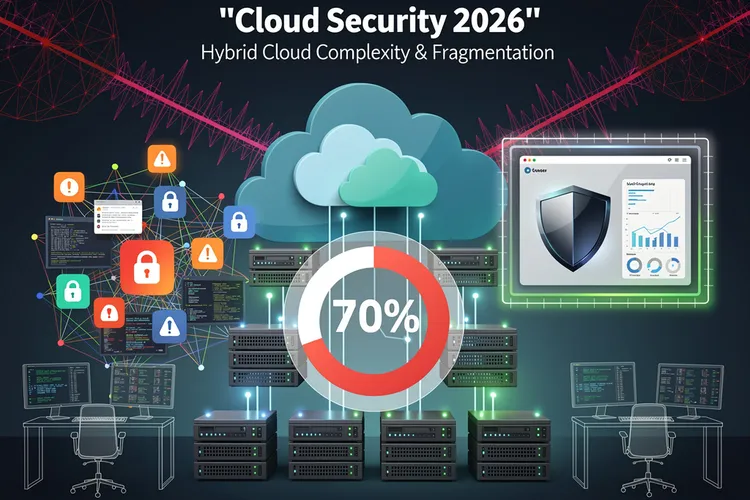
Fortinet's 2026 Cloud Security Report exposes a widening complexity gap in hybrid clouds, where tool sprawl, AI-driven attacks, and skills shortages overwhelm teams despite rising budgets. Nearly 70% cite fragmentation as the top barrier, urging platform shifts and MSSP aid.

IT Management
NordVPN’s Sixth Consecutive Audit Validates Zero-Logs Promise as Privacy Scrutiny Intensifies

NordVPN’s Sixth Consecutive Audit Validates Zero-Logs Promise as Privacy Scrutiny Intensifies

NordVPN completes its sixth consecutive independent audit by Deloitte, confirming its zero-logs policy amid intensifying privacy scrutiny. The verification highlights industry trends toward verifiable transparency as regulatory pressure mounts and consumer skepticism grows regarding VPN privacy claims.

IT Management
Upwind’s Runtime Revolution: $250M Fuels $1.5B Cloud Security Unicorn

Upwind’s Runtime Revolution: $250M Fuels $1.5B Cloud Security Unicorn

Upwind's $250 million Series B catapults it to $1.5 billion valuation, powering runtime-first cloud security amid 900% revenue surge. Backed by Bessemer and all-stars, the ex-Spot.io team targets AI-era threats for giants like Siemens and Roku.

IT Management
Mesh Security’s $12M Bet: Unifying Cyber Chaos into Enterprise Powerhouse

Mesh Security’s $12M Bet: Unifying Cyber Chaos into Enterprise Powerhouse

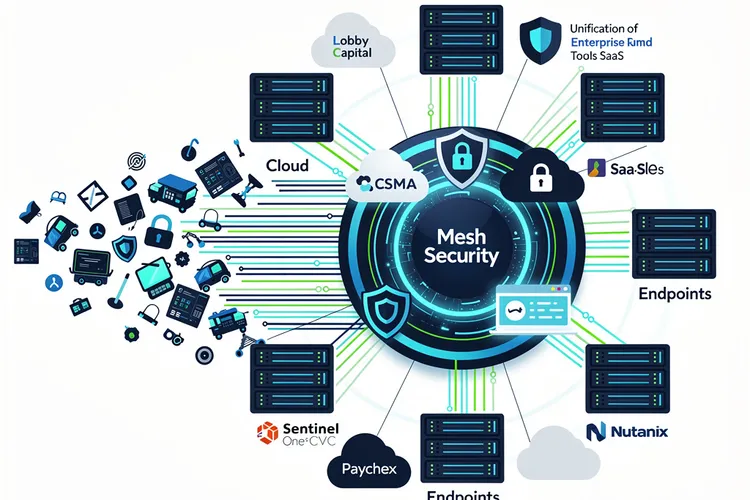
Mesh Security's $12M Series A funds its CSMA platform to unify enterprise cyber tools across clouds and SaaS, eliminating silos agentlessly. Backed by Lobby Capital and SentinelOne's CVC, it gains traction with Paychex and Nutanix amid tool sprawl crisis.

IT Management
Abstract Security and Netskope Forge Real-Time Threat Pipeline, Slicing Through Data Delays

Abstract Security and Netskope Forge Real-Time Threat Pipeline, Slicing Through Data Delays

Abstract Security and Netskope's new partnership embeds real-time detection into security data streams, eliminating indexing delays and slashing costs for joint customers. By processing Netskope telemetry in motion, it boosts threat response while preserving data control.

IT Management
Nationwide’s AI Fortress: AWS Bolsters Fraud Defenses for 17 Million Clients

Nationwide’s AI Fortress: AWS Bolsters Fraud Defenses for 17 Million Clients

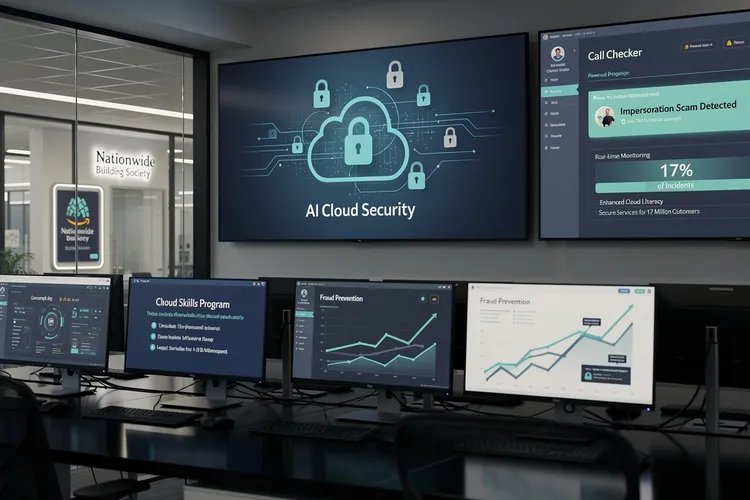
Nationwide Building Society expands its AWS partnership to deploy AI-driven cloud security and fraud prevention, powering tools like Call Checker against impersonation scams affecting 17% of incidents. Workforce training boosts cloud literacy for enhanced service to 17 million customers.

IT Management
CISOs’ Hidden Roadblocks: Why 58% See Their Firms Unready for Cyber Onslaught

CISOs’ Hidden Roadblocks: Why 58% See Their Firms Unready for Cyber Onslaught

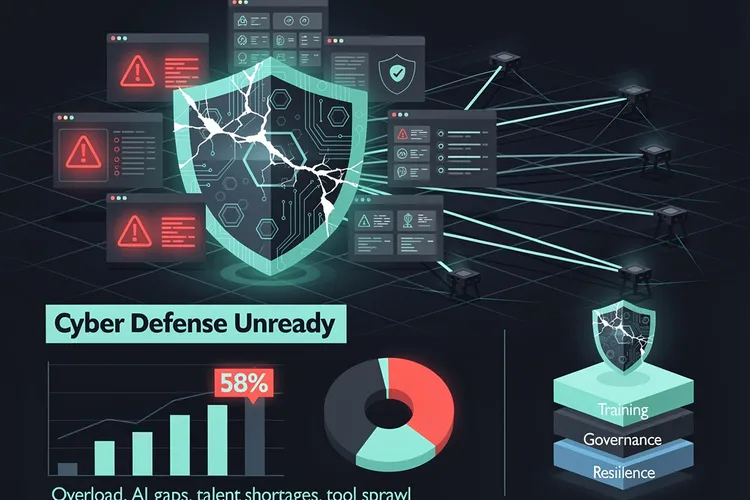
Despite rising budgets, 58% of CISOs deem their organizations unready for cyberattacks, hindered by team overload, AI gaps, talent shortages, and tool sprawl. Experts urge prioritization training, governance, and resilience focus.

IT Management
Security Chiefs Gear Up for AI Agents and Poly-Threats in 2026

Security Chiefs Gear Up for AI Agents and Poly-Threats in 2026

Security leaders brace for 2026's AI agents, poly-threats, and quantum risks, shifting from reactive defenses to governance, identity controls, and resilient architectures amid record attacks and regulatory mandates.

IT Management