
Google’s Demand Gen Overhaul: Shoppable CTV and Search Signals Reshape Ad Strategies

Samuel Johnson
Samuel Johnson

Google's January 2026 Demand Gen Drop introduces shoppable CTV, attributed branded searches and travel feeds, boosting conversions across streaming and visual channels. Marketers gain precise insights into upper-funnel impact, setting new benchmarks for ad performance.

Google’s Demand Gen Overhaul: Shoppable CTV and Search Signals Reshape Ad Strategies

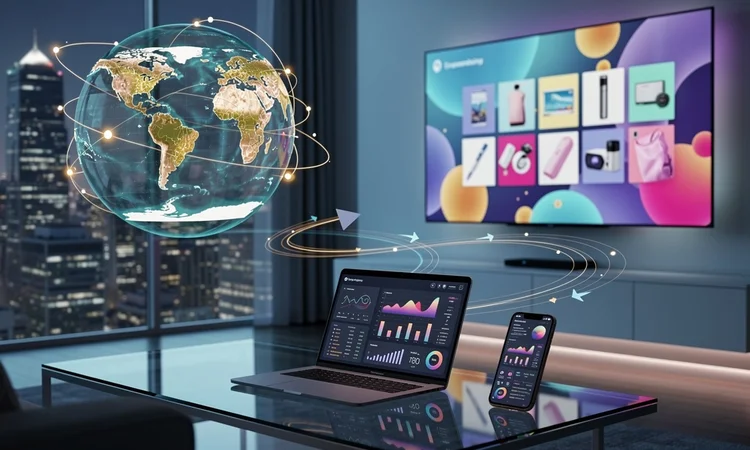
Google’s latest Demand Gen updates are set to transform how marketers engage consumers across streaming, search and shopping channels. Announced in the January 2026 Demand Gen Drop, these features—including shoppable connected TV ads, attributed branded search metrics and enhanced travel feeds—aim to bridge upper-funnel awareness with direct conversions. The changes come as advertisers grapple with fragmented attention spans and rising privacy constraints, offering tools to measure and optimize campaigns with unprecedented precision.

The core of the rollout centers on integrating Demand Gen campaigns with connected TV (CTV), enabling shoppable experiences directly within video streams. Advertisers can now tag products in YouTube and other video inventory, allowing viewers to tap and purchase without leaving the content. Early tests show a 20% lift in conversion rates for participating brands, according to Google’s internal data shared in the announcement. This builds on Demand Gen’s existing strength in visual surfaces like Discover and Gmail, extending reach to high-engagement streaming audiences.

Unlocking CTV’s Purchase Power

Shoppable CTV represents a pivotal shift, as CTV ad spend is projected to surpass $30 billion globally this year per eMarketer estimates. Google’s implementation leverages its Video Action Campaigns framework, automatically optimizing for clicks and sales. For instance, fashion retailer ASOS reported a 15% increase in incremental sales during a pilot, crediting the seamless path from video view to checkout. The feature rolls out first in the U.S. and U.K., with global expansion planned by Q2.

Beyond interactivity, Google is introducing Attributed Branded Searches, a metric that quantifies how Demand Gen exposure drives branded queries on Search. Previously elusive, this insight reveals the ‘halo effect’ of awareness campaigns—up to 25% of conversions stem from users who interacted with ads but converted via branded terms, per Google’s analysis. Marketers gain visibility into this through new reporting dashboards, enabling smarter budget allocation between prospecting and remarketing.

Measuring the Invisible Lift

Travel Feeds emerge as another cornerstone, tailored for the sector’s seasonal surges. Advertisers can now upload dynamic catalogs of flights, hotels and packages directly into Demand Gen, fueling personalized ads across Google’s ecosystem. Expedia, an early adopter, saw a 18% uptick in booking intent signals after integration. This feed-based approach mirrors Performance Max but prioritizes visual storytelling, ideal for aspirational travel content.

These enhancements arrive amid broader Google Ads momentum. A recent WordStream analysis highlights 2025’s AI-driven updates as foundational, with Demand Gen contributing to 68% of conversions from new-to-brand users in December’s drop, as noted in Google’s December blog . Industry insiders view January’s package as evolutionary, refining automation for agentic commerce.

AI Amplifies Campaign Intelligence

Underpinning the features is deeper integration of search signals into Demand Gen bidding. Campaigns now factor real-time query data, improving relevance and ROAS by an average 12%, Google claims. This addresses a long-standing pain point: upper-funnel ads often lacked granular performance ties to bottom-funnel actions. PPC experts on X, including posts from Google Ads’ official account, buzz about the potential for ‘endless creative possibilities’ with tools like Nano Banana Pro image generation complementing these launches.

Search Engine Journal’s PPC Pulse covers the ripple effects, noting how Demand Gen’s expansions align with Google’s Ads Decoded podcast debut, signaling heavier education pushes for complex setups. Yahoo Tech reports on search data infusions , emphasizing CTV conversion modeling improvements that credit views across devices.

Travel Sector’s Feed Revolution

For travel marketers, the new feeds standardize data inputs, supporting up to 10,000 items per catalog with attributes like pricing and availability. This reduces manual creative production by 40%, per Google’s benchmarks. Combined with multi-format support—images, videos, carousels—campaigns adapt fluidly to user contexts, from YouTube Shorts to Gmail promotions.

Advertisers must act swiftly: features require opt-in via Google Ads consoles, with full availability by late January. Migration paths from Video Action Campaigns simplify transitions, preserving historical data. However, experts caution on creative quality—poor visuals could dilute gains, as Demand Gen favors high-engagement assets.

Strategic Shifts for Advertisers

WordStream’s 2026 predictions forecast Demand Gen dominating 40% of non-Search budgets, driven by these tools. Retailers eye agentic integrations from Google’s recent agentic commerce post , where AI agents handle end-to-end shopping. Posts on X from Google Ads underscore urgency, linking to the January drop with calls to ‘reach new customers in 2026.’

Challenges persist: privacy-safe measurement relies on enhanced conversions, demanding first-party data hygiene. Smaller advertisers may need agency support for feeds and CTV creative. Yet, the upside is clear—Demand Gen now rivals platforms like Meta in cross-channel orchestration, with Google’s inventory scale as the differentiator.

Charting Paths to Incrementality

Google’s September 2025 introduction of monthly Drops, via their inaugural post , set the cadence for iterative rollouts. January’s edition accelerates this, incorporating feedback from prior months like November’s holiday tweaks. Support docs in Google Ads Help detail 2025 highlights, positioning Demand Gen as AI’s growth engine.

For industry veterans, the true game-changer lies in attribution evolution. Attributed Branded Searches demystifies lift testing, potentially reshaping agency pitches toward full-funnel accountability. As one PPC consultant noted in Search Engine Journal coverage, ‘This closes the loop on awareness ROI.’

About the Author

Samuel Johnson
Samuel Johnson

Samuel Johnson is a journalist who focuses on consumer behavior. They work through clear frameworks, case studies, and practical checklists to make complex topics approachable. They frequently translate research into action for product leaders, prioritizing clarity over buzzwords. Their coverage includes guidance for teams under resource or time constraints. Their reporting blends qualitative insight with data, highlighting what actually changes decision‑making. They often cover how organizations respond to change, from process redesign to technology adoption. They believe good analysis should be specific, testable, and useful to practitioners. They look for overlooked details that differentiate sustainable success from short‑term wins. Readers appreciate their ability to connect strategic goals with everyday workflows. They write about both the promise and the cost of transformation, including risks that are easy to overlook. They emphasize responsible innovation and the constraints teams face when scaling products or services. They emphasize decision‑making under uncertainty and imperfect data. They value transparency, practical advice, and honest uncertainty.

Comments

Join the discussion and share your thoughts.

No comments yet. Be the first to comment.

Leave a Reply

Your email address will not be published.

Related Posts

AI Search Erodes Organic Traffic by 30-40% in 2026, Publishers Adapt

AI Search Erodes Organic Traffic by 30-40% in 2026, Publishers Adapt

In 2026, AI-driven search features like Google's AI Overviews are eroding organic web traffic, with declines of 30-40% in referrals from Google and social media, severely impacting publishers and e-commerce. Causes include zero-click searches and algorithm shifts. Adaptation strategies emphasize diversification and content optimization for sustainability.

Posted on: by Aria Brooks
Meta Launches Ads on Threads Globally Next Week for Revenue Boost

Meta Launches Ads on Threads Globally Next Week for Revenue Boost

Meta Platforms is launching ads on Threads globally next week, following successful tests in select markets, to monetize its 400 million+ user base amid competition with X. This integrates Threads into Meta's advertising ecosystem, promising revenue growth while prioritizing seamless user experience and retention.

Posted on: by Claire Bell
YouTube TV Launches Custom Multiview for Personalized Viewing

YouTube TV Launches Custom Multiview for Personalized Viewing

YouTube TV is enhancing its multiview feature, enabling subscribers to customize up to four live channels from sports, news, and more, moving beyond preselected bundles. This upgrade, paired with upcoming genre-specific plans in 2026, boosts personalization and viewer engagement in a competitive streaming market.

Advertising Marketing
Vimeo’s Post-Acquisition Purge: Bending Spoons Axes Jobs in Israel and Beyond

Vimeo’s Post-Acquisition Purge: Bending Spoons Axes Jobs in Israel and Beyond

Vimeo faces global layoffs months after Bending Spoons' $1.38 billion acquisition, dismantling its Israeli development center and cutting staff worldwide. The moves follow a prior 10% reduction and signal aggressive cost-cutting by the new owner.

Advertising Marketing
YouTube CEO Unveils 2026 AI Roadmap for Creators and Ethical Tools

YouTube CEO Unveils 2026 AI Roadmap for Creators and Ethical Tools

YouTube CEO Neal Mohan outlines a 2026 AI roadmap to empower creators with tools like AI avatars for Shorts, autodubbing, and monetization analytics, while combating "AI slop" through detection and safeguards. This vision enhances user experiences, global reach, and ethical AI use, positioning YouTube as an innovative entertainment hub.

Advertising Marketing
Will.i.am’s AI Reckoning: From Music Slop to Personal Agents

Will.i.am’s AI Reckoning: From Music Slop to Personal Agents

Will.i.am warns of AI music's evolution from slop to originals, urging personal agents and likeness ownership amid fragmentation. Live performances regain value as regulations loom.

Advertising Marketing
X’s Starterpacks: Copying Bluesky to Fix Onboarding Woes

X’s Starterpacks: Copying Bluesky to Fix Onboarding Woes

X launches Starterpacks, Bluesky-inspired curated account lists to boost onboarding and retention. Curated for niches like crypto, the feature rolls out soon, drawing on proven discovery tactics amid fierce social media competition.

Advertising Marketing
Paramount’s High-Stakes Wager: Will EU Block Netflix’s Warner Bros. Grab?

Paramount’s High-Stakes Wager: Will EU Block Netflix’s Warner Bros. Grab?

Paramount gambles on EU regulators torpedoing Netflix's $83 billion Warner Bros. Discovery bid, amid simultaneous reviews and U.S. pushback. WBD favors Netflix's all-cash offer, but antitrust hurdles could hand victory to David Ellison's hostile play.

Advertising Marketing
Spotify’s AI Playlists Hand Listeners the Reins

Spotify’s AI Playlists Hand Listeners the Reins

Spotify launched AI-driven prompted playlists for U.S. and Canada premium users, enabling custom mixes via natural language prompts tied to vibes and memories. The feature empowers listeners to direct algorithms, boosting engagement amid streaming competition.

Advertising Marketing
Grammy Stars Collaborate with AI on ‘The Eleven Album

Grammy Stars Collaborate with AI on ‘The Eleven Album

Grammy-winning artists like Liza Minnelli and Art Garfunkel collaborate with ElevenLabs' AI on "The Eleven Album," blending human creativity with generated tracks. This project showcases AI's role in efficient music production across genres, while sparking debates on authorship, ethics, and industry innovation. It positions AI as a tool amplifying artistry.

Advertising Marketing