Huang’s Beijing Gambit: Nvidia Pushes Past U.S. Chip Curbs

Roman Grant
Roman Grant

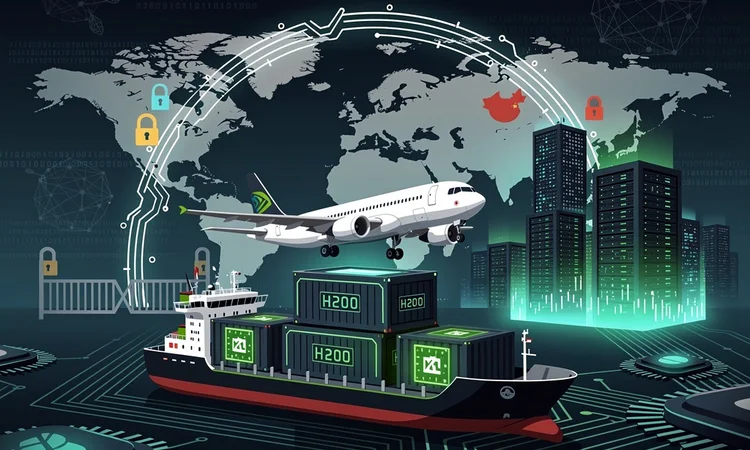
Nvidia CEO Jensen Huang heads to China to revive stalled AI chip sales amid U.S. export curbs, preparing H200 shipments. The pre-Lunar New Year visit highlights tensions between market access and national security.

Huang’s Beijing Gambit: Nvidia Pushes Past U.S. Chip Curbs

Nvidia Corp. Chief Executive Jensen Huang is set to visit China in the coming weeks, a high-stakes trip aimed at reviving sales of the company’s advanced AI processors amid tightening U.S. export restrictions. The journey, planned ahead of the Lunar New Year in mid-February, underscores Nvidia’s urgent efforts to reclaim access to its largest overseas market, where shipments of high-end chips have ground to a halt.

Two people familiar with the matter told CNBC that Huang’s visit comes as Nvidia prepares to resume deliveries of its H200 AI graphics processing units to China, pending approvals from both Washington and Beijing. The move follows months of stalled negotiations, with U.S. rules blocking sales of chips capable of powering sophisticated AI models.

Huang’s travel plans were first reported by Reuters , citing Bloomberg News sources, highlighting the CEO’s personal involvement in lobbying for market reentry.

Export Controls Squeeze Nvidia’s Revenue

U.S. restrictions, intensified under the Biden administration and potentially evolving under President Trump, have capped Nvidia’s China sales at lower-end chips like the H20 variant. In its latest quarter, China accounted for just 10% of data-center revenue, down from highs above 20%, according to Nvidia’s filings. The H200, a more powerful successor to the H100, remains off-limits without special licenses.

Industry analysts note that Chinese firms, including Alibaba Group Holding Ltd. and Tencent Holdings Ltd., have stockpiled compliant chips but crave higher-performance options for training large language models. Nvidia has developed China-specific versions, such as the H20 and upcoming B20 based on the Blackwell architecture, but volumes are limited by quotas.

Huang’s Track Record in Tense Talks

This isn’t Huang’s first foray into China under restrictions. In April 2025, he made a surprise Beijing visit shortly after new U.S. curbs, meeting DeepSeek founder Liang Wenfeng, as covered by The Guardian . That trip stirred social media buzz and signaled Nvidia’s commitment despite headwinds.

Huang has also engaged U.S. policymakers directly. In December 2025, he discussed export controls with President Trump and Republican senators on Capitol Hill, criticizing fragmented state-level AI regulations, per CNBC . “We talked in general about export controls,” Huang told reporters.

Recent web searches reveal heightened stakes: Nvidia shares rose on reports of the trip, with Yahoo Finance noting preparations for H200 shipments coincide with Beijing’s own limits on U.S. tech imports.

China’s Domestic Push Complicates Revival

Beijing’s response adds friction. State media reported in late 2025 that China would curb purchases of Nvidia’s H20 chips, favoring homegrown alternatives from Huawei Technologies Co. and Cambricon Technologies Corp. Ltd. DeepSeek’s open-source models, trained partly on smuggled or compliant Nvidia gear, have narrowed the performance gap.

Posts on X from Nvidia’s official account emphasize global AI leadership without direct China mentions, but industry chatter on the platform highlights Huang’s CES 2026 keynote unveiling the Rubin platform—potentially adaptable for China—as a bargaining chip. X sentiment reflects optimism for deal breakthroughs, though skeptics warn of Trump-era tightening.

Financial analysts at Mizuho Securities, via Intellectia , view the visit as pivotal for 2026 semiconductor outlooks, listing Nvidia among top picks despite modest growth projections.

Geopolitical Tightrope for AI Dominance

Nvidia’s China dependence once fueled its ascent to a $3 trillion market cap, but curbs have forced diversification into Europe and the Middle East. CEO Huang, in a December 2025 Los Angeles Times profile, lobbied Republicans to balance national security with industry leadership: “Export controls are hurting U.S. competitiveness.”

During a World Economic Forum session, Huang described AI as a “five-layer cake,” from energy infrastructure up, per Nvidia’s X post on January 21, 2026. China represents a massive slice, with data-center spending projected at $50 billion annually by IDC.

If successful, H200 approvals could unlock billions in backlog. Nvidia’s fiscal 2026 guidance anticipates China recovery, but executives caution on policy risks during earnings calls.

Broader Industry Ripples

Competitors like Advanced Micro Devices Inc. face similar hurdles, while Huawei’s Ascend 910C chips claim near-H100 parity in benchmarks leaked on Chinese forums. U.S. firms, including Broadcom Inc. and Marvell Technology Inc., watch closely as networking gear for AI clusters also falls under scrutiny.

Huang’s visit may include meetings with state officials, though details remain unclear amid Beijing’s curbs, as Yahoo Finance reports. Success hinges on U.S. license grants, with the Commerce Department’s Bureau of Industry and Security holding veto power.

X discussions amplify investor buzz, with Nvidia’s January 22, 2026, post teasing AI-factory talks featuring Huang and Cisco’s Chuck Robbins, hinting at full-stack strategies to mitigate single-market reliance.

Path Forward Amid Uncertainty

For Nvidia, the trip embodies a delicate dance: placating regulators while nurturing client relationships. Huang’s leather-jacketed charisma has won fans globally, but China’s AI sovereignty drive tests that appeal. Analysts at BofA, referenced in Intellectia, raised price targets post-CES on Rubin momentum, yet flag China as a wildcard.

Web-sourced updates confirm late-January timing, aligning with Lunar New Year traditions for tech execs. If Huang secures quotas, it could stabilize Nvidia’s 80% AI GPU market share; failure risks further Huawei gains.

The semiconductor sector braces for outcomes, with Nvidia’s January 23, 2026, stock up 2% intraday on visit news, per market data.

About the Author

Roman Grant
Roman Grant

Roman Grant is a journalist who focuses on AI deployment. They work through comparative reviews and hands‑on testing to make complex topics approachable. They often cover how organizations respond to change, from process redesign to technology adoption. They are known for dissecting tools and strategies that improve execution without adding complexity. They maintain a balanced tone, separating speculation from evidence. They value transparent sourcing and prefer primary data when it is available. They look for overlooked details that differentiate sustainable success from short‑term wins. They also highlight cultural factors that determine whether change sticks. They explore how policies, markets, and infrastructure intersect to create second‑order effects. Their coverage includes guidance for teams under resource or time constraints. They frequently compare approaches across industries to surface patterns that travel well. A recurring theme in their writing is how teams build repeatable systems and measure impact over time. They watch the policy landscape closely when it affects product strategy. Their work aims to be useful first, timely second.

Comments

Join the discussion and share your thoughts.

No comments yet. Be the first to comment.

Leave a Reply

Your email address will not be published.

Related Posts

US Lawmakers Strip Right-to-Repair from 2026 NDAA, Boosting Defense Contractors

US Lawmakers Strip Right-to-Repair from 2026 NDAA, Boosting Defense Contractors

U.S. lawmakers removed right-to-repair provisions from the 2026 NDAA, preventing military personnel from independently fixing equipment and preserving defense contractors' lucrative service contracts. Critics decry industry influence, citing potential cost savings and improved readiness. This setback fuels ongoing advocacy for repair reforms in military and civilian sectors.

Posted on: by Jack Chen
Amazon Prime Air Struggles: Drone Incidents, Regulations, and Rivals

Amazon Prime Air Struggles: Drone Incidents, Regulations, and Rivals

Amazon's Prime Air drone delivery program, launched in 2013, faces setbacks including a 2025 Texas incident where a drone clipped a cable, triggering FAA scrutiny, regulatory hurdles, and technical glitches. Trailing rivals like Walmart and Zipline, Amazon is pivoting strategies amid fierce competition. Recovery hinges on innovations and safer operations.

Posted on: by Grace Wright
DOJ’s Appeal in Google Antitrust Case Signals Protracted Legal Battle Over Search Monopoly Remedies

DOJ’s Appeal in Google Antitrust Case Signals Protracted Legal Battle Over Search Monopoly Remedies

The DOJ and state attorneys general have appealed Judge Mehta's Google antitrust remedies ruling, challenging the decision to reject structural breakups including Chrome divestiture. The appeal argues behavioral restrictions are insufficient to dismantle Google's search monopoly, setting up a multi-year legal battle.

Retail Ecommerce
Google Launches Doppl: AI Virtual Try-Ons Transform Online Shopping

Google Launches Doppl: AI Virtual Try-Ons Transform Online Shopping

Google has launched Doppl, an AI-powered app enabling virtual clothing try-ons with personalized, dynamic models to reduce online shopping uncertainties and returns. Amid expanding AI shopping tools like agentic checkout, it faces regulatory scrutiny over data practices, yet promises to revolutionize e-commerce personalization and consumer behavior.

Retail Ecommerce
Microsoft 365 Prices to Rise Up to 33% in 2026 Amid AI and Security Upgrades

Microsoft 365 Prices to Rise Up to 33% in 2026 Amid AI and Security Upgrades

Microsoft is raising Microsoft 365 prices by up to 33% starting July 1, 2026, for commercial, frontline, and government users, driven by AI enhancements like Copilot and improved security features. This first major hike since 2022 aims to fund innovations amid cyber threats, though it sparks mixed reactions on affordability.

Retail Ecommerce
EU Court Upholds Intel Antitrust Ruling, Slashes Fine to €237M

EU Court Upholds Intel Antitrust Ruling, Slashes Fine to €237M

Europe's General Court upheld Intel's antitrust violation for using rebates and payments to exclude rivals like AMD in the chip market, but slashed the fine from €376 million to €237 million. This ruling, part of a decades-long saga, highlights evolving EU antitrust standards amid Intel's competitive challenges.

Retail Ecommerce
MasterClass 2025 Holiday Deal: 40% Off Annual Subscriptions

MasterClass 2025 Holiday Deal: 40% Off Annual Subscriptions

MasterClass's 2025 holiday promotion offers 40% off annual subscriptions, reducing Standard to $72, Plus to $108, and Premium to $144, including gifts. This strategy enhances accessibility to celebrity-led courses amid market competition. It boosts subscriber growth and democratizes elite education during economic uncertainties.

Retail Ecommerce
NYC’s 2025 Congestion Pricing Slashes Traffic 11%, Pollution 22% in Manhattan

NYC’s 2025 Congestion Pricing Slashes Traffic 11%, Pollution 22% in Manhattan

New York City's 2025 congestion pricing in Manhattan charges drivers to enter south of 60th Street, reducing traffic by 11% and PM2.5 pollution by 22%. This has improved air quality citywide, cut noise and accidents, funded transit upgrades, and serves as a model for urban sustainability.

Retail Ecommerce
2025 RAM Prices Skyrocket Amid AI-Driven Shortages

2025 RAM Prices Skyrocket Amid AI-Driven Shortages

In 2025, RAM prices have skyrocketed due to explosive AI demand for high-bandwidth memory in data centers, causing shortages and doubling or tripling costs for consumer DDR5 and DDR4 modules. This crisis disrupts PC building, smartphones, and industries, with experts forecasting prolonged volatility through 2027-2028 as production lags behind.

Retail Ecommerce
Nvidia Pilots AI Chip Tracking Software to Curb Smuggling to China

Nvidia Pilots AI Chip Tracking Software to Curb Smuggling to China

Nvidia is piloting software that uses telemetry data to track the locations of its AI chips, like the Blackwell series, to combat smuggling into restricted markets such as China amid US export bans. This initiative addresses geopolitical tensions and black-market operations, enhancing compliance without hardware changes.

Retail Ecommerce