
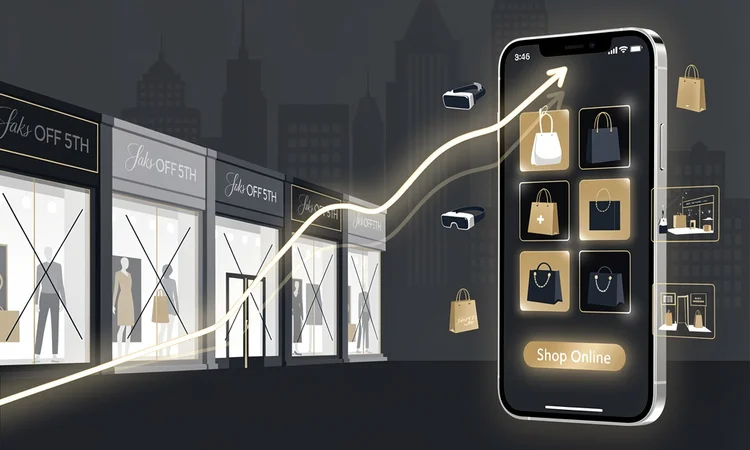
The American luxury retail sector faces its most significant restructuring in decades as Saks Fifth Avenue’s parent company announces plans to shutter approximately 150 stores across its outlet divisions, a move that reflects the seismic shifts reshaping how affluent consumers shop and what they expect from premium brands. The closures, affecting Saks OFF 5TH and Last Call stores nationwide, represent more than a simple downsizing—they signal a fundamental recalibration of the luxury retail model in an era where digital commerce and experiential shopping have redefined the rules of engagement.
According to Business Insider , the planned closures will impact roughly 150 locations across the outlet portfolio, though the company has not released a comprehensive list of specific stores slated for closure. The announcement comes as parent company Saks Global, formed through the merger of Saks Fifth Avenue and Neiman Marcus Group, seeks to streamline operations and focus resources on its full-price flagship locations and digital platforms. This strategic pivot underscores a broader industry trend where luxury retailers are reassessing the value proposition of outlet stores in an increasingly sophisticated and digitally-native consumer market.
The timing of these closures coincides with a period of intense scrutiny on the outlet retail model itself. Once viewed as a lucrative channel for moving excess inventory while maintaining brand prestige, outlet stores have faced mounting criticism for diluting luxury brands’ cachet and cannibalizing full-price sales. Industry analysts suggest that the proliferation of outlet centers over the past two decades may have reached a saturation point, particularly as younger luxury consumers demonstrate less interest in the treasure-hunt shopping experience that defined earlier generations’ relationship with discount luxury goods.
The Economics Behind the Exodus
The financial calculus driving Saks’ decision reflects a harsh reality confronting many traditional retailers: maintaining extensive physical footprints has become increasingly untenable in an era of rising real estate costs, labor expenses, and shifting consumer preferences. Outlet stores, which typically operate on thinner margins than full-price locations, face particular pressure as landlords demand higher rents even as foot traffic to suburban shopping centers continues its long-term decline. The COVID-19 pandemic accelerated these trends, forcing retailers to confront questions about store productivity and profitability that many had postponed for years.
For Saks Global, the store closures represent an opportunity to redirect capital toward more profitable ventures, particularly its e-commerce operations and flagship stores in major metropolitan markets. The company’s merger, which created a luxury retail powerhouse with combined annual revenues exceeding $10 billion, was predicated on achieving significant cost synergies and operational efficiencies. Eliminating underperforming outlet locations aligns with this strategy, allowing the company to concentrate investments in areas with higher returns and stronger growth prospects.
The outlet sector’s challenges extend beyond simple economics to encompass fundamental questions about brand positioning and customer perception. Luxury brands have grown increasingly concerned about the impact of outlet stores on their image, particularly as social media amplifies the visibility of discounted merchandise. Some premium brands have begun restricting their presence in outlet channels or creating outlet-specific product lines to protect the exclusivity of their main collections. This evolution has left outlet retailers like Saks OFF 5TH in a precarious position, caught between the need to offer compelling merchandise and the desire to maintain relationships with luxury brands wary of overexposure in discount environments.
Digital Disruption and the Changing Luxury Consumer
The rise of digital luxury retail platforms has fundamentally altered the competitive dynamics that once favored physical outlet stores. Online luxury resale marketplaces such as The RealReal, Vestiaire Collective, and Rebag have emerged as formidable competitors, offering authenticated pre-owned luxury goods at prices that often undercut traditional outlet stores. These platforms appeal to environmentally conscious consumers who view secondhand shopping as more sustainable than purchasing new merchandise, even at outlet prices. The convenience of shopping from home, combined with sophisticated authentication services and generous return policies, has made online resale an increasingly attractive alternative to the outlet store experience.
Moreover, the democratization of luxury through digital channels has changed consumer expectations about accessibility and pricing transparency. Flash sale sites and brand-direct clearance sections on e-commerce platforms provide luxury goods at discounted prices without requiring consumers to visit physical outlet locations. This shift has eroded one of the traditional outlet store’s key advantages: exclusive access to discounted luxury merchandise. As price comparison tools and deal aggregation websites make it easier than ever to find the best prices on luxury goods, the value proposition of driving to an outlet mall has diminished considerably.
The demographic profile of luxury consumers has also evolved in ways that favor digital channels over physical outlet stores. Younger affluent shoppers, particularly millennials and Generation Z consumers who now represent a growing share of luxury spending, demonstrate strong preferences for seamless omnichannel experiences and digital-first interactions with brands. These consumers are less likely to view outlet shopping as an enjoyable leisure activity and more likely to prioritize convenience, speed, and personalized service—attributes more readily delivered through sophisticated e-commerce platforms than through traditional outlet stores.
Implications for the Broader Retail Sector
Saks’ decision to close 150 outlet stores sends ripples throughout the retail industry, raising questions about the long-term viability of the outlet center format that has been a fixture of American retail for decades. Major outlet mall operators, including Simon Property Group and Tanger Factory Outlet Centers, face mounting pressure as anchor tenants reconsider their physical footprints. The loss of a significant player like Saks from outlet centers could trigger a cascading effect, making these properties less attractive to other retailers and shoppers alike. This dynamic could accelerate the transformation of some outlet centers into mixed-use developments incorporating entertainment, dining, and residential components to offset declining retail traffic.
The closures also highlight the growing divergence between luxury retail’s winners and losers in the post-pandemic era. While companies that have successfully integrated digital and physical channels are thriving, those that relied heavily on traditional outlet models are struggling to adapt. The luxury sector’s bifurcation into experience-focused flagship stores and sophisticated e-commerce operations leaves less room for mid-tier outlet locations that offer neither the prestige of full-price stores nor the convenience of digital shopping. This polarization suggests that future luxury retail success will depend on delivering either exceptional in-person experiences or seamless digital convenience—with little space for the middle ground that outlet stores have traditionally occupied.
The workforce implications of these closures cannot be overlooked. With approximately 150 stores slated for closure, thousands of retail employees face uncertain futures as Saks Global consolidates its operations. While the company may offer relocation opportunities to some employees, the reality is that many will need to seek employment elsewhere in an already challenging retail labor market. This human cost of retail transformation often receives less attention than strategic and financial considerations, yet it represents a significant impact on communities where these stores operate, particularly in smaller markets where a Saks outlet location may be a major employer.
The Future of Luxury Outlet Retail
Despite the challenges facing traditional outlet stores, the concept of discounted luxury retail is unlikely to disappear entirely. Instead, it appears poised for reinvention. Some industry observers predict that successful outlet formats will need to evolve into experiential destinations that offer more than just discounted merchandise. This might include exclusive events, personalized styling services, or integration with entertainment and dining options that make outlet shopping a destination experience rather than a purely transactional activity. Retailers that can transform their outlet stores from clearance centers into lifestyle destinations may find continued relevance, while those that maintain traditional discount-focused models will likely face ongoing pressure.
The role of outlets within luxury conglomerates’ broader strategies is also being reassessed. Rather than viewing outlets primarily as channels for moving excess inventory, forward-thinking companies are exploring how these locations might serve other purposes, such as customer acquisition, brand building in emerging markets, or testing grounds for new retail concepts. This strategic reorientation requires significant investment and creativity, but it may offer a path forward for outlet retail that goes beyond simple discounting. The question is whether companies like Saks Global view this evolution as worth the investment or whether they prefer to exit the outlet business in favor of focusing resources on more promising opportunities.
Looking ahead, the luxury retail sector’s transformation will likely accelerate as economic pressures, changing consumer behaviors, and technological innovation continue to reshape the industry. Saks’ decision to close 150 outlet stores represents not an isolated incident but rather a harbinger of broader changes to come. Other luxury retailers will be watching closely to see how this strategy affects Saks Global’s financial performance and brand positioning. If the closures successfully free up resources for more profitable initiatives without significantly damaging the company’s market position, competitors may follow suit with their own outlet rationalization efforts. Conversely, if the closures create opportunities for rival retailers to capture displaced customers and market share, it could validate the continued importance of physical outlet presence, at least in select markets.
The ultimate outcome of this retail restructuring will depend on numerous factors, including macroeconomic conditions, consumer confidence, and the luxury sector’s ability to navigate ongoing disruption. What seems certain is that the outlet retail model that flourished in the late 20th and early 21st centuries requires fundamental reinvention to remain relevant in an era defined by digital commerce, experiential retail, and increasingly sophisticated luxury consumers. Saks’ bold move to close 150 stores represents a clear-eyed assessment of these realities and a willingness to make difficult decisions in pursuit of long-term sustainability. Whether this strategy proves prescient or premature will become clear in the years ahead, but it undeniably marks a significant inflection point in American luxury retail’s ongoing evolution.


Leave a Reply
Your email address will not be published.