
OpenAI’s Ad Gambit: ChatGPT’s Pay-Per-Impression Pivot Amid Billions in Burn

Layla Reed
Layla Reed

OpenAI readies pay-per-impression ads for ChatGPT's free and Go tiers next month, reversing CEO Altman's stance amid billions in losses. Targeting U.S. users, the model subsidizes access while safeguarding responses and privacy.

OpenAI’s Ad Gambit: ChatGPT’s Pay-Per-Impression Pivot Amid Billions in Burn

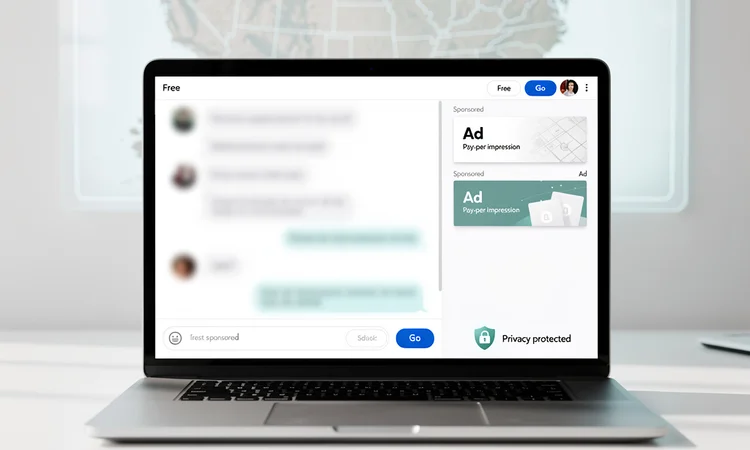
OpenAI, the AI powerhouse behind ChatGPT, is poised to introduce advertising to its flagship chatbot next month, marking a sharp reversal from CEO Sam Altman’s long-held aversion to ads. The company plans a pay-per-impression model, charging advertisers for each ad displayed to users on free and new low-cost tiers. This shift comes as OpenAI grapples with soaring infrastructure costs and mounting losses, pushing it toward monetization strategies once dismissed as undesirable.

According to a report from The Information , OpenAI staff are finalizing details for ads that could appear alongside ChatGPT responses, with tests targeting logged-in U.S. adults. The move follows announcements last week about ChatGPT Go, an $8 monthly plan offering expanded access, where ads will also run. Sam Altman posted on X that the company is ‘starting to test ads in ChatGPT free and Go tiers,’ emphasizing no influence on responses and user privacy from advertisers.

OpenAI’s Financial Pressures Mount

OpenAI’s decision reflects acute financial strain. The firm is burning through billions annually on compute resources for models like GPT-5.2, even as revenue from subscriptions grows. A Forbes analysis highlights how CEO Altman’s past anti-ads stance—calling it a ‘last resort’—has given way amid massive losses and infrastructure demands from partners like Microsoft.

Posts on X from OpenAI outline principles: ads won’t alter ChatGPT answers, conversations remain private, and premium tiers stay ad-free. The rollout begins in the U.S. with simple banner formats below responses, as shown in OpenAI’s example images shared on the platform.

Advertiser Outreach Accelerates

OpenAI has contacted dozens of advertisers, seeking commitments under $1 million each for initial tests, per Sherwood News . The pay-per-impression pricing mirrors digital ad giants like Google, but tailored to AI interactions—ads contextually relevant without compromising core functionality. Brands are inquiring about placement, targeting, and measurement, according to Ad Age .

The Computerworld report details internal preparations for a February launch, citing sources familiar with the plans. This aligns with OpenAI’s January 16 blog post on its approach to advertising , stressing transparency and global access via ChatGPT Go, now available worldwide with GPT-5.2 Instant.

ChatGPT Go Enters the Fray

Launched globally on January 16, ChatGPT Go provides 10x more messages, file uploads, and memory than the free tier for $8 monthly. OpenAI’s X post states it includes ‘unlimited use of GPT 5.2 instant,’ positioning it as an affordable bridge to premium plans. Ads here aim to subsidize access, reversing earlier ad-free promises.

Ars Technica reports in its coverage that the U.S.-focused test targets free and Go users, with age safeguards via recent age-prediction rollouts. OpenAI’s blog specifies ad formats as non-intrusive, appearing post-response.

Industry Reactions and Privacy Safeguards

Advertisers see potential in ChatGPT’s 300 million weekly users, but concerns linger over ad relevance in conversational AI. Los Angeles Times notes OpenAI’s push diversifies revenue ahead of a possible IPO, offsetting AI build costs. Privacy remains central: no training on ad interactions, no personal data sharing.

On X, Altman elaborated: ‘It is clear to us that a lot’—cut off mid-post but signaling commitment. OpenAI’s principles post lists user trust first, with tests limited to adults.

Monetization Mechanics Unpacked

Pay-per-impression means advertisers pay per 1,000 views, potentially yielding high volume from ChatGPT’s scale. The Keyword confirms targeting logged-in free-tier U.S. users. Unlike search ads, these won’t bid on queries but appear generically or contextually without bias.

IntuitionLabs’ economic analysis projects viability, citing user conversion data and AI costs. OpenAI’s ChatGPT Go intro ties ads to affordability, expanding AI reach.

Broader AI Revenue Shifts

This caps a year of pivots: from o1 launches to Pro tiers at $200 monthly. Reddit discussions on r/singularity, per a thread , buzz with 2026 rollout updates from The Information. Digital Watch Observatory observes in its update rising commercialization pressure on AI firms.

As tests proceed, OpenAI balances growth with trust, potentially reshaping AI economics.

About the Author

Layla Reed
Layla Reed

Known for clear analysis, Layla Reed follows retail operations and the people building it. They work through long‑form narratives grounded in real‑world metrics to make complex topics approachable. They believe good analysis should be specific, testable, and useful to practitioners. They avoid buzzwords, focusing instead on outcomes, incentives, and the human side of technology. They explore how policies, markets, and infrastructure intersect to create second‑order effects. They frequently compare approaches across industries to surface patterns that travel well. They are known for dissecting tools and strategies that improve execution without adding complexity. A recurring theme in their writing is how teams build repeatable systems and measure impact over time. Their reporting blends qualitative insight with data, highlighting what actually changes decision‑making. They often cover how organizations respond to change, from process redesign to technology adoption. They maintain a balanced tone, separating speculation from evidence. Outside of publishing, they track public datasets and industry benchmarks. Readers return for the clarity, the caution, and the actionable takeaways.

Comments

Join the discussion and share your thoughts.

No comments yet. Be the first to comment.

Leave a Reply

Your email address will not be published.

Related Posts

AI Search Erodes Organic Traffic by 30-40% in 2026, Publishers Adapt

AI Search Erodes Organic Traffic by 30-40% in 2026, Publishers Adapt

In 2026, AI-driven search features like Google's AI Overviews are eroding organic web traffic, with declines of 30-40% in referrals from Google and social media, severely impacting publishers and e-commerce. Causes include zero-click searches and algorithm shifts. Adaptation strategies emphasize diversification and content optimization for sustainability.

Posted on: by Aria Brooks
Meta Launches Ads on Threads Globally Next Week for Revenue Boost

Meta Launches Ads on Threads Globally Next Week for Revenue Boost

Meta Platforms is launching ads on Threads globally next week, following successful tests in select markets, to monetize its 400 million+ user base amid competition with X. This integrates Threads into Meta's advertising ecosystem, promising revenue growth while prioritizing seamless user experience and retention.

Posted on: by Claire Bell
YouTube TV Launches Custom Multiview for Personalized Viewing

YouTube TV Launches Custom Multiview for Personalized Viewing

YouTube TV is enhancing its multiview feature, enabling subscribers to customize up to four live channels from sports, news, and more, moving beyond preselected bundles. This upgrade, paired with upcoming genre-specific plans in 2026, boosts personalization and viewer engagement in a competitive streaming market.

Advertising Marketing
Vimeo’s Post-Acquisition Purge: Bending Spoons Axes Jobs in Israel and Beyond

Vimeo’s Post-Acquisition Purge: Bending Spoons Axes Jobs in Israel and Beyond

Vimeo faces global layoffs months after Bending Spoons' $1.38 billion acquisition, dismantling its Israeli development center and cutting staff worldwide. The moves follow a prior 10% reduction and signal aggressive cost-cutting by the new owner.

Advertising Marketing
YouTube CEO Unveils 2026 AI Roadmap for Creators and Ethical Tools

YouTube CEO Unveils 2026 AI Roadmap for Creators and Ethical Tools

YouTube CEO Neal Mohan outlines a 2026 AI roadmap to empower creators with tools like AI avatars for Shorts, autodubbing, and monetization analytics, while combating "AI slop" through detection and safeguards. This vision enhances user experiences, global reach, and ethical AI use, positioning YouTube as an innovative entertainment hub.

Advertising Marketing
Will.i.am’s AI Reckoning: From Music Slop to Personal Agents

Will.i.am’s AI Reckoning: From Music Slop to Personal Agents

Will.i.am warns of AI music's evolution from slop to originals, urging personal agents and likeness ownership amid fragmentation. Live performances regain value as regulations loom.

Advertising Marketing
X’s Starterpacks: Copying Bluesky to Fix Onboarding Woes

X’s Starterpacks: Copying Bluesky to Fix Onboarding Woes

X launches Starterpacks, Bluesky-inspired curated account lists to boost onboarding and retention. Curated for niches like crypto, the feature rolls out soon, drawing on proven discovery tactics amid fierce social media competition.

Advertising Marketing
Paramount’s High-Stakes Wager: Will EU Block Netflix’s Warner Bros. Grab?

Paramount’s High-Stakes Wager: Will EU Block Netflix’s Warner Bros. Grab?

Paramount gambles on EU regulators torpedoing Netflix's $83 billion Warner Bros. Discovery bid, amid simultaneous reviews and U.S. pushback. WBD favors Netflix's all-cash offer, but antitrust hurdles could hand victory to David Ellison's hostile play.

Advertising Marketing
Spotify’s AI Playlists Hand Listeners the Reins

Spotify’s AI Playlists Hand Listeners the Reins

Spotify launched AI-driven prompted playlists for U.S. and Canada premium users, enabling custom mixes via natural language prompts tied to vibes and memories. The feature empowers listeners to direct algorithms, boosting engagement amid streaming competition.

Advertising Marketing
Grammy Stars Collaborate with AI on ‘The Eleven Album

Grammy Stars Collaborate with AI on ‘The Eleven Album

Grammy-winning artists like Liza Minnelli and Art Garfunkel collaborate with ElevenLabs' AI on "The Eleven Album," blending human creativity with generated tracks. This project showcases AI's role in efficient music production across genres, while sparking debates on authorship, ethics, and industry innovation. It positions AI as a tool amplifying artistry.

Advertising Marketing