
Panama Court Ruling Ignites U.S.-China Clash Over Canal Ports

Ivy Bailey
Ivy Bailey

Panama's Supreme Court voided CK Hutchison's canal port concessions, aiding Trump's push against Chinese influence and jeopardizing a $23 billion global sale. Shares tumbled amid vows from Beijing to protect its firms.

Panama Court Ruling Ignites U.S.-China Clash Over Canal Ports

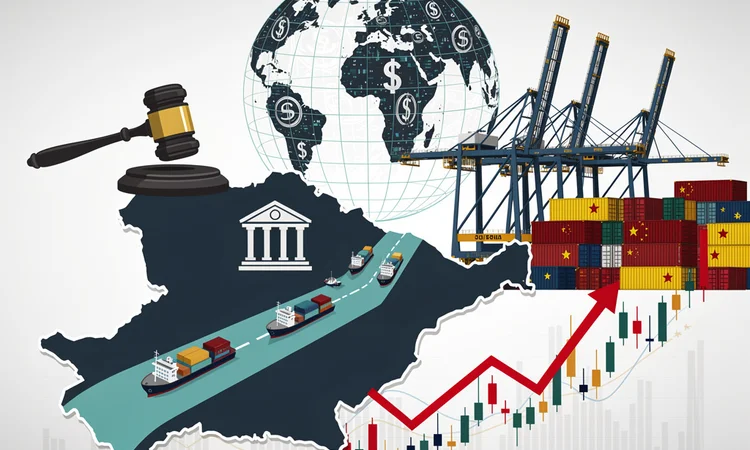
Panama’s Supreme Court delivered a seismic blow to Hong Kong-based CK Hutchison Holdings on January 29, 2026, declaring unconstitutional the long-standing concession for its subsidiary, Panama Ports Company (PPC), to operate the strategic ports of Balboa and Cristóbal at the Panama Canal’s entrances. The waterway, handling about 5% of global maritime trade, has become a flashpoint in the escalating U.S.-China rivalry, with the decision widely viewed as a win for President Donald Trump’s campaign to curb Beijing’s regional influence.

The court’s terse statement, issued after “extensive deliberation,” invalidated the contracts PPC has held since the 1990s, citing violations of Panama’s constitution. No immediate details emerged on next steps, leaving the ports’ future ownership in limbo and threatening CK Hutchison’s proposed $23 billion sale of 43 global ports—including the Panamanian assets—to a consortium led by BlackRock and Mediterranean Shipping Company (MSC). Shares of the Hong Kong-listed firm plunged 4.6% to 5.5% on January 30, dragging the Hang Seng Index down over 2%.

The Spark of Geopolitical Tension

This ruling arrives nearly a year after Trump, in early 2025, threatened to reclaim the canal—built by the U.S. and transferred to Panama in 1999—claiming it was “being operated by China.” The president reiterated his stance this month, dubbing his approach the “Donroe Doctrine,” a supersession of the Monroe Doctrine. “Under our new national security strategy, American dominance in the Western Hemisphere will never be questioned again,” Trump declared, following a U.S. operation on January 3, 2026, that captured Venezuelan President Nicolás Maduro.

Panama’s government, under President José Raúl Mulino, initiated the legal challenge amid U.S. pressure. An audit by the comptroller uncovered alleged irregularities in PPC’s 2021 25-year extension, prompting the attorney general to deem the contracts unconstitutional. Despite Panama’s insistence that China exerts no control over canal operations, U.S. officials like Sen. Marco Rubio framed port operations as a national security imperative.

CK Hutchison’s Precarious Position

PPC swiftly condemned the verdict, stating it “lacks legal basis and jeopardizes not only PPC and its contract, but also the well-being and stability of thousands of Panamanian families who depend directly and indirectly on port activity but also the rule of law and legal certainty in the country.” The firm, controlled by Hong Kong billionaire Li Ka-shing, reserves all legal rights, including potential arbitration. Analysts anticipate new tenders or public-private partnerships, as Mulino suggested in July 2025.

China’s Foreign Ministry fired back on January 30, with a spokesperson asserting the decision was “contrary to the laws governing Panama’s approval of the relevant franchises” and vowing Beijing would “take all necessary measures to safeguard the legitimate rights and interests of Chinese companies.” Hong Kong’s government echoed this, “firmly rejecting” the ruling.

Trump’s Broader Hemisphere Push

The Trump administration prioritized ousting Chinese sway from the canal, which processes 40% of U.S. container traffic. Trump had praised the BlackRock-MSC deal for shifting assets to majority U.S. ownership, but Beijing opposed it, pushing state-owned COSCO for a controlling stake—a move sources say stalled amid regulatory hurdles.

BlackRock and MSC declined immediate comment, underscoring the deal’s fragility. Political analyst Edwin Cabrera noted that post-notification, Panama’s executive branch and Maritime Authority will decide operations, predicting no disruptions. Up to 14,000 ships transit the 51-mile canal annually, making continuity vital for global shipping.

China’s Swift Rebuff and Market Ripples

CK Hutchison, spanning infrastructure, telecoms, and logistics, faces heightened scrutiny as Hong Kong firms navigate U.S.-China frictions. The port sale aimed to mitigate political risks, but the ruling clouds prospects. Reuters reported the decision could force Panama to restructure port contracting frameworks, potentially requiring fresh bids.

Panama rejected Trump’s seizure threats, with Mulino affirming the canal “is and will remain” under national control. Yet, the verdict aligns with Washington’s goals, boosting defense stocks and signaling a hard-power era in the hemisphere, as noted in broader coverage of U.S. actions like the Venezuela raid.

Uncertain Path Forward for Global Trade Routes

The Balboa (Pacific) and Cristóbal (Atlantic) terminals, distinct from canal authority operations, underscore ports’ role as geopolitical prizes. Al Jazeera highlighted the lawsuit’s roots in 2025 tax payment allegations against PPC. As U.S. and China—the canal’s top users—vie for leverage, this episode escalates tensions over chokepoints vital to trade.

Industry insiders watch for arbitration fallout and bidder interest. The New York Times emphasized Trump’s repeated calls for U.S. retaking control, while ABC News tied the ruling to Panama’s comptroller audit. With no public evidence of direct Chinese canal dominance, the dispute amplifies fears of economic weaponization in strategic infrastructure.

About the Author

Ivy Bailey
Ivy Bailey

Ivy Bailey specializes in product management and reports on the systems behind modern business. They work through trend monitoring with careful context and caveats to make complex topics approachable. They look for overlooked details that differentiate sustainable success from short‑term wins. Their perspective is shaped by interviews across engineering, operations, and leadership roles. Readers appreciate their ability to connect strategic goals with everyday workflows. They also highlight cultural factors that determine whether change sticks. They frequently translate research into action for engineering managers, prioritizing clarity over buzzwords. They are known for dissecting tools and strategies that improve execution without adding complexity. A recurring theme in their writing is how teams build repeatable systems and measure impact over time. They frequently compare approaches across industries to surface patterns that travel well. They avoid buzzwords, focusing instead on outcomes, incentives, and the human side of technology. They tend to favor small experiments over sweeping predictions. Readers return for the clarity, the caution, and the actionable takeaways.

Comments

Join the discussion and share your thoughts.

No comments yet. Be the first to comment.

Leave a Reply

Your email address will not be published.

Related Posts

US Lawmakers Strip Right-to-Repair from 2026 NDAA, Boosting Defense Contractors

US Lawmakers Strip Right-to-Repair from 2026 NDAA, Boosting Defense Contractors

U.S. lawmakers removed right-to-repair provisions from the 2026 NDAA, preventing military personnel from independently fixing equipment and preserving defense contractors' lucrative service contracts. Critics decry industry influence, citing potential cost savings and improved readiness. This setback fuels ongoing advocacy for repair reforms in military and civilian sectors.

Posted on: by Jack Chen
Amazon Prime Air Struggles: Drone Incidents, Regulations, and Rivals

Amazon Prime Air Struggles: Drone Incidents, Regulations, and Rivals

Amazon's Prime Air drone delivery program, launched in 2013, faces setbacks including a 2025 Texas incident where a drone clipped a cable, triggering FAA scrutiny, regulatory hurdles, and technical glitches. Trailing rivals like Walmart and Zipline, Amazon is pivoting strategies amid fierce competition. Recovery hinges on innovations and safer operations.

Posted on: by Grace Wright
DOJ’s Appeal in Google Antitrust Case Signals Protracted Legal Battle Over Search Monopoly Remedies

DOJ’s Appeal in Google Antitrust Case Signals Protracted Legal Battle Over Search Monopoly Remedies

The DOJ and state attorneys general have appealed Judge Mehta's Google antitrust remedies ruling, challenging the decision to reject structural breakups including Chrome divestiture. The appeal argues behavioral restrictions are insufficient to dismantle Google's search monopoly, setting up a multi-year legal battle.

Retail Ecommerce
Google Launches Doppl: AI Virtual Try-Ons Transform Online Shopping

Google Launches Doppl: AI Virtual Try-Ons Transform Online Shopping

Google has launched Doppl, an AI-powered app enabling virtual clothing try-ons with personalized, dynamic models to reduce online shopping uncertainties and returns. Amid expanding AI shopping tools like agentic checkout, it faces regulatory scrutiny over data practices, yet promises to revolutionize e-commerce personalization and consumer behavior.

Retail Ecommerce
Microsoft 365 Prices to Rise Up to 33% in 2026 Amid AI and Security Upgrades

Microsoft 365 Prices to Rise Up to 33% in 2026 Amid AI and Security Upgrades

Microsoft is raising Microsoft 365 prices by up to 33% starting July 1, 2026, for commercial, frontline, and government users, driven by AI enhancements like Copilot and improved security features. This first major hike since 2022 aims to fund innovations amid cyber threats, though it sparks mixed reactions on affordability.

Retail Ecommerce
EU Court Upholds Intel Antitrust Ruling, Slashes Fine to €237M

EU Court Upholds Intel Antitrust Ruling, Slashes Fine to €237M

Europe's General Court upheld Intel's antitrust violation for using rebates and payments to exclude rivals like AMD in the chip market, but slashed the fine from €376 million to €237 million. This ruling, part of a decades-long saga, highlights evolving EU antitrust standards amid Intel's competitive challenges.

Retail Ecommerce
MasterClass 2025 Holiday Deal: 40% Off Annual Subscriptions

MasterClass 2025 Holiday Deal: 40% Off Annual Subscriptions

MasterClass's 2025 holiday promotion offers 40% off annual subscriptions, reducing Standard to $72, Plus to $108, and Premium to $144, including gifts. This strategy enhances accessibility to celebrity-led courses amid market competition. It boosts subscriber growth and democratizes elite education during economic uncertainties.

Retail Ecommerce
NYC’s 2025 Congestion Pricing Slashes Traffic 11%, Pollution 22% in Manhattan

NYC’s 2025 Congestion Pricing Slashes Traffic 11%, Pollution 22% in Manhattan

New York City's 2025 congestion pricing in Manhattan charges drivers to enter south of 60th Street, reducing traffic by 11% and PM2.5 pollution by 22%. This has improved air quality citywide, cut noise and accidents, funded transit upgrades, and serves as a model for urban sustainability.

Retail Ecommerce
2025 RAM Prices Skyrocket Amid AI-Driven Shortages

2025 RAM Prices Skyrocket Amid AI-Driven Shortages

In 2025, RAM prices have skyrocketed due to explosive AI demand for high-bandwidth memory in data centers, causing shortages and doubling or tripling costs for consumer DDR5 and DDR4 modules. This crisis disrupts PC building, smartphones, and industries, with experts forecasting prolonged volatility through 2027-2028 as production lags behind.

Retail Ecommerce
Nvidia Pilots AI Chip Tracking Software to Curb Smuggling to China

Nvidia Pilots AI Chip Tracking Software to Curb Smuggling to China

Nvidia is piloting software that uses telemetry data to track the locations of its AI chips, like the Blackwell series, to combat smuggling into restricted markets such as China amid US export bans. This initiative addresses geopolitical tensions and black-market operations, enhancing compliance without hardware changes.

Retail Ecommerce