Samsung Knox: Zero Trust’s Mobile Fortress in Enterprise Cybersecurity Wars

Amelia Keller
Amelia Keller

Samsung Knox leads enterprise mobile security with zero trust principles, hardware attestation, and partnerships like Microsoft Intune and Cisco, countering endpoint breaches amid AI threats.

Samsung Knox: Zero Trust’s Mobile Fortress in Enterprise Cybersecurity Wars

In the high-stakes arena of enterprise cybersecurity, where endpoints serve as the primary breach vectors, Samsung Electronics is positioning its Knox platform as the vanguard of zero trust architecture. Dr. Jerry Park, executive vice president and head of the global mobile B2B team at Samsung’s mobile experience business, laid out this strategy in a January 27, 2026, editorial, declaring, “A systematic, comprehensive approach is critical to ensuring seamless mobile capabilities and uncompromising cyber-protection.” With 70% of successful breaches originating from endpoints according to IDC data cited in Samsung News , Samsung’s shift from network-centric defenses to endpoint fortification arrives at a pivotal moment.

Mobile devices, now the dominant gateway to corporate networks amid remote and hybrid work, expose vast attack surfaces through suspicious URLs, insider threats, malware, and emerging AI risks like prompt injection. Park emphasized, “Endpoints have the largest attack surface and are the most challenging IT assets to protect against cyberattacks.” Samsung Knox, a defense-grade multilayer platform embedded in Galaxy hardware from the chipset level, enforces “never trust, always verify” by continuously assessing user identity, device posture, behavioral signals, and context such as location and time before granting access.

Endpoint Vulnerabilities Demand Radical Shifts

Traditional perimeter defenses falter as cloud apps, BYOD policies, and hyperconnectivity blur boundaries. Samsung’s zero trust model restricts privileges dynamically, isolating suspicious activity and integrating with enterprise tools for real-time enforcement. As detailed in Samsung’s Knox documentation updated March 7, 2025, the platform leverages ARM TrustZone for hardware-rooted trust, secure boot, and Knox Vault—a physically isolated chip certified to CC EAL 4/5+ standards that safeguards credentials and biometrics even if the main OS is compromised ( Samsung Knox Whitepaper ).

Knox’s architecture spans hardware, kernel, OS, and app layers, with features like DEFEX for exploit detection and Message Guard against zero-click attacks via SMS. The Knox Zero Trust Framework, introduced with Android 14, logs over 100 security signals in a privacy-filtered database, enabling SOC integration for threat hunting without exposing user data ( Samsung Knox Docs ).

Hardware-Backed Attestation Redefines Device Trust

Central to Samsung’s strategy is hardware-backed on-device attestation, first integrated with Microsoft Intune in 2023—the industry’s inaugural solution working on both corporate and personal devices. Now default in Intune’s Android App Protection Policies, it verifies device integrity before access, as noted in a Samsung Knox blog: “Samsung Knox On-Device Attestation is now enabled by default in Intune—making it easier to enforce Zero Trust” ( Samsung Knox Blog ). Further, Knox Asset Intelligence connects directly to Microsoft Sentinel SIEM, streaming near-real-time telemetry for fleet-wide monitoring.

In 2024, Samsung partnered with Cisco Secure Access, a Security Service Edge solution, to verify identity, threats, and context for high-speed Zero Trust Network Access (ZTNA) without VPNs—even on unmanaged BYOD devices running Android 15+. Park stated, “It is only through open collaboration with partners that we can bring the most advanced solutions to our customers” ( Samsung News US ).

Strategic Partnerships Accelerate Adoption

Knox Suite bundles these capabilities with management tools like Knox E-FOTA for staged firmware updates and Knox Asset Manager for telemetry. For foldables and rugged devices, Knox Vault and Enhanced Encrypted Protection (KEEP) in One UI 8 isolate AI features on-device, addressing 2025 threats like those in Verizon’s Data Breach Report where 60% involve human elements ( The Hacker News ). CIO.com highlights how Knox refines telemetry into SOC-digestible events: “The Samsung Knox Zero Trust framework… enabling better threat detection for admins” ( CIO ).

By Android 15, Knox enables prioritized SOC alerts and ZTNA augment requests. Certifications from the U.S., U.K., Australia, Canada, Netherlands, and Germany’s BSI underscore its rigor. Park affirmed, “These collaborative solutions are a testament to our commitment to not only adhere to industry standards but to also drive their continued development.”

Knox Innovations Counter Evolving Threats

Amid AI-driven attacks, Knox’s 2026 updates integrate on-device AI defenses for zero-day detection via system call analysis ( AirDroid ). Knox Matrix extends protection across Galaxy ecosystems, with dashboards in One UI 7 for transparent oversight. Samsung Business Insights notes, “Galaxy devices also benefit from… Knox Enhanced Encrypted Protection (KEEP), which debuted with One UI 8” ( Samsung Insights ).

For enterprises, Knox Platform for Enterprise offers granular controls, from auto-blocker against sideloading to warranty bit for tamper detection. As Park concluded, “As threats become increasingly complex with AI and hyperconnectivity taking centre stage, security and privacy are more important now than ever before.” Samsung’s endpoint-centric zero trust not only mitigates risks but empowers productivity, setting a benchmark for mobile security in regulated sectors like finance and defense.


Future-Proofing Enterprise Mobility

About the Author

Amelia Keller
Amelia Keller

Amelia Keller writes about supply chain resilience, translating complex ideas into practical insight. Their approach combines scenario planning and on‑the‑ground reporting. Their coverage includes guidance for teams under resource or time constraints. They avoid buzzwords, focusing instead on outcomes, incentives, and the human side of technology. Their reporting blends qualitative insight with data, highlighting what actually changes decision‑making. They are known for dissecting tools and strategies that improve execution without adding complexity. They maintain a balanced tone, separating speculation from evidence. They also highlight cultural factors that determine whether change sticks. They write about both the promise and the cost of transformation, including risks that are easy to overlook. They explore how policies, markets, and infrastructure intersect to create second‑order effects. They frequently translate research into action for security leaders, prioritizing clarity over buzzwords. Readers appreciate their ability to connect strategic goals with everyday workflows. They focus on what changes decisions, not just what makes headlines.

Comments

Join the discussion and share your thoughts.

No comments yet. Be the first to comment.

Leave a Reply

Your email address will not be published.

Related Posts

Formae’s Multi-Cloud Leap: Platform Engineering Labs Arms Builders Against IaC Gridlock

Formae’s Multi-Cloud Leap: Platform Engineering Labs Arms Builders Against IaC Gridlock

Platform Engineering Labs' formae surges to multi-cloud with GCP, Azure, OCI, and OVH beta support plus a Plugin SDK, empowering infrastructure builders to extend IaC without vendor delays. This upgrade redefines extensibility in a fragmented cloud era.

Posted on: by Ivy Bailey
Sky47’s Sovereign Surge: Pakistan’s Massive AI Cloud Bet

Sky47’s Sovereign Surge: Pakistan’s Massive AI Cloud Bet

Sky47's January 2026 launch marks Pakistan's boldest sovereign cloud move, with 3,000 racks and 50MW for AI workloads. Backed by Mari Energies and Fauji Foundation, it eyes hyperscalers amid rising data sovereignty demands.

Posted on: by Zoe Patel
Cloud’s Complexity Trap: How Tool Overload and AI-Wielding Attackers Are Fracturing Security Defenses

Cloud’s Complexity Trap: How Tool Overload and AI-Wielding Attackers Are Fracturing Security Defenses

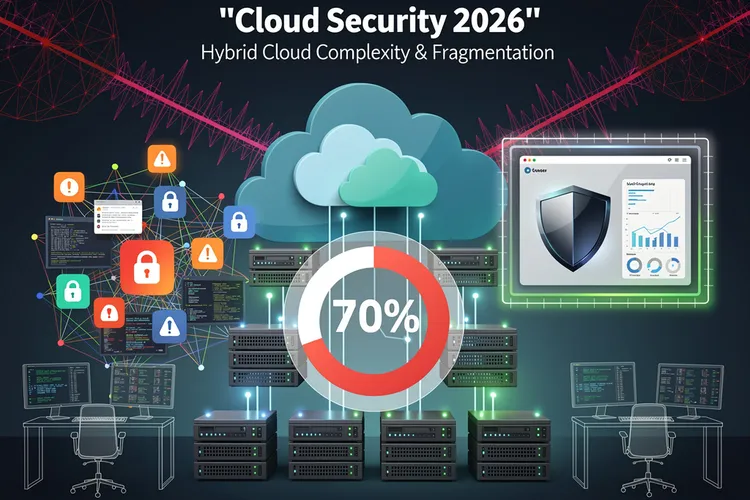
Fortinet's 2026 Cloud Security Report exposes a widening complexity gap in hybrid clouds, where tool sprawl, AI-driven attacks, and skills shortages overwhelm teams despite rising budgets. Nearly 70% cite fragmentation as the top barrier, urging platform shifts and MSSP aid.

IT Management
NordVPN’s Sixth Consecutive Audit Validates Zero-Logs Promise as Privacy Scrutiny Intensifies

NordVPN’s Sixth Consecutive Audit Validates Zero-Logs Promise as Privacy Scrutiny Intensifies

NordVPN completes its sixth consecutive independent audit by Deloitte, confirming its zero-logs policy amid intensifying privacy scrutiny. The verification highlights industry trends toward verifiable transparency as regulatory pressure mounts and consumer skepticism grows regarding VPN privacy claims.

IT Management
Upwind’s Runtime Revolution: $250M Fuels $1.5B Cloud Security Unicorn

Upwind’s Runtime Revolution: $250M Fuels $1.5B Cloud Security Unicorn

Upwind's $250 million Series B catapults it to $1.5 billion valuation, powering runtime-first cloud security amid 900% revenue surge. Backed by Bessemer and all-stars, the ex-Spot.io team targets AI-era threats for giants like Siemens and Roku.

IT Management
Mesh Security’s $12M Bet: Unifying Cyber Chaos into Enterprise Powerhouse

Mesh Security’s $12M Bet: Unifying Cyber Chaos into Enterprise Powerhouse

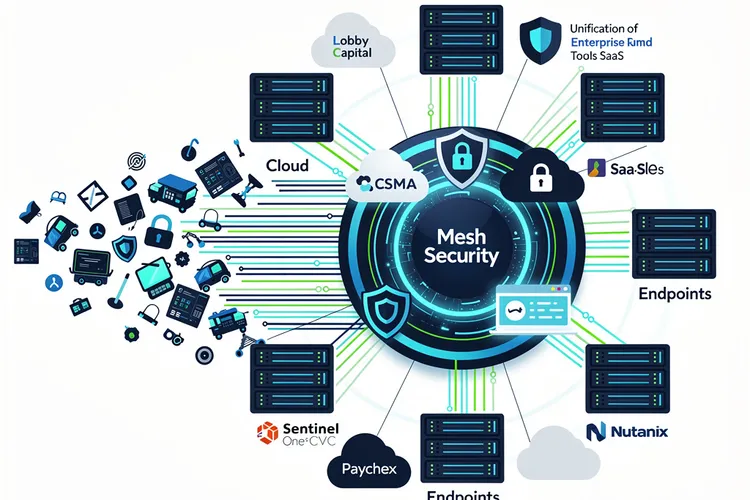
Mesh Security's $12M Series A funds its CSMA platform to unify enterprise cyber tools across clouds and SaaS, eliminating silos agentlessly. Backed by Lobby Capital and SentinelOne's CVC, it gains traction with Paychex and Nutanix amid tool sprawl crisis.

IT Management
Abstract Security and Netskope Forge Real-Time Threat Pipeline, Slicing Through Data Delays

Abstract Security and Netskope Forge Real-Time Threat Pipeline, Slicing Through Data Delays

Abstract Security and Netskope's new partnership embeds real-time detection into security data streams, eliminating indexing delays and slashing costs for joint customers. By processing Netskope telemetry in motion, it boosts threat response while preserving data control.

IT Management
Nationwide’s AI Fortress: AWS Bolsters Fraud Defenses for 17 Million Clients

Nationwide’s AI Fortress: AWS Bolsters Fraud Defenses for 17 Million Clients

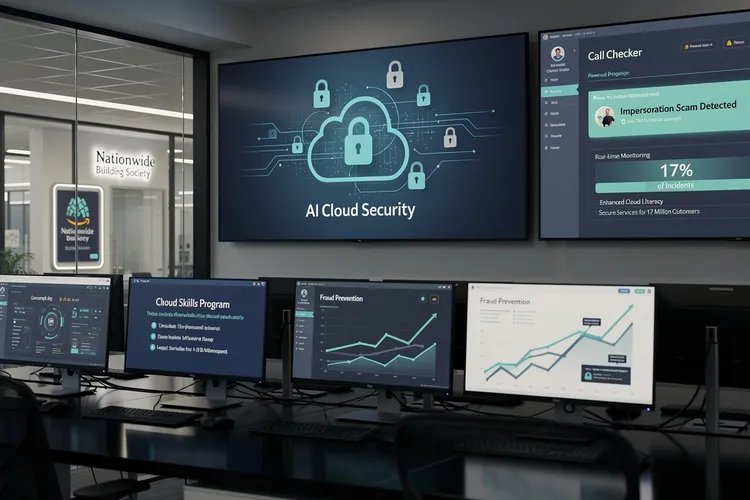
Nationwide Building Society expands its AWS partnership to deploy AI-driven cloud security and fraud prevention, powering tools like Call Checker against impersonation scams affecting 17% of incidents. Workforce training boosts cloud literacy for enhanced service to 17 million customers.

IT Management
CISOs’ Hidden Roadblocks: Why 58% See Their Firms Unready for Cyber Onslaught

CISOs’ Hidden Roadblocks: Why 58% See Their Firms Unready for Cyber Onslaught

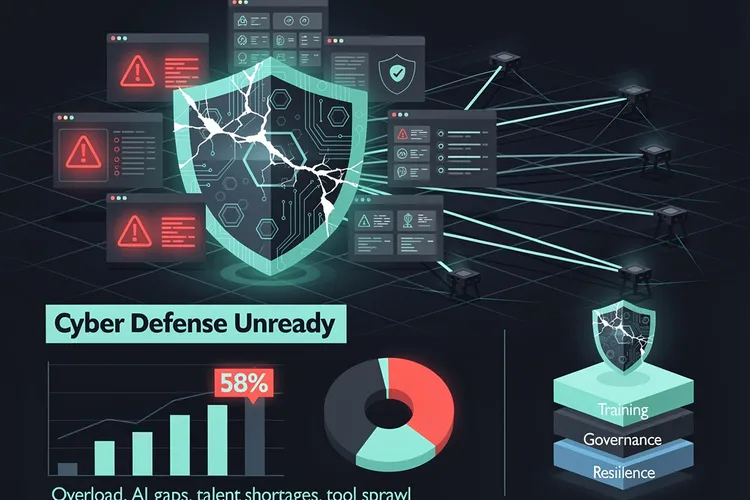
Despite rising budgets, 58% of CISOs deem their organizations unready for cyberattacks, hindered by team overload, AI gaps, talent shortages, and tool sprawl. Experts urge prioritization training, governance, and resilience focus.

IT Management
Security Chiefs Gear Up for AI Agents and Poly-Threats in 2026

Security Chiefs Gear Up for AI Agents and Poly-Threats in 2026

Security leaders brace for 2026's AI agents, poly-threats, and quantum risks, shifting from reactive defenses to governance, identity controls, and resilient architectures amid record attacks and regulatory mandates.

IT Management