
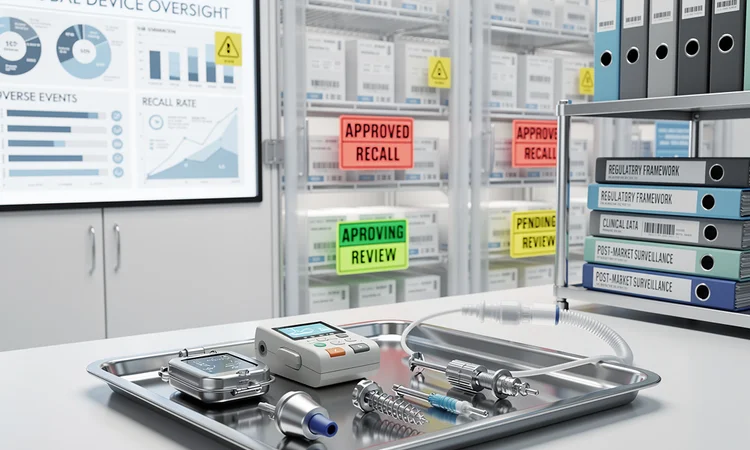
The global medical device industry, valued at over $500 billion annually, faces mounting scrutiny as regulatory frameworks struggle to keep pace with technological innovation and patient safety concerns. Recent investigations have revealed systemic weaknesses in how devices are approved, monitored, and recalled—raising fundamental questions about the balance between rapid innovation and rigorous safety protocols.
According to The BMJ , the current regulatory environment for medical devices differs substantially from pharmaceutical oversight, with many high-risk devices reaching patients through expedited pathways that require less clinical evidence than traditional drug approvals. This disparity has created what some healthcare policy experts describe as a two-tiered system of patient protection, where surgical implants and life-sustaining devices may receive less pre-market scrutiny than medications treating similar conditions.
The consequences of this regulatory gap extend beyond individual patient harm. Healthcare systems worldwide are grappling with the financial and operational burden of device-related complications, which can require additional surgeries, extended hospital stays, and long-term monitoring. The ripple effects touch every stakeholder in the healthcare ecosystem, from surgeons who must inform patients about device risks to hospital administrators managing liability concerns and insurance companies calculating coverage policies.
The Regulatory Approval Paradox
Medical device approval pathways have evolved to encourage innovation, but this evolution has created unexpected vulnerabilities. In the United States, the FDA’s 510(k) clearance process allows manufacturers to bring devices to market by demonstrating “substantial equivalence” to existing products, rather than conducting extensive clinical trials. This pathway, originally designed as a streamlined route for low-risk devices, now covers approximately 90% of all medical device approvals, including some high-risk implantable products.
The European Union’s regulatory framework, historically considered more permissive than its American counterpart, underwent significant reform with the implementation of the Medical Device Regulation (MDR) in 2021. However, the transition has proven challenging, with many manufacturers struggling to meet new documentation requirements and notified bodies—the third-party organizations responsible for certifying device compliance—facing capacity constraints. These implementation difficulties have created market disruptions, with some established devices temporarily unavailable as manufacturers navigate the new regulatory requirements.
Post-Market Surveillance Failures
Even well-designed pre-market approval processes cannot identify all safety issues, making post-market surveillance critical for patient protection. Yet healthcare systems worldwide have struggled to establish effective monitoring mechanisms. Adverse event reporting remains largely voluntary in many jurisdictions, creating significant underreporting that obscures the true scope of device-related complications.
The fragmented nature of healthcare delivery compounds these surveillance challenges. Unlike pharmaceutical adverse events, which often present with recognizable symptom patterns, device complications may manifest differently across patient populations and clinical settings. A hip implant failure, for instance, might be attributed to patient factors, surgical technique, or post-operative care rather than device design—making it difficult to identify systematic problems until they affect large numbers of patients.
Registry systems, which track device performance across multiple institutions, have emerged as a potential solution. The Australian Orthopaedic Association National Joint Replacement Registry, established in 1999, has demonstrated how systematic data collection can identify problematic devices years before traditional surveillance methods. The registry’s success has inspired similar initiatives globally, though implementation remains inconsistent across medical specialties and geographic regions.
The Innovation-Safety Tension
Medical device manufacturers argue that overly restrictive regulation could stifle innovation and delay patient access to beneficial technologies. This concern carries particular weight in fields like cardiovascular medicine and neurosurgery, where device innovations have dramatically improved outcomes for previously untreatable conditions. The first-generation transcatheter aortic valve replacement (TAVR) devices, for example, offered life-saving treatment options for elderly patients too frail for open-heart surgery, despite limited long-term safety data at the time of approval.
However, critics contend that the innovation imperative has been used to justify inadequate safety testing. High-profile device failures—including metal-on-metal hip implants, transvaginal mesh products, and certain cardiac defibrillators—have affected hundreds of thousands of patients worldwide, generating billions in legal settlements and eroding public trust in regulatory oversight. These cases share common patterns: expedited approval pathways, limited pre-market clinical data, delayed recognition of safety signals, and inadequate regulatory response once problems emerged.
Financial Incentives and Market Dynamics
The medical device industry’s financial structure creates incentives that may not always align with optimal patient safety. Unlike pharmaceuticals, where blockbuster drugs can generate revenue for decades, medical devices often face shorter market lifecycles due to iterative improvements and competitive pressures. This dynamic encourages rapid product development and market entry, potentially at the expense of thorough safety testing.
Hospital purchasing decisions further complicate the safety equation. Healthcare institutions often select devices based on cost considerations and existing supplier relationships rather than comparative safety data—which may not be publicly available or easily interpretable. Surgeon preferences, influenced by training, experience, and sometimes financial relationships with manufacturers, also play a significant role in device selection, creating additional barriers to evidence-based decision-making.
The lack of transparent pricing in medical device markets exacerbates these challenges. Unlike pharmaceutical products, which face increasing price transparency requirements, device costs often remain opaque, making it difficult for healthcare systems to assess value propositions that balance safety, effectiveness, and economic considerations.
Patient Advocacy and Information Asymmetry
Patients receiving medical devices typically face significant information asymmetries. Informed consent processes often focus on procedural risks rather than device-specific safety data, and patients may lack access to comparative information about alternative devices or treatment approaches. This information gap becomes particularly problematic when devices are implanted during emergency procedures or when patients have limited capacity to participate in shared decision-making.
Patient advocacy organizations have emerged as important voices in device safety debates, often highlighting safety concerns before regulatory agencies take action. These groups have successfully lobbied for improved adverse event reporting systems, device tracking requirements, and patient access to safety information. However, their influence varies significantly across medical specialties and geographic regions, with well-organized advocacy efforts in areas like orthopedics and women’s health contrasting with limited patient engagement in other device categories.
The Path Forward: Reimagining Device Oversight
Addressing the medical device safety challenge requires systemic reforms that span the entire product lifecycle. Regulatory agencies worldwide are exploring risk-based approaches that calibrate oversight intensity to device risk profiles, while maintaining pathways for truly innovative technologies. The FDA’s recent efforts to develop a “predetermined change control plan” framework, which allows manufacturers to implement certain device modifications without new regulatory submissions, exemplifies attempts to balance agility with safety.
Enhanced post-market surveillance represents another critical reform area. Mandatory device registries, electronic health record integration for adverse event detection, and unique device identification systems could dramatically improve safety signal detection. However, implementing these systems requires significant investment, interoperability standards, and coordination across fragmented healthcare delivery systems—challenges that have proven difficult to overcome despite widespread recognition of their importance.
International harmonization efforts, including the International Medical Device Regulators Forum, aim to align safety standards and reduce duplicative regulatory requirements. While harmonization could improve efficiency and facilitate global access to beneficial devices, critics worry that international standards may gravitate toward the lowest common denominator, potentially weakening patient protections in countries with historically rigorous oversight.
Rebuilding Trust Through Transparency
Restoring public confidence in medical device safety ultimately depends on transparency. This includes public access to clinical trial data, adverse event reports, and regulatory decision-making processes. Some jurisdictions have made progress in this direction, with the European Union’s EUDAMED database promising comprehensive device information access, though implementation has faced repeated delays.
Manufacturer transparency regarding financial relationships with healthcare providers and institutions also remains contentious. While sunshine laws in various countries now require disclosure of certain payments to physicians, enforcement varies and loopholes persist. More fundamentally, transparency alone may be insufficient without mechanisms to help patients and clinicians interpret complex safety data and make informed decisions.
The medical device safety challenge reflects broader tensions in modern healthcare: the desire for innovative treatments, the imperative to protect patients from harm, the need for economically sustainable healthcare systems, and the complexity of regulating rapidly evolving technologies. As the industry continues to grow and devices become increasingly sophisticated—incorporating artificial intelligence, wireless connectivity, and personalized features—these tensions will only intensify. The question facing policymakers, healthcare providers, and patients is not whether to regulate medical devices, but how to create oversight systems that promote both innovation and safety in an increasingly complex technological environment.


Leave a Reply
Your email address will not be published.