
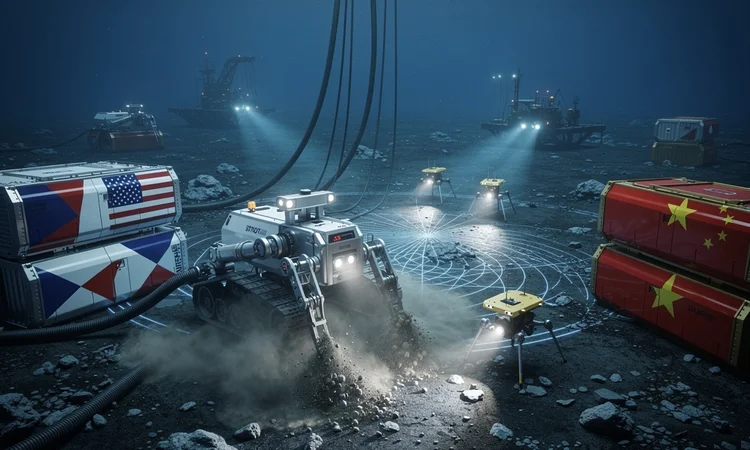
The push for deep-sea mining has taken a dramatic turn under the Trump administration, with recent moves to expedite permits for extracting critical minerals from the ocean floor. This initiative aims to secure supplies of nickel, cobalt, manganese, and other elements vital for electric vehicle batteries and renewable energy technologies. As global demand surges, the U.S. is positioning itself to challenge international regulations and tap into vast underwater reserves, potentially reshaping supply chains for strategic materials.
Environmental groups and international bodies have raised alarms, warning of irreversible damage to fragile marine ecosystems. Yet, industry proponents argue that accelerated access could reduce dependence on foreign suppliers, particularly China, which dominates the processing of these minerals. The administration’s strategy involves streamlining bureaucratic hurdles, allowing American companies to move faster in international waters governed by the United Nations Convention on the Law of the Sea, though the U.S. has not ratified it.
Recent reports highlight how this fast-tracking aligns with broader economic goals, including bolstering domestic manufacturing and energy independence. Companies like The Metals Company have been vocal advocates, emphasizing the potential for sustainable harvesting of polymetallic nodules scattered across the abyssal plains. These nodules, formed over millions of years, contain high concentrations of battery-grade metals, offering an alternative to land-based mining with its own environmental tolls.
Accelerating Permits Amid International Pushback
The Trump administration’s latest executive actions, as detailed in a Reuters report , involve pressing forward with efforts to encourage U.S. exploration by speeding up permitting processes for critical minerals in international waters. This move, announced on January 21, 2026, is expected to face significant environmental and legal challenges, but it underscores a commitment to rapid resource acquisition.
Parallel to this, the National Oceanic and Atmospheric Administration (NOAA) has finalized rules that consolidate applications into a single, shorter review period, effectively halving the timeline for approvals. According to MINING.COM , these changes take effect immediately, paving the way for companies to begin operations without waiting for protracted international negotiations.
Social media sentiment on X reflects a mix of enthusiasm and concern. Posts from industry watchers highlight potential stock boosts for firms involved in deep-sea tech, while environmental advocates decry the risks to ocean biodiversity. One prominent thread discusses how this could ignite a “scramble for deep-sea resources” before global standards are established, echoing warnings from The Globe and Mail .
Geopolitical Stakes in Underwater Resources
The race for seabed minerals is intensifying geopolitical rivalries, with the U.S. aiming to counter China’s lead in critical mineral supply chains. A Canary Media article notes that at U.N. talks, allies criticized the U.S. for pushing unilateral mining, even aligning temporarily with economic competitors to oppose the move. This friction highlights the tension between national interests and collective global governance.
Trump’s executive order from April 2025, as covered by CSIS , extended exploration rights to the outer continental shelf and beyond, with implications for maritime security. The order directs multiple federal agencies to coordinate, emphasizing the strategic importance of these minerals for defense and clean energy transitions.
Industry insiders point to the economic incentives: deep-sea nodules could supply enough metals to power millions of electric vehicles, reducing reliance on terrestrial mines in politically unstable regions. However, critics argue that the environmental costs—such as sediment plumes disrupting deep-ocean life—outweigh the benefits, a view amplified in posts on X where users share visuals of potential ecological devastation.
Technological Innovations Driving the Dive
Advancements in subsea robotics and extraction technologies are making deep-sea mining more feasible. Companies are developing autonomous underwater vehicles capable of collecting nodules with minimal disturbance, though questions remain about long-term impacts. A Mother Jones piece from 2025 details how Trump’s fast-tracking opens doors for firms frustrated by delays in international permissions, potentially leading to unregulated scraping of the ocean floor.
The administration’s path, outlined in E&E News by POLITICO , accelerates production in U.S. waters despite concerns, focusing on critical minerals essential for batteries. This includes streamlining environmental reviews, which some experts fear could compromise thorough assessments of biodiversity hotspots.
On X, traders and analysts are buzzing about beneficiaries like Oceaneering International, with posts noting stock surges tied to these policy shifts. The discourse often ties back to broader energy strategies, including Trump’s push for rapid approvals in oil, gas, and nuclear sectors, as seen in viral threads praising the “energy explosion.”
Environmental and Legal Hurdles Ahead
Opposition to deep-sea mining is mounting, with over 20 countries calling for a moratorium due to insufficient scientific understanding of deep-ocean ecosystems. The International Seabed Authority (ISA), under U.N. auspices, is still negotiating mining codes, but U.S. actions could preempt these, leading to a patchwork of regulations. The Verge reports that Trump is effectively steamrolling these global calls, prioritizing American interests in battery minerals.
Legal challenges are inevitable, with environmental NGOs preparing lawsuits arguing violations of international law. The U.S.’s non-ratification of the Law of the Sea treaty complicates matters, yet the administration asserts jurisdiction over sponsored entities in international waters.
X users are sharing opinions from experts, with some posts warning of “global power struggles over ocean resources,” drawing from op-eds like one in Eco-Business . These discussions underscore how climate change and rivalry are turning oceans into geopolitical frontiers.
Economic Implications for Battery Supply Chains
The fast-tracking could transform the battery mineral market, potentially lowering costs for EV manufacturers and boosting U.S. competitiveness. Analysts estimate that deep-sea sources might supply up to 20% of global cobalt needs, a mineral currently dominated by the Democratic Republic of Congo’s troubled mines. This shift aligns with Trump’s “America First” agenda, as evidenced by executive orders boosting domestic mining, per Reuters coverage from 2025.
However, supply chain experts caution about volatility: rapid extraction without standards could lead to market gluts or international trade disputes. Companies must navigate complex sponsorship requirements through nations that are ISA members, adding layers of diplomacy.
Sentiment on X leans optimistic among investors, with posts linking this to a “lithium and critical mineral mining renaissance” under Trump, especially with figures like Elon Musk influencing policy. Threads often reference the EV battery jobs boom in Republican states, tying deep-sea efforts to broader industrial revival.
Strategic Alliances and Global Reactions
Allies like Canada and European nations have expressed dismay at the U.S. unilateralism, fearing it undermines collective efforts to protect the high seas. At recent U.N. negotiations in Jamaica, delegations blasted the approach, sometimes siding with China to advocate for stricter controls, as detailed in Canary Media.
Domestically, the policy garners support from mining lobbies and defense sectors, viewing deep-sea minerals as crucial for national security. The Department of Defense’s involvement, as per CSIS analysis, highlights risks of supply disruptions in a multipolar world.
X conversations reveal a divide: proponents celebrate the bypassing of “UN red tape,” while detractors share articles on oxygen-producing nodules vital for marine life, warning of destruction “in minutes” after millions of years of formation.
Future Prospects in Deep-Water Ventures
Looking ahead, the administration’s moves could spur innovation in sustainable mining practices, such as real-time monitoring of environmental impacts. NOAA’s accelerated timelines, announced via their official release , aim to balance speed with oversight, though skeptics doubt the efficacy.
International responses may include boycotts or alternative pacts excluding U.S. firms, complicating global trade. Yet, for American companies, this represents a golden opportunity to lead in a nascent industry.
As debates rage on X and in policy circles, the trajectory suggests a heated contest over the ocean’s depths, with Trump’s fast-tracking setting the stage for either breakthrough or backlash in the quest for battery minerals. The coming months will reveal whether this bold strategy secures America’s edge or ignites wider conflicts over shared global commons.


Leave a Reply
Your email address will not be published.