
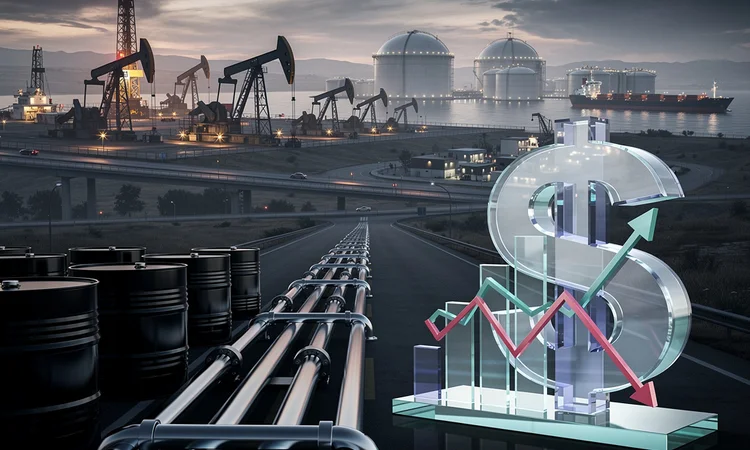
Trump’s Drill-Baby-Drill Vision Clashes with Oil’s Profit Squeeze
In the early days of Donald Trump’s second term, the administration has rolled out a series of aggressive measures aimed at bolstering the U.S. oil sector. From expediting drilling permits to slashing environmental regulations, the president’s “pro-petroleum” agenda promised a renaissance for domestic energy production. Yet, as 2025 unfolds, industry executives are voicing skepticism, pointing to market dynamics that undermine the profitability of ramped-up drilling. Despite the policy shifts, oil prices hover around levels that make new investments unappealing, leaving many companies on the sidelines.
The financial hurdles are stark. Global oil demand is projected to grow at its slowest pace in five years, hampered by economic slowdowns and trade tensions exacerbated by Trump’s tariffs. According to a report from the International Energy Agency, as shared in posts on X, U.S. production increases are tapering off amid retaliatory measures from trading partners. This environment contrasts sharply with the administration’s optimism, where officials tout deregulation as a pathway to energy dominance.
Industry leaders, speaking anonymously in surveys like one from the Dallas Federal Reserve, have criticized these policies for ignoring fundamental economics. One executive noted that “drill baby drill” rhetoric fails to account for current break-even prices, which for many shale operations exceed $50 per barrel. With Brent crude dipping toward $60, as forecasted by Citi in X discussions, the math simply doesn’t add up for aggressive expansion.
Market Forces Trump Policy Promises
Even as the White House pushes for more leasing on federal lands, oil firms are prioritizing capital discipline over volume growth. Major players like ExxonMobil and Chevron have signaled restraint, focusing on high-return projects rather than blanket increases in output. This shift reflects lessons from past boom-and-bust cycles, where overproduction led to price crashes and widespread bankruptcies.
Recent data underscores the disconnect. U.S. oil output has hit records above 13 million barrels per day, yet profitability remains elusive due to a global surplus. Ars Technica reports that the financial picture around drilling is moving against the administration’s hopes, with industry objections to reversals of long-standing policies. Market forces, including ample supply from non-OPEC sources, are dampening enthusiasm for new ventures.
Furthermore, Trump’s international maneuvers add layers of complexity. His proposed blockade on Venezuelan oil tankers, as detailed in a Guardian article, aims to curb imports but risks escalating global tensions. While this has temporarily lifted prices by easing surplus concerns, per Reuters , it hasn’t translated to sustained profits for U.S. producers.
Geopolitical Gambits and Domestic Doubts
The administration’s outreach to oil companies, encouraging a return to Venezuelan operations post-potential regime change, has met with reluctance. Politico reveals that despite White House efforts, industry players are wary of political instability and uncertain returns. Stephen Miller’s assertion that Venezuelan oil “belongs” to the U.S., covered in Al Jazeera , has stirred nationalist backlash but done little to entice investments.
Domestically, the push for deregulation faces pushback. Environmental rollbacks, while speeding permits, haven’t offset low prices driven by oversupply. As The Conversation explains, leaders object to these changes, viewing them as short-sighted amid shifting energy trends toward renewables. X posts from energy analysts like Eric Nuttall highlight factual gaps in policy rhetoric, noting U.S. import dependence despite claims of self-sufficiency.
Tariffs on Canadian and Mexican imports, set at 10-25%, are particularly counterproductive. These measures inflate refining costs, as lamented in X threads, potentially leading to higher gasoline prices for consumers—a irony given Trump’s campaign promises of affordability. The Wall Street Journal, in related coverage, suggests that such policies could strain relations with Saudi Arabia, which resists contributing to a price-depressing glut.
Investor Caution in a Volatile Arena
Shareholders are demanding returns over growth, pressuring companies to avoid risky expansions. This investor sentiment, evident in declining rig counts despite policy incentives, signals a broader industry pivot. InvestMacro quotes Rice University’s Skip York, who notes that high-profile objections from organizations underscore the mismatch between administration goals and market realities.
The evolving energy systems serve as a reminder of presidential limits, as Cipher News observes. Even with fossil fuels experiencing a temporary uptick, long-term profitability hinges on demand recovery, not just regulatory relief. X users point to 2024 trends accelerating into 2025, with output records failing to deliver margins due to OPEC+ ramp-ups and seasonal demand dips.
Smaller operators, hit hardest by price volatility, face bankruptcy risks reminiscent of Trump’s first term. Back then, as E&E News recalls in their analysis , the industry endured massive layoffs despite regulatory cuts. Today’s scenario echoes that, with crude at $50 rendering many operations unviable, per X commentary from users tracking refinery shutdowns.
Strategic Shifts Amid Economic Pressures
Looking ahead, companies are diversifying into lower-carbon alternatives, hedging against a potential demand peak. This strategic realignment, driven by global transitions, diminishes the appeal of Trump’s fossil-fuel focus. Fast Company emphasizes that investments require a clear profit path, which current conditions lack.
Trade wars compound the issue. Retaliatory tariffs from partners could curb U.S. exports, squeezing margins further. As seen in X posts analyzing Citi’s bearish outlook, Brent crude might average $60 in 2025, a 20% drop that spells trouble for shale-heavy firms. The administration’s Ukraine brokering, mentioned in platform discussions, aims to stabilize supply but introduces new uncertainties.
Venezuela remains a wildcard. Trump’s claims of “stolen” oil fields, as reported by The New York Times , ignite debates but fail to mobilize industry action. Without stable governance, re-entry seems improbable, leaving U.S. firms to grapple with domestic overproduction.
Balancing Rhetoric with Real-World Economics
Despite the gloom, some segments benefit. Refiners enjoy lower input costs from abundant supply, though end-user prices fluctuate. X sentiments vary, with pro-Trump voices celebrating market flooding as “winning,” while critics highlight counterproductive elements like tariffs.
Policy reversals, such as reducing Biden-era backlogs, have cleared some hurdles, per StartupNews . Yet, this hasn’t spurred the anticipated boom. Industry execs, in Fed surveys shared on X, anonymously blast the approach for harming long-term viability.
Ultimately, the oil sector’s response underscores a core tension: political ambition versus economic pragmatism. As Trump pushes for dominance, companies weigh risks, opting for caution in an era of abundant supply and tepid demand growth.
Emerging Trends and Future Trajectories
Renewable integrations are gaining traction, with oil giants investing in carbon capture to future-proof operations. This diversification mitigates reliance on volatile crude markets, challenging the “pro-petroleum” narrative.
Global alliances, strained by U.S. policies, could reshape supply chains. Saudi hesitance, as noted in X analyses, might lead to production cuts, offering temporary price relief but not structural change.
For insiders, the lesson is clear: profitability demands alignment with market signals, not just regulatory tailwinds. As 2025 progresses, the industry’s measured stance may force policy recalibrations, blending ambition with fiscal reality.
Navigating Uncertainty in Energy Markets
Innovation in extraction technologies could lower break-evens, potentially reviving interest in marginal fields. However, without demand surges, such advancements offer limited upside.
Consumer impacts loom large. While pump prices dip amid surpluses, tariff-induced costs might offset gains, per ongoing X debates.
In this dynamic setting, Trump’s vision faces its sternest test, with industry profitability hanging in the balance amid global and domestic pressures.


Leave a Reply
Your email address will not be published.