
Airtable’s Superagent: Multi-Agent AI Reshapes No-Code Empire

Layla Reed
Layla Reed

Airtable launches Superagent, its first standalone AI product via DeepSky acquisition, enabling multi-agent coordination for complex research and interactive deliverables. CEO Howie Liu bets big despite valuation reset, positioning the no-code giant as an AI-native powerhouse serving Fortune 100 firms.

Airtable’s Superagent: Multi-Agent AI Reshapes No-Code Empire

Airtable, the no-code platform powering workflows for over 500,000 organizations including 80% of the Fortune 100, has unveiled Superagent, its first standalone product in 13 years. Launched at superagent.com , the tool marks a bold pivot toward multi-agent AI coordination, built directly on the company’s acquisition of DeepSky last fall. Founder and CEO Howie Liu positions it as a shift from single-threaded AI chats to parallel, collaborative intelligence that executes complex tasks autonomously.

Superagent deploys a central coordinating agent to break down user prompts into parallel subtasks handled by specialized agents. For instance, evaluating Google as a three-year investment triggers agents for financial analysis, competitive positioning, management review, and news scanning. Outputs consolidate into interactive visualizations: filterable matrices, expandable detail cards, and positioning maps, ready for boardroom use. “Multi-agent coordination is the defining architecture of today. We’re moving AI from single-threaded chat to parallel, collaborative intelligence,” Liu wrote in the Built In coverage of the launch.

From DeepSky Roots to Standalone Powerhouse

The product stems from Airtable’s October 2025 acquisition of DeepSky, formerly Gradient, an AI agent startup that raised $40 million. DeepSky specialized in autonomous research for investment reports, market assessments, and strategic insights, popular among Stanford MBAs and investors. Its founding team—Chris Chang, Forrest Moret, and Mark Huang—joined Airtable with 12 staffers, now helming Superagent semi-independently, as detailed in Upstarts Media . Chang will report directly to Liu, preserving DeepSky’s self-service model while integrating with Airtable bases.

This deal, Airtable’s largest to date with terms undisclosed, accelerates the company’s AI-native transformation. DeepSky’s superagent complemented Airtable’s Omni app builder: DeepSky for research and strategy, Omni for execution on structured data. “DeepSky brings the brains and legs: multi-step research, quantitative analysis, retrieval, planning, and tool use across the web and internal systems,” Chang explained in his Substack post .

Valuation Reset Fuels Aggressive AI Push

Airtable’s move comes amid a valuation drop from $11.7 billion in 2021 to about $4 billion on secondary markets. Yet with $700 million cash from $1.4 billion raised and positive cash flow, Liu views it as an advantage. “The valuation collapse affected investor returns and employee stock options but didn’t undermine the business itself,” he told Yahoo Tech . Lower valuations aid recruiting with richer equity upside, enabling “wartime” focus on adaptation over defense.

Employing over 700, Airtable serves mission-critical operations without new funding needs. Liu frames Superagent as potential to eclipse the core platform long-term, though Airtable remains larger near-term. The launch coincides with CTO David Azose’s hiring from OpenAI, where he led ChatGPT business products, bolstering engineering for agentic frameworks.

Technical Edge in Agent Orchestration

Unlike sequential LLM chats, Superagent’s coordinator plans, deploys specialists, synthesizes, and delivers polished artifacts—reports, slides, or sites. It plans work across pipelines, generates insights flowing into structured data, and automates intelligence at scale. Future integrations allow invocation from Airtable bases for dynamic research, per the official Airtable announcement .

Airtable’s prior AI builds—like agentic frameworks for Omni and Field Agents—handled dynamic decisions, internet fetches, and base analysis. Superagent extends this to enterprise-grade multi-agent systems, addressing limitations of early features. “Agents don’t just help you work. They do the work,” Liu emphasized.

Enterprise Use Cases and Integration Path

Targeted at complex queries like competitor analysis, market opportunities, or strategic decisions, Superagent turns prompts into exhaustive, fact-checked deliverables. Users in finance, strategy, and operations gain tools for investment evaluations or positioning maps without manual synthesis. Early adopters leverage it for boardroom-ready outputs, with Airtable planning deeper data source expansions.

Bi-directional synergy shines: Superagent pulls from Airtable for structured inputs, while outputs feed back into apps for tracking. This loop shifts from manual entry to autonomous updates, unlocking market intelligence systems. As TipRanks notes, it diversifies revenue while future-proofing against AI commoditization.

Competitive Positioning Amid AI Frenzy

In a crowded field, Superagent differentiates via Airtable’s no-code moat—democratizing app-building now extends to agent orchestration. Rivals like major productivity suites push agents, but Airtable’s 500,000-org base and cash reserves enable scaled experimentation. Liu bets on coordination over single-model smarts, potentially resonating in enterprise where visibility and execution matter.

Challenges persist: proving “true autonomous agents” over LLM workflows, amid intense competition. Yet with DeepSky’s track record in quantitative reports and Airtable’s governance, Superagent targets buyers needing reliable, structured intelligence. Live now, it signals Airtable’s multi-product era, blending databases with AI autonomy.
About the Author

Layla Reed
Layla Reed

Known for clear analysis, Layla Reed follows retail operations and the people building it. They work through long‑form narratives grounded in real‑world metrics to make complex topics approachable. They believe good analysis should be specific, testable, and useful to practitioners. They avoid buzzwords, focusing instead on outcomes, incentives, and the human side of technology. They explore how policies, markets, and infrastructure intersect to create second‑order effects. They frequently compare approaches across industries to surface patterns that travel well. They are known for dissecting tools and strategies that improve execution without adding complexity. A recurring theme in their writing is how teams build repeatable systems and measure impact over time. Their reporting blends qualitative insight with data, highlighting what actually changes decision‑making. They often cover how organizations respond to change, from process redesign to technology adoption. They maintain a balanced tone, separating speculation from evidence. Outside of publishing, they track public datasets and industry benchmarks. Readers return for the clarity, the caution, and the actionable takeaways.

Comments

Join the discussion and share your thoughts.

No comments yet. Be the first to comment.

Leave a Reply

Your email address will not be published.

Related Posts

Formae’s Multi-Cloud Leap: Platform Engineering Labs Arms Builders Against IaC Gridlock

Formae’s Multi-Cloud Leap: Platform Engineering Labs Arms Builders Against IaC Gridlock

Platform Engineering Labs' formae surges to multi-cloud with GCP, Azure, OCI, and OVH beta support plus a Plugin SDK, empowering infrastructure builders to extend IaC without vendor delays. This upgrade redefines extensibility in a fragmented cloud era.

Posted on: by Ivy Bailey
Sky47’s Sovereign Surge: Pakistan’s Massive AI Cloud Bet

Sky47’s Sovereign Surge: Pakistan’s Massive AI Cloud Bet

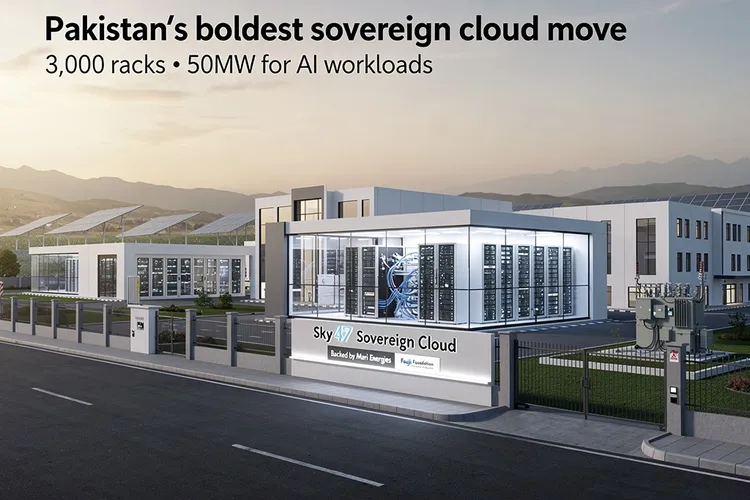
Sky47's January 2026 launch marks Pakistan's boldest sovereign cloud move, with 3,000 racks and 50MW for AI workloads. Backed by Mari Energies and Fauji Foundation, it eyes hyperscalers amid rising data sovereignty demands.

Posted on: by Zoe Patel
Cloud’s Complexity Trap: How Tool Overload and AI-Wielding Attackers Are Fracturing Security Defenses

Cloud’s Complexity Trap: How Tool Overload and AI-Wielding Attackers Are Fracturing Security Defenses

Fortinet's 2026 Cloud Security Report exposes a widening complexity gap in hybrid clouds, where tool sprawl, AI-driven attacks, and skills shortages overwhelm teams despite rising budgets. Nearly 70% cite fragmentation as the top barrier, urging platform shifts and MSSP aid.

IT Management
NordVPN’s Sixth Consecutive Audit Validates Zero-Logs Promise as Privacy Scrutiny Intensifies

NordVPN’s Sixth Consecutive Audit Validates Zero-Logs Promise as Privacy Scrutiny Intensifies

NordVPN completes its sixth consecutive independent audit by Deloitte, confirming its zero-logs policy amid intensifying privacy scrutiny. The verification highlights industry trends toward verifiable transparency as regulatory pressure mounts and consumer skepticism grows regarding VPN privacy claims.

IT Management
Upwind’s Runtime Revolution: $250M Fuels $1.5B Cloud Security Unicorn

Upwind’s Runtime Revolution: $250M Fuels $1.5B Cloud Security Unicorn

Upwind's $250 million Series B catapults it to $1.5 billion valuation, powering runtime-first cloud security amid 900% revenue surge. Backed by Bessemer and all-stars, the ex-Spot.io team targets AI-era threats for giants like Siemens and Roku.

IT Management
Mesh Security’s $12M Bet: Unifying Cyber Chaos into Enterprise Powerhouse

Mesh Security’s $12M Bet: Unifying Cyber Chaos into Enterprise Powerhouse

Mesh Security's $12M Series A funds its CSMA platform to unify enterprise cyber tools across clouds and SaaS, eliminating silos agentlessly. Backed by Lobby Capital and SentinelOne's CVC, it gains traction with Paychex and Nutanix amid tool sprawl crisis.

IT Management
Abstract Security and Netskope Forge Real-Time Threat Pipeline, Slicing Through Data Delays

Abstract Security and Netskope Forge Real-Time Threat Pipeline, Slicing Through Data Delays

Abstract Security and Netskope's new partnership embeds real-time detection into security data streams, eliminating indexing delays and slashing costs for joint customers. By processing Netskope telemetry in motion, it boosts threat response while preserving data control.

IT Management
Nationwide’s AI Fortress: AWS Bolsters Fraud Defenses for 17 Million Clients

Nationwide’s AI Fortress: AWS Bolsters Fraud Defenses for 17 Million Clients

Nationwide Building Society expands its AWS partnership to deploy AI-driven cloud security and fraud prevention, powering tools like Call Checker against impersonation scams affecting 17% of incidents. Workforce training boosts cloud literacy for enhanced service to 17 million customers.

IT Management
CISOs’ Hidden Roadblocks: Why 58% See Their Firms Unready for Cyber Onslaught

CISOs’ Hidden Roadblocks: Why 58% See Their Firms Unready for Cyber Onslaught

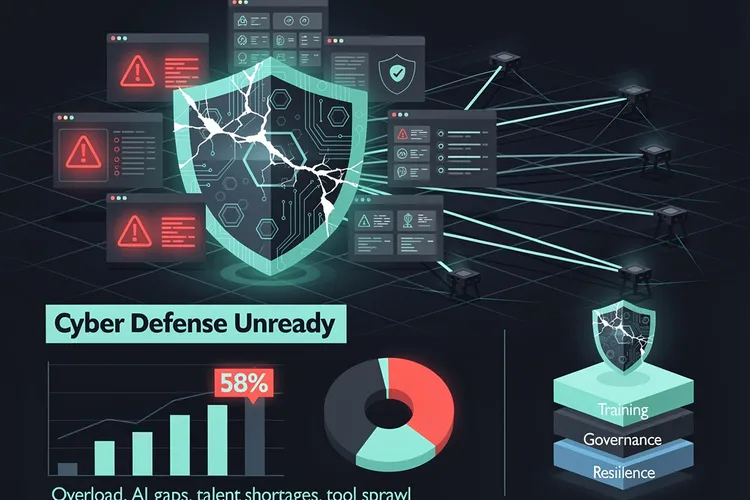
Despite rising budgets, 58% of CISOs deem their organizations unready for cyberattacks, hindered by team overload, AI gaps, talent shortages, and tool sprawl. Experts urge prioritization training, governance, and resilience focus.

IT Management
Security Chiefs Gear Up for AI Agents and Poly-Threats in 2026

Security Chiefs Gear Up for AI Agents and Poly-Threats in 2026

Security leaders brace for 2026's AI agents, poly-threats, and quantum risks, shifting from reactive defenses to governance, identity controls, and resilient architectures amid record attacks and regulatory mandates.

IT Management