
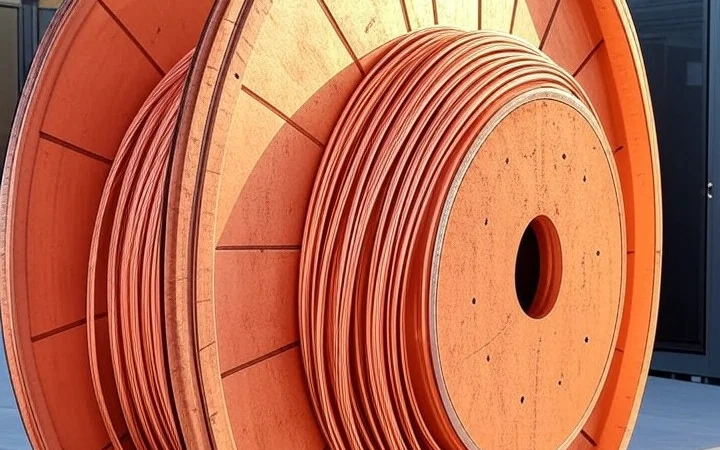
The global market for copper, often dubbed the metal with a Ph.D. in economics for its ability to signal broader economic health, is experiencing an unprecedented rally. Prices have soared to record highs, driven largely by the insatiable appetite of artificial intelligence infrastructure. As data centers multiply to support AI’s computational demands, copper’s role as a critical conductor has thrust it into the spotlight. Recent analyses suggest this trend is not a fleeting spike but a structural shift that could define the metal’s trajectory through 2026 and beyond.
Industry experts point to a confluence of factors propelling copper prices upward. Tight supply chains, exacerbated by mining disruptions and geopolitical tensions, collide with burgeoning demand from tech giants racing to build AI-powered facilities. For instance, a single hyperscale data center can consume up to 50,000 tons of copper, according to estimates from the Copper Development Association. This demand surge comes at a time when global production struggles to keep pace, creating a perfect storm for price volatility.
Yet, the story isn’t solely one of unbridled optimism. Forecasts indicate that while prices may dip slightly in the near term, the long-term outlook remains bullish. Analysts from major financial institutions warn of impending deficits that could widen without significant investments in new mining capacity and recycling efforts. This dynamic sets the stage for what could be one of the most transformative periods in the copper industry.
The AI Boom’s Voracious Appetite
Artificial intelligence is reshaping entire sectors, and its infrastructure needs are placing enormous pressure on copper supplies. Data centers, the backbone of AI operations, require vast amounts of the metal for wiring, cooling systems, and power distribution. A report from S&P Global highlights how the AI sector alone could drive a 50% increase in global copper demand by 2040, potentially reaching 42 million metric tons annually from current levels around 28 million.
This projection isn’t mere speculation; it’s grounded in the rapid expansion plans of tech behemoths like Google, Microsoft, and Amazon. These companies are investing billions in new facilities, each demanding thousands of tons of copper. For context, conventional data centers use between 5,000 and 15,000 tons, but AI-optimized hyperscalers can require triple that amount, as noted in insights from USFunds . By 2030, AI data centers might collectively consume over half a million tons of copper yearly, amplifying the strain on global reserves.
Beyond AI, electrification trends in electric vehicles and renewable energy further compound demand. Electric vehicles use about four times more copper than traditional cars, and the push for green energy infrastructure adds another layer. However, it’s the AI sector’s exponential growth that analysts identify as the game-changer, with demand forecasts outstripping supply projections for years to come.
Supply Constraints Tighten the Noose
On the supply side, the picture is increasingly dire. Major producers face challenges from aging mines, regulatory hurdles, and unexpected outages. In Chile, the world’s largest copper-producing nation, output has hit multi-year lows due to operational issues and water shortages. A post on X from Hedgeye underscores this, noting that Morgan Stanley anticipates the most severe copper deficit in 22 years for 2026, estimating a shortfall of 590,000 tons.
Geopolitical factors add another wrinkle. Trade tensions and tariffs, particularly those affecting Chinese exports, have disrupted global flows. Reuters reported in December 2025 that copper was approaching $12,000 per metric ton amid tight supplies outside the U.S., as detailed in their article on how tight supply and AI demand propelled prices . This tightness is not abating; instead, it’s expected to persist as new mine developments lag behind demand growth.
Recycling offers some relief, but it’s insufficient to bridge the gap. S&P Global’s study warns of an annual supply shortfall exceeding 10 million metric tons by 2040 without aggressive expansions in mining and secondary sources. This deficit could manifest as early as 2026, with BloombergNEF predicting a swing into a 1 million metric ton deficit driven by data centers and EVs, as shared in a post by Tracy Shuchart on X.
Price Projections and Market Sentiment
Current prices hover near all-time highs, with recent trades pushing toward $5.92 per pound, as enthusiasts on X platforms like Nfoz have celebrated. Business Insider’s recent coverage in Copper Prices Are at Records, but AI Demand Could Keep Pushing Them Higher echoes this sentiment, citing S&P Global’s analysis that the AI boom will sustain elevated demand amid constrained supplies.
Looking ahead to 2026, forecasts vary but lean toward continued strength. Goldman Sachs Research, in their outlook published on copper prices forecast to decline somewhat from record highs , expects a modest pullback to $10,000-$11,000 per ton, attributing it to short-term market adjustments. However, they anticipate a rebound in the longer term fueled by energy infrastructure needs.
Sentiment on social platforms reflects this optimism mixed with caution. Posts from users like Robert Friedland highlight the copper requirements for data centers, estimating 40-60 kilotons per gigawatt of capacity. UBS has even hiked its targets to $13,000 per ton by December 2026, driven by electrification and AI catalysts, as reported in a MiningVisuals update on X.
Strategic Implications for Industries
The ripple effects of this copper crunch extend far beyond mining companies. For the tech industry, rising costs could inflate the expenses of building and maintaining AI infrastructure. A post by Tracy Shuchart on X warns that the copper boom is turning into a cost problem for the AI sector, potentially acting as an inflationary input that erodes profit margins.
Defense spending also plays a role, with increased allocations for military technologies adding to demand. S&P Global’s press release on January 8, 2026, accessible via ‘Substantial Shortfall’ in Copper Supply , emphasizes how AI and defense sectors will exacerbate the shortfall, positioning copper as a strategic commodity.
Investors are taking note, with copper-related stocks and funds seeing inflows. Katusa Research’s analysis on X points to the big copper problem starting in 2026, linking data center energy consumption to heightened metal needs. This positions copper as a key beneficiary of the global shift toward digital and sustainable technologies.
Pathways to Mitigation and Innovation
Addressing the impending deficit will require multifaceted strategies. Accelerating new mine developments is crucial, though environmental concerns and lengthy permitting processes pose barriers. Regions like Africa and South America hold untapped potential, but political instability often deters investment.
Innovation in recycling and alternative materials could alleviate some pressure. Advances in scrap recovery and urban mining are gaining traction, with S&P Global advocating for more than doubling current recycling rates to meet future needs. Additionally, research into copper-efficient technologies, such as advanced conductors or substitutes in certain applications, might ease demand.
Policy interventions could also shape the market. Governments may incentivize domestic production or strategic stockpiling, recognizing copper’s role in national security and economic resilience. As Carsten Stork noted on X, copper is becoming the backbone of the AI age, with demand projections underscoring the need for proactive measures.
Global Economic Ramifications
The broader economic implications are profound. A sustained copper shortage could hinder the green transition, delaying EV adoption and renewable energy deployments. This, in turn, might slow progress on climate goals, as copper is integral to solar panels, wind turbines, and grid upgrades.
For emerging markets reliant on copper exports, price booms offer windfalls but also volatility risks. Countries like Peru and Zambia could see economic boosts, yet supply disruptions might lead to revenue shortfalls. Conversely, import-dependent nations face higher costs for infrastructure projects.
Looking further out, the interplay between AI advancement and resource constraints could redefine global trade dynamics. As Saleh Almenawer highlighted on X, the copper crunch is a systemic threat, with S&P Global’s study forecasting a 10 million ton annual gap by 2040. This underscores the urgency for collaborative international efforts to secure supplies.
Investor Perspectives and Future Outlook
From an investment standpoint, the copper narrative presents both opportunities and risks. Hedge funds and commodity traders are positioning for deficits, with some predicting prices could eclipse current records. CNBC’s report on copper on pace for best year since 2009 suggests the rally could extend into 2026, fueled by AI spending and supply fears.
However, not all views are unanimously bullish. Potential economic slowdowns or breakthroughs in alternative technologies could temper demand. Fastmarkets’ insights on AI and data center growth driving U.S. copper demand emphasize the need for balanced assessments.
Industry insiders must navigate this environment with foresight, balancing short-term gains against long-term sustainability. As MargoMDesigns noted on X, AI data centers’ copper consumption is skyrocketing, demanding strategic planning to avoid bottlenecks. The copper market’s evolution will likely influence technological progress and economic stability for years to come, making it a focal point for stakeholders across sectors.
In this era of rapid innovation, copper’s resurgence highlights the interconnectedness of technology and natural resources. While challenges loom, the potential for adaptive solutions offers hope for meeting future demands without derailing progress. As the AI revolution accelerates, so too does the imperative to rethink how we source and utilize this essential metal.


Leave a Reply
Your email address will not be published.