
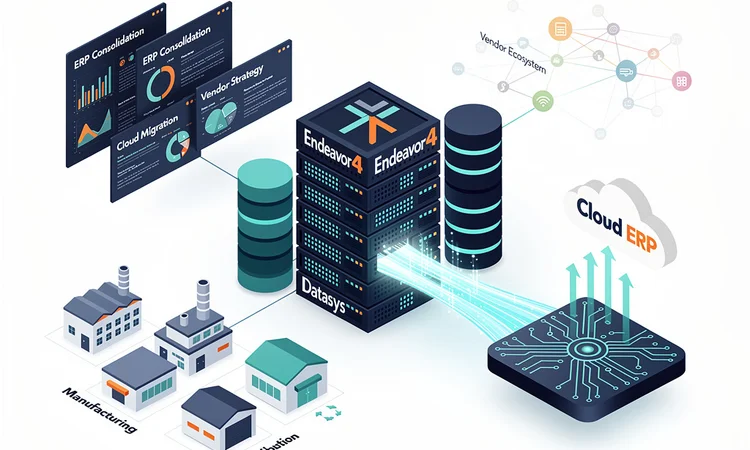
The enterprise resource planning software sector is witnessing another significant consolidation as Endeavor4, a specialized ERP provider serving manufacturing and distribution companies, announces the acquisition of Datasys’s client portfolio. This transaction, while modest in scale compared to mega-deals dominating technology headlines, offers critical insights into the competitive pressures reshaping the mid-market ERP segment and the strategic imperatives driving vendor consolidation.
According to ERP Software Blog , the integration represents more than a simple customer transfer. Datasys clients will transition to Endeavor4’s platform, which emphasizes industry-specific functionality for manufacturers and distributors. The move underscores a fundamental shift in how mid-market ERP vendors compete: not through feature proliferation, but through vertical specialization and operational excellence.
The timing of this acquisition reflects broader market dynamics that have been building for years. Mid-market ERP vendors face mounting pressure from multiple directions—cloud-native competitors offering lower-cost alternatives, legacy systems providers moving downmarket, and customer expectations for modern user experiences and seamless integrations. For companies like Datasys, maintaining competitive investment levels while serving a finite customer base has become increasingly untenable.
The Economics of Mid-Market ERP Consolidation
The financial calculus driving ERP consolidation differs markedly from consumer software acquisitions. Unlike subscription businesses with viral growth potential, ERP vendors typically serve customers through long-term relationships characterized by high switching costs and predictable revenue streams. This creates unique valuation dynamics where customer retention rates and implementation expertise often matter more than growth metrics.
Industry analysts have long predicted consolidation in the mid-market ERP segment, where hundreds of vendors compete for a finite pool of customers. The challenge intensifies as cloud migration accelerates and customers demand continuous innovation. Smaller vendors struggle to fund the development investments required to modernize platforms while simultaneously supporting legacy on-premises installations—a dual burden that strains resources and dilutes focus.
Endeavor4’s strategy appears designed to capitalize on these market inefficiencies. By absorbing Datasys clients, the company gains immediate scale advantages in customer support, development resources, and industry expertise. The acquired customer relationships provide recurring revenue that can fund platform enhancements, creating a virtuous cycle that benefits both existing and new clients.
Technical Integration Challenges and Customer Concerns
For Datasys customers, the transition raises immediate questions about data migration, system compatibility, and business continuity. ERP implementations rank among the most complex technology projects organizations undertake, with failures often resulting from inadequate planning, insufficient resources, or misaligned expectations. Transitioning an established ERP environment to a new platform compounds these challenges.
The technical architecture differences between Datasys and Endeavor4 systems will determine migration complexity. Organizations running heavily customized Datasys installations face particularly difficult decisions: recreate customizations in Endeavor4, accept functional gaps, or explore alternative solutions. These choices carry significant cost implications and operational risks that extend far beyond software licensing fees.
Customer data security and regulatory compliance add additional complexity layers. Manufacturing and distribution companies often handle sensitive information including customer records, supplier agreements, and proprietary product specifications. Ensuring data integrity and maintaining compliance during system transitions requires meticulous planning and execution—areas where vendor expertise and resource commitment prove critical.
Strategic Implications for Manufacturing and Distribution Sectors
The Datasys-Endeavor4 transaction illuminates broader strategic considerations facing manufacturing and distribution companies. As ERP vendors consolidate, customers confront a shrinking pool of truly independent providers. This concentration creates dependencies that can limit negotiating leverage and reduce competitive pressure on pricing and innovation.
However, consolidation also delivers potential benefits. Larger vendors typically offer more robust product roadmaps, broader implementation partner networks, and greater financial stability. For customers operating in competitive markets where operational efficiency drives profitability, partnering with well-capitalized vendors capable of sustained platform investment often outweighs the benefits of maintaining relationships with smaller, potentially vulnerable providers.
The industry-specific focus that Endeavor4 emphasizes represents another critical consideration. Generic ERP platforms require extensive configuration to support specialized manufacturing and distribution workflows. Vendors offering pre-configured industry solutions can accelerate implementations and reduce total cost of ownership—assuming their vertical expertise genuinely addresses customer requirements rather than serving as marketing positioning.
The Cloud Migration Imperative
Cloud computing fundamentally alters ERP economics and competitive dynamics. Traditional on-premises ERP implementations required substantial upfront capital investments, creating high barriers to entry and exit. Cloud-based alternatives shift costs to operating expenses while enabling more flexible deployment models. This transition democratizes access to enterprise-grade functionality while simultaneously intensifying competitive pressure on established vendors.
For mid-market vendors like Datasys and Endeavor4, cloud migration presents both opportunity and challenge. Customers increasingly expect cloud deployment options, mobile accessibility, and seamless integrations with complementary applications. Meeting these expectations requires architectural modernization that can strain development resources, particularly for vendors supporting legacy on-premises installations.
The subscription revenue model inherent in cloud ERP also transforms vendor economics. Rather than recognizing revenue upfront through perpetual licenses, cloud vendors must demonstrate ongoing value to maintain customer relationships. This shift favors vendors with strong customer success capabilities and continuous innovation programs—attributes that scale more effectively with larger customer bases and consolidated operations.
Partner Ecosystem Considerations
ERP implementations rarely succeed through vendor efforts alone. Implementation partners, independent software vendors, and systems integrators form critical ecosystem components that determine customer outcomes. The Datasys acquisition will inevitably affect these partner relationships, creating uncertainty for consultancies and solution providers that have built practices around Datasys expertise.
Endeavor4 must carefully manage partner transitions to preserve institutional knowledge and maintain customer confidence. Implementation partners possess deep understanding of customer environments, industry requirements, and system configurations that prove invaluable during migrations and ongoing support. Losing key partners or failing to integrate them effectively into the expanded ecosystem could jeopardize customer satisfaction and retention.
The partner dynamics also influence competitive positioning. Vendors with robust partner networks can scale implementation capacity without proportional increases in direct headcount. This leverage becomes increasingly important as customer expectations for rapid deployment and responsive support intensify. Consolidation that strengthens partner ecosystems creates competitive advantages; transactions that fragment or weaken partner relationships risk undermining the strategic rationale for acquisition.
Looking Forward: Market Evolution and Customer Strategy
The Datasys-Endeavor4 transaction represents one data point in a broader market evolution that will continue reshaping the mid-market ERP sector. Customers should anticipate additional consolidation as vendors seek scale advantages and investors pursue exit opportunities. This environment demands proactive strategic planning rather than reactive responses to vendor announcements.
Organizations evaluating ERP strategies should consider vendor financial stability, product roadmap credibility, and customer references with particular scrutiny. The most compelling vendor presentations and competitive pricing matter little if the provider lacks resources to support long-term customer relationships or sustain platform innovation. Due diligence should extend beyond feature comparisons to assess organizational capabilities and strategic positioning.
For current Datasys customers specifically, the transition period offers opportunities to reassess ERP strategies comprehensively. Rather than simply accepting migration to Endeavor4, organizations should evaluate whether the combined platform genuinely serves their evolving requirements. Alternative options may warrant consideration, particularly for companies whose needs have diverged from their original Datasys implementation or who face significant business model changes.
The mid-market ERP sector stands at an inflection point where technological change, customer expectations, and competitive dynamics converge to force strategic recalibration. Vendors must achieve scale to fund necessary investments while maintaining the customer intimacy and industry expertise that differentiate them from enterprise-focused competitors. Customers must balance the stability of established vendor relationships against the innovation and flexibility that emerging alternatives promise. How these tensions resolve will determine market structure and competitive dynamics for years to come, with implications extending far beyond individual transactions like the Datasys acquisition.


Leave a Reply
Your email address will not be published.