
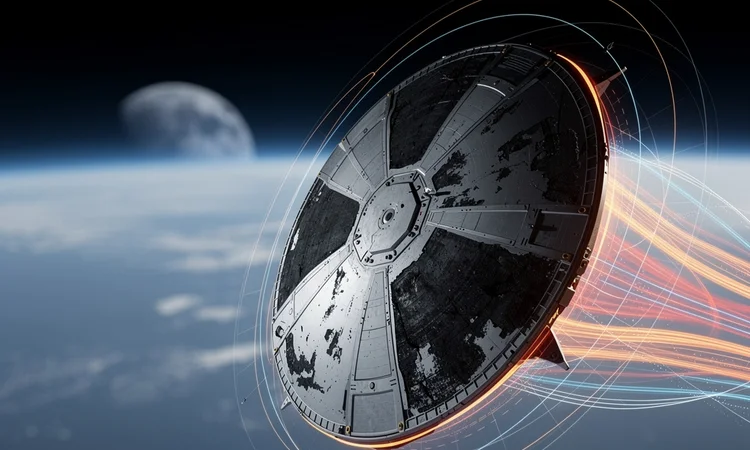
The ambitious return of human spaceflight beyond low Earth orbit has encountered another significant setback, as NASA announced a delay to its Artemis II mission—the agency’s first crewed lunar flyby in over five decades. The postponement, pushing the launch window from September 2025 to April 2026, stems from critical concerns regarding the Orion spacecraft’s heat shield performance during the uncrewed Artemis I test flight, revealing the complex engineering challenges inherent in deep space exploration and the unforgiving nature of lunar return velocities.
According to The Verge , NASA Administrator Bill Nelson emphasized that crew safety remains the paramount consideration, stating that the agency will not proceed until engineers fully understand and address the heat shield irregularities observed during Artemis I’s return to Earth in December 2022. The decision reflects a cautious approach born from decades of spaceflight experience, where rushing to meet arbitrary deadlines has historically resulted in catastrophic consequences.
The heat shield concerns center on unexpected charring patterns and material erosion that exceeded engineering predictions during Artemis I’s atmospheric reentry. When the Orion capsule returned from its 25-day journey around the Moon, traveling at approximately 25,000 miles per hour, the Avcoat ablative material designed to protect the spacecraft experienced more significant degradation than computer models had anticipated. This discrepancy between predicted and actual performance has triggered an exhaustive investigation involving thousands of hours of analysis, materials testing, and computational fluid dynamics simulations.
Engineering Complexities Behind Lunar Return Trajectories
The physics of returning from lunar distances present fundamentally different challenges than those encountered during missions to the International Space Station. Spacecraft returning from the Moon enter Earth’s atmosphere at velocities roughly 30 percent higher than those returning from low Earth orbit, generating temperatures exceeding 5,000 degrees Fahrenheit—hot enough to ionize the surrounding air and create a plasma sheath around the vehicle. The Orion heat shield, measuring 16.5 feet in diameter, represents one of the largest such structures ever constructed for human spaceflight, comprising more than 180 blocks of Avcoat material precisely machined and bonded to a titanium skeleton.
NASA’s investigation has revealed that the charring patterns observed on the Artemis I heat shield suggest potential issues with how the ablative material bonds to its substrate or how gases generated during the ablation process escape from the shield’s surface. Industry sources familiar with the investigation indicate that engineers are examining whether manufacturing processes used to apply the Avcoat material may have created microscopic voids or inconsistencies that affected performance during the extreme thermal environment of reentry. The agency has conducted extensive ground testing, including arc jet facilities that can replicate portions of the reentry environment, though no ground-based test can perfectly simulate the combined effects of velocity, temperature, and atmospheric density encountered during actual lunar return.
Ripple Effects Across the Artemis Program Architecture
The Artemis II delay cascades through NASA’s broader lunar exploration timeline, potentially affecting the scheduling of subsequent missions including Artemis III, which aims to land the first woman and first person of color on the lunar surface. The integrated nature of the Artemis program means that delays in one mission create scheduling pressures throughout the architecture, affecting not only NASA’s internal planning but also the dozens of commercial partners and international space agencies contributing hardware, services, and crew members to the effort.
The Space Launch System (SLS), NASA’s heavy-lift rocket designed specifically for deep space missions, adds another layer of complexity to the scheduling equation. Each SLS core stage requires approximately two years to manufacture at NASA’s Michoud Assembly Facility in Louisiana, and the agency maintains a production pipeline designed to support an eventual cadence of one launch per year. However, the extended ground time between missions raises concerns about hardware degradation and the need for recertification testing, particularly for components with limited shelf lives or those sensitive to environmental exposure.
Financial Implications and Congressional Scrutiny
The Artemis program’s cost trajectory has long attracted attention from congressional oversight committees and government accountability offices. The SLS and Orion programs have collectively consumed more than $40 billion since their inception, with per-launch costs estimated between $2 billion and $4 billion depending on how development expenses are amortized. Each delay adds to these totals, not only through continued workforce retention and facility maintenance but also through the opportunity costs of deferred scientific returns and the potential for technological obsolescence as commercial space capabilities advance.
NASA’s approach contrasts sharply with the rapid iteration philosophy embraced by commercial space companies like SpaceX, which has adopted a test-to-failure methodology that accepts vehicle losses as part of an accelerated development process. The agency’s more conservative stance reflects both its governmental mandate to minimize risk to human life and the political reality that a crew loss would likely prove catastrophic to the entire Artemis program’s viability. This fundamental tension between speed and safety permeates every decision point in human spaceflight program management.
International Partnership Dynamics and Crew Selection
The Artemis II crew, announced in April 2023, consists of Commander Reid Wiseman, Pilot Victor Glover, Mission Specialist Christina Koch, and Canadian Space Agency astronaut Jeremy Hansen. These four individuals have maintained their training regimen despite the delay, though the extended timeline creates both personal and professional challenges. Astronaut training for specific missions typically intensifies in the year before launch, and maintaining peak proficiency over an extended period requires careful management to prevent both skill degradation and crew burnout.
Canada’s participation in Artemis II, secured through its contribution of the Canadarm3 robotic system for the lunar Gateway station, represents the first time a non-American astronaut will venture beyond low Earth orbit. This international dimension adds diplomatic considerations to the technical decision-making process, as delays affect not only NASA’s domestic stakeholders but also the space agencies and governments of partner nations who have made substantial commitments to the program’s success.
Technical Alternatives and Risk Mitigation Strategies
NASA engineers are evaluating several potential paths forward for addressing the heat shield concerns. Options range from relatively minor modifications to the reentry trajectory profile—adjusting the angle and timing of atmospheric entry to reduce peak heating—to more substantial interventions such as reformulating the Avcoat material or implementing manufacturing process changes. Each approach carries distinct tradeoffs between development time, cost, and residual risk, requiring careful analysis to identify the optimal solution.
The agency has also considered whether Artemis II could proceed with the existing heat shield design by accepting higher risk levels, potentially implementing additional crew safety measures or modifying mission parameters to reduce thermal loads. However, NASA leadership has consistently emphasized that compromising safety standards to meet schedule pressures would contradict the lessons learned from previous spaceflight accidents, particularly the Challenger and Columbia disasters where organizational culture and schedule pressure contributed to fatal decision-making.
Broader Context of American Space Exploration
The Artemis delays unfold against a backdrop of intensifying international competition in space exploration, particularly from China’s rapidly advancing lunar program. The China National Space Administration has announced plans for crewed lunar missions in the 2030s and has already demonstrated sophisticated robotic capabilities with its Chang’e sample return missions. While NASA officials publicly downplay the notion of a space race, the geopolitical implications of lunar exploration leadership remain significant, influencing both congressional funding decisions and public support for the Artemis program.
The commercial space sector’s evolution also shapes the context for Artemis program decisions. SpaceX’s Starship vehicle, currently in development and testing, is designed to carry substantially larger payloads to the Moon than the SLS, potentially at a fraction of the cost. While Starship faces its own technical challenges and regulatory hurdles, its progress raises questions about the long-term sustainability of NASA’s current architecture and whether the agency should consider alternative approaches to achieving its lunar exploration objectives.
Looking Toward Future Mission Readiness
As NASA works through the heat shield investigation, the agency continues preparing other elements of the Artemis II mission. Ground teams at Kennedy Space Center are processing flight hardware, conducting integrated testing of spacecraft systems, and rehearsing launch procedures. The European Space Agency’s contribution—the Orion service module that provides propulsion, power, and life support—has been delivered and integrated with the crew module, representing a critical milestone in mission preparation despite the launch date uncertainty.
The resolution of the heat shield issue will likely establish precedents for how NASA approaches risk management and technical decision-making throughout the remainder of the Artemis program. The agency’s willingness to delay the mission rather than accept uncertain risks demonstrates an institutional commitment to learning from past failures, even as it acknowledges the frustration and costs associated with extended timelines. For the four astronauts awaiting their historic journey and the thousands of engineers and technicians supporting the mission, the wait continues—a testament to the patient, methodical approach required for humanity’s return to deep space exploration.


Leave a Reply
Your email address will not be published.