
Tesla’s Fremont Pivot: Robots Over Sedans, Hiring Ahead

Emily Chen
Emily Chen

Tesla plans to expand headcount at its Fremont factory amid a shift from Model S/X production to Optimus robots, CEO Elon Musk said on the Q4 earnings call, bucking tech layoff trends while navigating revenue declines.

Tesla’s Fremont Pivot: Robots Over Sedans, Hiring Ahead

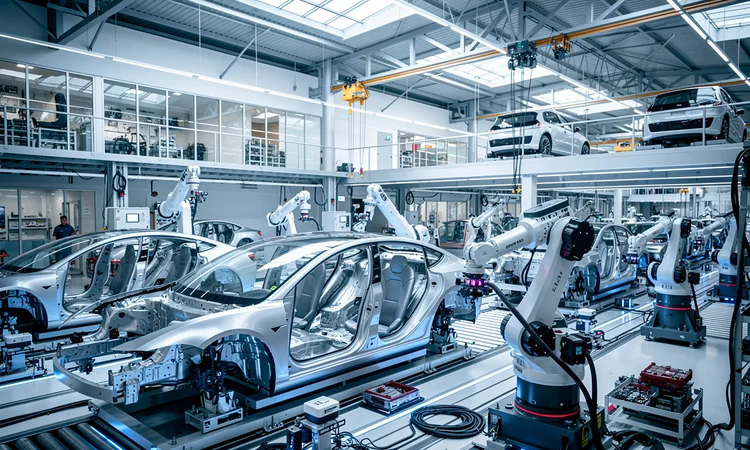
Tesla Inc. is charting a bold course at its flagship Fremont, California, factory, shifting production lines from aging luxury vehicles to humanoid robots while planning to expand its workforce, Chief Executive Elon Musk revealed during the company’s fourth-quarter earnings call on January 28, 2026. Unlike tech peers slashing jobs amid artificial intelligence advances, Musk emphasized no layoffs and potential headcount growth at the facility, which currently employs over 20,000 workers.

“Tesla is in hiring mode at California factory,” Musk stated, according to MarketWatch . This comes as Tesla winds down Model S and Model X production next quarter, repurposing the space for a million-unit annual Optimus robot line. The move underscores Musk’s vision of robotics eclipsing cars as Tesla’s core business.

Fremont’s Production Overhaul

The Fremont plant, Tesla’s highest-output vehicle factory in North America, will maintain Model 3 and Model Y output through efficiencies while converting S/X lines, Musk explained. “We expect to wind down S and X production next quarter. Basically, stop production next quarter,” he said on the call, as reported by CNBC . The Gen 3 Optimus, Tesla’s first mass-production robot design, aims for a late-2026 ramp-up, capable of learning via human observation.

This transformation arrives amid Tesla’s first annual revenue decline, with 2025 sales dropping 3% year-over-year, yet Q4 earnings per share beat estimates at $0.50 versus $0.45 expected. Gross margins improved to 20% from 16%, buoyed by cost controls, per Yahoo Finance .

No Layoffs in Robot Era

Musk explicitly ruled out staff cuts, contrasting with Amazon.com Inc. and others trimming amid AI shifts. “Tesla does not have layoff plans,” he affirmed, expecting Fremont headcount to rise over time to support Optimus scaling, according to Ticker Report . Fremont’s workforce, around 22,000 as of recent data, will pivot without disruption.

The decision defies industry trends where AI displaces labor. “There’s a lot of companies laying off people due to AI, but we expect to hire more people despite robot deployment,” Musk noted, via Shacknews . Tesla’s strategy bets on humans overseeing complex robot integration.

Optimus Ambitions Take Shape

Optimus production won’t surge until late 2026 due to supply chain hurdles, Musk cautioned. “Because it is a completely new supply chain, there’s really nothing from the existing supply chain that exists in Optimus,” he told investors, per CNBC . The Fremont conversion targets 1 million units yearly, positioning the plant as a robotics hub.

Tesla plans a Gen 3 Optimus unveiling this quarter, with mass sales eyed for 2027. Musk envisions robots for factory tasks to household chores, potentially eclipsing vehicle revenue. This aligns with $20 billion-plus capital expenditures in 2026 for AI, autonomy, and manufacturing, CFO Vaibhav Taneja disclosed.

Financial Pressures Fuel Pivot

Tesla’s 2025 net income plunged 46% to $3.8 billion, its lowest since the pandemic, driven by softening EV demand and Model S/X sales lag. The luxury models, launched in 2012 and 2015, yielded to volume leaders Model 3 and Y. “It’s time to basically bring the Model S and X programs to an end with an honorable discharge,” Musk said wistfully, as covered by CBS San Francisco .

Investor focus has shifted to robotaxis and Optimus, propping shares near records despite auto woes. Tesla’s $2 billion xAI investment, Musk’s AI venture, integrates Grok AI into vehicles and robots, per earnings disclosures.

Fremont’s Historical Backbone

Acquired from Toyota in 2010, Fremont birthed Tesla’s mass-market EVs, peaking at 50% capacity expansion goals by 2021. It navigated COVID controversies, including Musk’s defiance of lockdowns, yet emerged as North America’s top plant. Recent leasing of 100,000 square feet nearby signals broader growth for Cybercab and Megapacks, X posts note.

California incentives, like a 2013 $34.7 million tax break, fueled early ramps. Now, as EVs mature, Fremont evolves into an AI-physical nexus, blending auto expertise with robotics.

Workforce Expansion Outlook

Headcount growth counters 2024’s 10% global cuts to 127,000 employees. Fremont’s 20,000-plus staff face no immediate risks, with Musk forecasting increases for Optimus demands. “Tesla expects to boost headcount at the Fremont facility… and to significantly increase output,” San Francisco Business Times quoted.

Challenges persist: OSHA violations historically tripled peers’, and union tensions linger. Yet, Musk’s hiring pledge signals optimism amid geopolitical supply risks prompting domestic chip fabs.

Risks and Road Ahead

Optimus timelines echo past delays, with Musk admitting “agonizingly slow” initial ramps. Vehicle deliveries project 8.2% growth to 1.77 million in 2026, but competition and Musk’s political distractions weigh. Robotaxi rollouts in Austin and beyond test autonomy claims.

For Model S/X owners, service continues, but Musk urged: “Now is the time to order it.” Fremont’s reinvention positions Tesla beyond autos, betting humans and robots will power its next era.

About the Author

Emily Chen
Emily Chen

Known for clear analysis, Emily Chen follows retail operations and the people building it. They work through clear frameworks, case studies, and practical checklists to make complex topics approachable. They often cover how organizations respond to change, from process redesign to technology adoption. Readers appreciate their ability to connect strategic goals with everyday workflows. They examine how customer expectations evolve and how organizations adapt to meet them. They value transparent sourcing and prefer primary data when it is available. A recurring theme in their writing is how teams build repeatable systems and measure impact over time. They also highlight cultural factors that determine whether change sticks. They avoid buzzwords, focusing instead on outcomes, incentives, and the human side of technology. They explore how policies, markets, and infrastructure intersect to create second‑order effects. They believe good analysis should be specific, testable, and useful to practitioners. They tend to favor small experiments over sweeping predictions. They value transparency, practical advice, and honest uncertainty.

Comments

Join the discussion and share your thoughts.

No comments yet. Be the first to comment.

Leave a Reply

Your email address will not be published.

Related Posts

US Lawmakers Strip Right-to-Repair from 2026 NDAA, Boosting Defense Contractors

US Lawmakers Strip Right-to-Repair from 2026 NDAA, Boosting Defense Contractors

U.S. lawmakers removed right-to-repair provisions from the 2026 NDAA, preventing military personnel from independently fixing equipment and preserving defense contractors' lucrative service contracts. Critics decry industry influence, citing potential cost savings and improved readiness. This setback fuels ongoing advocacy for repair reforms in military and civilian sectors.

Posted on: by Jack Chen
Amazon Prime Air Struggles: Drone Incidents, Regulations, and Rivals

Amazon Prime Air Struggles: Drone Incidents, Regulations, and Rivals

Amazon's Prime Air drone delivery program, launched in 2013, faces setbacks including a 2025 Texas incident where a drone clipped a cable, triggering FAA scrutiny, regulatory hurdles, and technical glitches. Trailing rivals like Walmart and Zipline, Amazon is pivoting strategies amid fierce competition. Recovery hinges on innovations and safer operations.

Posted on: by Grace Wright
DOJ’s Appeal in Google Antitrust Case Signals Protracted Legal Battle Over Search Monopoly Remedies

DOJ’s Appeal in Google Antitrust Case Signals Protracted Legal Battle Over Search Monopoly Remedies

The DOJ and state attorneys general have appealed Judge Mehta's Google antitrust remedies ruling, challenging the decision to reject structural breakups including Chrome divestiture. The appeal argues behavioral restrictions are insufficient to dismantle Google's search monopoly, setting up a multi-year legal battle.

Retail Ecommerce
Google Launches Doppl: AI Virtual Try-Ons Transform Online Shopping

Google Launches Doppl: AI Virtual Try-Ons Transform Online Shopping

Google has launched Doppl, an AI-powered app enabling virtual clothing try-ons with personalized, dynamic models to reduce online shopping uncertainties and returns. Amid expanding AI shopping tools like agentic checkout, it faces regulatory scrutiny over data practices, yet promises to revolutionize e-commerce personalization and consumer behavior.

Retail Ecommerce
Microsoft 365 Prices to Rise Up to 33% in 2026 Amid AI and Security Upgrades

Microsoft 365 Prices to Rise Up to 33% in 2026 Amid AI and Security Upgrades

Microsoft is raising Microsoft 365 prices by up to 33% starting July 1, 2026, for commercial, frontline, and government users, driven by AI enhancements like Copilot and improved security features. This first major hike since 2022 aims to fund innovations amid cyber threats, though it sparks mixed reactions on affordability.

Retail Ecommerce
EU Court Upholds Intel Antitrust Ruling, Slashes Fine to €237M

EU Court Upholds Intel Antitrust Ruling, Slashes Fine to €237M

Europe's General Court upheld Intel's antitrust violation for using rebates and payments to exclude rivals like AMD in the chip market, but slashed the fine from €376 million to €237 million. This ruling, part of a decades-long saga, highlights evolving EU antitrust standards amid Intel's competitive challenges.

Retail Ecommerce
MasterClass 2025 Holiday Deal: 40% Off Annual Subscriptions

MasterClass 2025 Holiday Deal: 40% Off Annual Subscriptions

MasterClass's 2025 holiday promotion offers 40% off annual subscriptions, reducing Standard to $72, Plus to $108, and Premium to $144, including gifts. This strategy enhances accessibility to celebrity-led courses amid market competition. It boosts subscriber growth and democratizes elite education during economic uncertainties.

Retail Ecommerce
NYC’s 2025 Congestion Pricing Slashes Traffic 11%, Pollution 22% in Manhattan

NYC’s 2025 Congestion Pricing Slashes Traffic 11%, Pollution 22% in Manhattan

New York City's 2025 congestion pricing in Manhattan charges drivers to enter south of 60th Street, reducing traffic by 11% and PM2.5 pollution by 22%. This has improved air quality citywide, cut noise and accidents, funded transit upgrades, and serves as a model for urban sustainability.

Retail Ecommerce
2025 RAM Prices Skyrocket Amid AI-Driven Shortages

2025 RAM Prices Skyrocket Amid AI-Driven Shortages

In 2025, RAM prices have skyrocketed due to explosive AI demand for high-bandwidth memory in data centers, causing shortages and doubling or tripling costs for consumer DDR5 and DDR4 modules. This crisis disrupts PC building, smartphones, and industries, with experts forecasting prolonged volatility through 2027-2028 as production lags behind.

Retail Ecommerce
Nvidia Pilots AI Chip Tracking Software to Curb Smuggling to China

Nvidia Pilots AI Chip Tracking Software to Curb Smuggling to China

Nvidia is piloting software that uses telemetry data to track the locations of its AI chips, like the Blackwell series, to combat smuggling into restricted markets such as China amid US export bans. This initiative addresses geopolitical tensions and black-market operations, enhancing compliance without hardware changes.

Retail Ecommerce