







Booze for Good: Canada’s Creative Pivot on US Liquor Stockpiles Amid Trade Turmoil
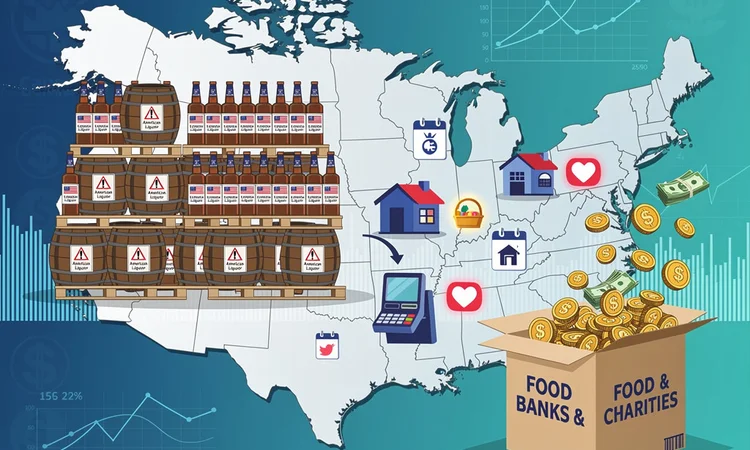
In the escalating trade frictions between Canada and the United States, an unexpected commodity has taken center stage: American-made alcohol. Provinces across Canada, responding to tariff threats from south of the border, pulled millions of dollars worth of US liquor from shelves earlier this year. Now, as inventories risk spoilage, several regions are opting for a charitable twist—selling off the stockpiles and funneling proceeds to food banks and community organizations. This move not only addresses logistical headaches but also highlights the broader economic ripple effects of geopolitical tensions on everyday goods.
The saga began amid heated disputes over tariffs, with Canadian leaders retaliating against US policies by banning American alcohol sales. Provinces like Ontario, Manitoba, and Newfoundland and Labrador found themselves with vast reserves of whiskey, bourbon, and other spirits gathering dust in warehouses. For instance, Manitoba shelved about a million dollars’ worth of US booze, only to later announce plans to resell it ahead of the holidays, directing revenues to seasonal charities. This approach reflects a pragmatic blend of economic strategy and social goodwill, turning potential waste into community support.
As the year draws to a close, with the current date marking mid-December 2025, the urgency has intensified. Some products face expiration dates, prompting quick action. In a recent development, at least four provinces have committed to using sales from these American liquors to fund food banks, according to reporting from Business Insider . This initiative underscores how trade wars can inadvertently boost philanthropy, providing a lifeline to underfunded services amid rising food insecurity.
Provincial Strategies Diverge in Handling Stockpiles
Diving deeper, the responses vary by province, illustrating the decentralized nature of Canada’s alcohol regulation. Manitoba’s premier announced the resumption of sales for US-made alcohol, with all proceeds earmarked for holiday charities, as detailed in a CBC News article. Within hours of lifting the ban temporarily for private retailers and businesses, nearly $1.9 million in stock was snapped up, showcasing pent-up demand and the economic value at stake.
In Newfoundland and Labrador, the local liquor corporation holds $3.2 million in US alcohol, initially removed in response to tariff threats. The government has since decided to sell off the inventory, donating net profits to the Community Food Sharing Association, per updates from VOCM . This decision came after weeks of silence, contrasting with other provinces’ more proactive stances and highlighting internal debates over waste versus revenue.
Ontario, a major player in Canada’s alcohol market, faces calls to follow suit. Premier Doug Ford has indicated he’ll consult with the Liquor Control Board of Ontario (LCBO) about selling stockpiled US booze to benefit food banks, amid pressure from opposition parties. Coverage from CTV News notes the potential for millions in proceeds, especially timely as food bank usage surges due to inflation and economic pressures.
Trade Tensions and Economic Underpinnings
The backdrop to this alcohol dilemma is a broader trade war, ignited by US tariff impositions that prompted Canadian countermeasures. Provinces like British Columbia and Nova Scotia joined Ontario in yanking US products from shelves, a move that affected over a billion dollars in goods nationwide. Social media sentiment on X reflects public frustration and humor, with posts highlighting the irony of boycotting American liquor while seeking ways to repurpose it charitably. Users have shared anecdotes of sudden shortages, underscoring how such policies disrupt consumer habits.
Economically, this situation exposes vulnerabilities in supply chains. The alcohol industry, heavily reliant on cross-border trade, has seen disruptions that could lead to long-term shifts. For example, Alberta and Saskatchewan have relented on their bans, opting to restock US brands, as reported in Global News . This divergence raises questions about unified national strategy versus provincial autonomy in trade retaliation.
Charity organizations stand to gain significantly. Food banks, strained by increased demand—reports indicate a 20% rise in usage over the past year—view these donations as a boon. In Manitoba, the quick sell-off generated funds that could support thousands of families during the holidays, aligning with seasonal giving drives. Experts in nonprofit sectors note that such windfalls, while opportunistic, provide critical buffer against funding shortfalls from traditional sources.
Logistical Challenges and Expiration Risks
Handling these stockpiles isn’t without hurdles. Many spirits have shelf lives, and prolonged storage risks financial loss through spoilage. A BBC piece details how provinces are racing against time, with some inventories worth millions nearing expiry. This has forced innovative solutions, like discounted sales or bulk distributions to licensed venues, ensuring minimal waste.
Industry insiders point to the operational complexities. Warehousing costs, inventory management, and regulatory compliance add layers of expense. In Newfoundland, the government’s initial reticence, as covered by CBC News, stemmed from these logistics, but the charitable pivot has mitigated criticism. Comparisons to past trade spats, such as those involving softwood lumber, reveal patterns where perishable goods amplify urgency.
Public reaction, gleaned from X posts, mixes support for the charitable angle with skepticism about government motives. Some users decry the initial ban as politically motivated, while others applaud the food bank donations as a silver lining. This sentiment echoes broader discussions on how trade policies affect everyday life, from grocery prices to holiday traditions.
Broader Implications for Cross-Border Relations
Looking ahead, this episode could influence future trade negotiations. With the US and Canada entangled in disputes over energy, minerals, and tariffs, the alcohol ban serves as a microcosm of larger frictions. Analysts suggest that charitable resales might soften the blow, presenting Canada as a principled yet pragmatic partner. Business Insider’s coverage emphasizes how provinces are “figuring out” these stockpiles, potentially setting precedents for handling boycotted goods in other sectors.
For the alcohol industry, this disruption encourages diversification. Canadian distillers have seen a sales uptick as consumers shift to local brands, fostering domestic growth. However, reliance on US imports remains high, with popular labels like Jack Daniel’s and Jim Beam staples in many markets. The temporary lifts, as in Manitoba’s case via CBC News, indicate a balancing act between retaliation and economic realism.
Charities, meanwhile, are adapting to these unconventional funding streams. Leaders from food banks express gratitude but caution that one-off donations aren’t sustainable solutions to systemic issues like poverty and inflation. In Ontario, where CTV News reports mounting pressure on Ford, the potential infusion could fund expanded services, from meal programs to emergency aid.
Industry Perspectives and Future Outlook
Insiders in the beverage sector warn of lingering effects. Suppliers face uncertainty, with some US exporters rerouting products to other markets. Canadian retailers, adapting to the bans, have ramped up promotions for alternatives, potentially reshaping consumer preferences long-term. VOCM’s update on Newfoundland’s donation plan illustrates how such moves can enhance public image, turning a trade liability into a PR win.
On the philanthropic front, this model could inspire similar initiatives globally. Amid trade disputes elsewhere, like those in Europe over agricultural goods, redirecting surpluses to aid has appeal. X discussions highlight international interest, with users drawing parallels to boycotts in other countries.
As 2025 wraps up, the fate of remaining stockpiles hangs in the balance. Provinces like Ontario may soon announce plans, influenced by successful models in Manitoba and Newfoundland. BBC’s analysis of expiration risks adds pressure, ensuring that charity remains a key outlet. This confluence of trade, economics, and goodwill demonstrates resilience in the face of adversity, offering lessons for navigating future conflicts.
Stakeholder Voices and Emerging Trends
Voices from affected parties provide nuanced insights. A Manitoba official, quoted in recent news, described the resale as a “win-win,” alleviating storage burdens while aiding communities. Food bank representatives echo this, noting how funds could procure essentials amid holiday demand spikes.
Emerging trends point to digital tracking for such inventories, with some provinces exploring apps to monitor stock and facilitate charitable sales. This tech integration could streamline responses to similar crises, blending logistics with social impact.
Ultimately, as trade talks evolve, the alcohol episode may fade, but its charitable legacy could endure, reinforcing Canada’s approach to blending policy with compassion. With ongoing coverage from sources like BNN Bloomberg urging action in Ontario, the narrative continues to unfold, blending economic strategy with humanitarian aid.






Leave a Reply
Your email address will not be published.