





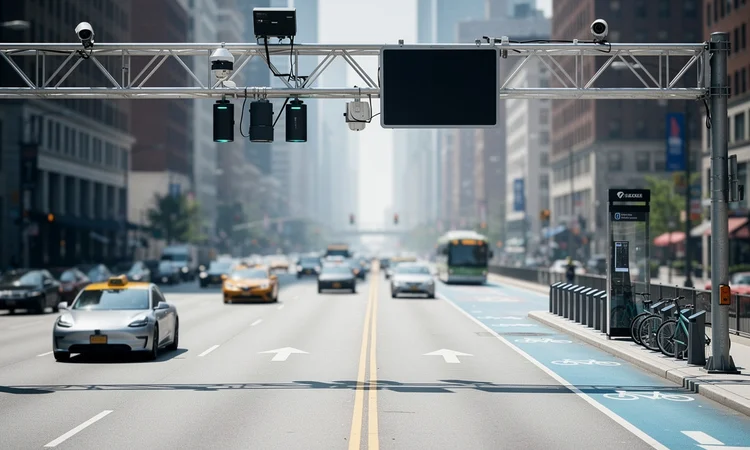
Manhattan’s Toll on Traffic: How Congestion Pricing Cleared the Air in New York
New York City’s bold experiment with congestion pricing, implemented in January 2025, has quickly proven its worth not just in easing gridlock but in significantly improving air quality. The program, which charges drivers a fee to enter Manhattan south of 60th Street during peak hours, was designed to reduce traffic volume and fund transit improvements. But its environmental benefits have emerged as a standout success, with recent studies showing a sharp decline in harmful pollutants. This initiative marks a pivotal shift in urban policy, blending economic incentives with public health goals in one of the world’s densest cities.
At the heart of this transformation is a toll structure that starts at $9 for passenger vehicles during daytime hours, scaling up for larger trucks and varying by time of day. The Congestion Relief Zone, as it’s officially known, covers a bustling area prone to chronic congestion. Early data indicates that traffic within the zone dropped by 11% in the first six months, according to reports from city officials. This reduction has cascading effects, from fewer accidents—down 14%—to a dramatic 45% decrease in noise complaints, painting a picture of a more livable urban core.
The policy’s roots trace back to years of debate and legal hurdles, finally overcoming opposition from neighboring states like New Jersey. A federal judge’s ruling in late 2024 cleared the path, though it mandated further review of environmental impacts on adjacent areas. Despite initial skepticism, the program’s rollout has been smooth, generating revenue projected to bolster the Metropolitan Transportation Authority’s (MTA) infrastructure.
Early Wins in Air Quality Metrics
A groundbreaking study from Cornell University, published in the journal npj Clean Air, quantifies the pollution reductions with precision. Researchers analyzed air quality data from 42 monitoring stations, factoring in traffic patterns and weather variables. Their findings reveal a 22% drop in particulate matter (PM2.5) within the toll zone, a pollutant linked to respiratory illnesses, heart disease, and premature deaths. This decline extends beyond Manhattan, with an 8% improvement across New York City’s five boroughs and measurable benefits in surrounding suburbs.
The study’s lead author emphasized that these gains stem directly from fewer vehicles idling in traffic, which cuts tailpipe emissions of fine particulates. Globally, such pollutants contribute to millions of premature deaths annually, making New York’s results a potential model for other cities. The research, detailed in npj Clean Air , calls for even stronger measures, such as higher tolls on delivery trucks to amplify the effects.
Complementing this, air quality monitoring by independent groups has corroborated the trends. For instance, data from the city’s Department of Environmental Protection shows reduced levels of nitrogen oxides and volatile organic compounds, which are precursors to ground-level ozone. These improvements align with the program’s original environmental assessment, which predicted air quality gains but faced criticism for underestimating impacts on outlying areas.
Policy Evolution and Legal Battles
The journey to congestion pricing was fraught with challenges, including lawsuits arguing insufficient environmental reviews. In a key decision, U.S. District Judge Leo Gordon ruled largely in favor of the MTA, though he required more detailed mitigation plans for New Jersey communities expecting diverted traffic. This ruling, covered extensively in Wikipedia’s comprehensive entry on the program , highlighted the tension between local benefits and regional equity.
Critics initially feared that the toll would merely shift pollution to peripheral neighborhoods, such as the Bronx or Staten Island. However, the Cornell analysis debunks this to some extent, showing net positive air quality changes citywide. Still, the judge’s remand to the Federal Highway Administration underscores ongoing needs for balanced implementation, including targeted investments in pollution hotspots outside the zone.
From a policy standpoint, New York’s approach draws inspiration from established systems in London and Stockholm, where similar tolls have yielded long-term reductions in emissions. Here, the MTA has integrated exemptions for low-income drivers and credits for existing tolls, aiming to mitigate economic burdens. Revenue from the program is earmarked for subway upgrades, bus electrification, and accessibility improvements, creating a virtuous cycle of sustainable transport.
Public Health Implications Explored
The health dividends of cleaner air are profound, particularly in a city where asthma rates are elevated in congested areas. Particulate pollution aggravates conditions like heart disease and lung cancer, with the World Health Organization estimating it as a top risk factor for early mortality. In Manhattan, where baseline pollution levels were high due to dense traffic, the 22% reduction translates to tangible benefits for residents, workers, and visitors alike.
Experts from Columbia University’s Earth Institute, as discussed in State of the Planet , project that sustained improvements could prevent hundreds of hospital visits annually. This aligns with broader urban health strategies, where reducing vehicle miles traveled directly correlates with lower incidence of pollution-related ailments.
Moreover, the program’s noise reduction—quantified at 45% fewer complaints—contributes to mental health gains, as chronic urban din is linked to stress and sleep disturbances. City officials have noted increased pedestrian activity and cycling, further amplifying the shift away from car dependency.
Economic and Social Ripples
Beyond environment, congestion pricing is reshaping New York’s economy. Toll revenues are on track to generate billions for transit, funding projects like signal modernizations and station renovations. This infusion is critical for a system strained by decades of underinvestment, as highlighted in analyses from the Natural Resources Defense Council in their blog post .
Businesses in the zone report mixed impacts: some delivery firms face higher costs, but reduced traffic means faster logistics overall. A Bloomberg report notes that rush-hour delays have plummeted, boosting productivity for commuters and freight alike. This efficiency gain could attract more investment to Manhattan’s core, countering post-pandemic office vacancies.
Socially, the policy addresses equity concerns through targeted relief. Low-income New Yorkers qualify for discounts, and funds support expanded bus services in underserved areas. Yet, debates persist on whether the toll disproportionately affects outer-borough residents, prompting calls for broader fare subsidies.
Regional and Global Comparisons
Looking regionally, New Jersey’s opposition led to enhanced mitigation, such as air quality monitoring in affected towns. The Yale Environment 360 digest, in their coverage , underscores how the program’s success challenges skeptics, with pollution drops validating the environmental rationale.
Globally, cities like Singapore and Milan have seen similar outcomes, with congestion charges cutting emissions by up to 20%. New York’s data, as reported in Phys.org , positions it as a U.S. pioneer, potentially inspiring Los Angeles or Chicago to follow suit.
On social media platforms like X, sentiment reflects growing approval. Posts from urban planning advocates highlight the 22% pollution cut, praising it as a win for climate action. Transportation experts share anecdotes of smoother commutes, while environmental groups amplify calls for expansion.
Challenges and Future Adjustments
Despite successes, implementation hurdles remain. Some drivers evade tolls via loopholes, and enforcement relies on camera technology that has sparked privacy concerns. The MTA’s portal, accessible via NYC311 , provides updates, but critics argue for more transparent revenue allocation.
Future tweaks could include dynamic pricing based on real-time traffic or incentives for electric vehicles. The Cornell study suggests subsidizing transit fares to encourage modal shifts, potentially deepening pollution reductions.
As New York navigates these, the program’s first year offers lessons in adaptive policy-making. Balancing economic vitality with environmental stewardship, it demonstrates how targeted fees can transform urban environments.
Sustaining Momentum Amid Uncertainties
Long-term sustainability hinges on political will. With federal changes looming, advocates like those from the Effective Transit Alliance on X urge vigilance to protect the initiative. Early indicators show increased transit ridership, up by percentages that offset some car trips.
Comparative studies, such as one from Georgetown Law’s Environmental Law Review in their blog , anticipated these benefits but warned of scrutiny over true impacts. Now, with empirical data, the narrative shifts from speculation to evidence-based endorsement.
Ultimately, congestion pricing’s air quality triumph underscores a replicable strategy for cities grappling with pollution and overcrowding. By incentivizing smarter mobility, New York is charting a path toward healthier, more efficient urban living, with ripple effects that could redefine metropolitan policies nationwide.






Leave a Reply
Your email address will not be published.