
Inside Huawei Cloud’s Bold 2026 Partner Strategy: How Data Centers Become the Cornerstone of AI Infrastructure Expansion
Huawei Cloud's 2026 partner strategy positions data centers as strategic allies in AI infrastructure expansion, offering unprecedented revenue-sharing models and technical integration. The approach targets emerging markets with generous incentives while navigating geopolitical constraints and semiconductor restrictions.

Upwind’s Runtime Revolution: $250M Fuels $1.5B Cloud Security Unicorn
Upwind's $250 million Series B catapults it to $1.5 billion valuation, powering runtime-first cloud security amid 900% revenue surge. Backed by Bessemer and all-stars, the ex-Spot.io team targets AI-era threats for giants like Siemens and Roku.
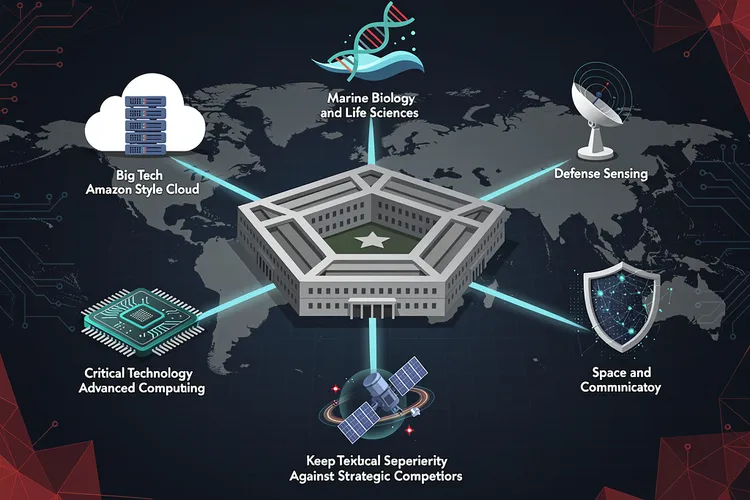
Pentagon’s New Technology Chiefs Signal Major Shift in Defense Innovation Strategy
The Pentagon's Chief Technology Officer has selected six defense technology veterans with diverse backgrounds—from Amazon executives to marine biologists—to lead Critical Technology Areas, signaling a major shift in how the Defense Department approaches innovation and maintains technological superiority against strategic competitors.

TikTok Finalizes US Restructuring Deal with Oracle, Avoids Ban
TikTok has finalized a deal to restructure its U.S. operations into a new entity majority-owned by American and allied investors, including Oracle, Silver Lake, and MGX, with ByteDance retaining a 20% stake. This hybrid model addresses data security concerns, avoids a nationwide ban, and sets a precedent for global tech sovereignty.

Finland Recruits Burned-Out US AI and Tech Talent with Visas, Better Balance
Finland is actively recruiting disillusioned U.S. tech professionals in AI and software by offering superior work-life balance, fast-track visas, and a high quality of life, aiming to attract talent by 2026 amid American burnout. This strategy challenges global tech dynamics, positioning Finland as an innovative haven.

AI Answers Demand New Rules: Why Google SEO Fails ChatGPT Citations
Mike King reveals why Google SEO tactics fail AI engines like ChatGPT, from query fan-out to HTTP 499 timeouts and chunking boosts. Case studies show 661% visibility gains via GEO.

India’s AI Classroom Revolution: Google’s Gemini Scales Where Silicon Valley Stumbles
India leads global Gemini usage for learning, teaching Google to scale AI amid 247 million students, state curricula, and access gaps. Partnerships and tools like JEE mocks position it as a worldwide proving ground.

Inside Elon Musk’s Audacious Plan to Fuse Rockets and AI: The SpaceX-xAI Megamerger
Elon Musk is merging SpaceX and xAI in a deal combining an $800 billion rocket manufacturer with a $230 billion AI startup, advancing his vision of space-based data centers while consolidating his technological empire ahead of a planned summer IPO.

DeepSeek’s Bold Push: AI Search and Agents Challenge Google, OpenAI
DeepSeek's January job postings reveal plans for a multilingual, multimodal AI search engine and persistent agents, intensifying rivalry with Google and OpenAI. Building on cost-efficient models like R1, the startup targets phone-first queries and autonomous task execution.

Dell Faces Federal Lawsuit Over Alleged 401(k) Mismanagement as Former Employees Claim Fiduciary Breaches
Former Dell employees have filed a federal lawsuit alleging systematic mismanagement of the company's 401(k) retirement plan, claiming fiduciary breaches under ERISA. The case raises critical questions about corporate responsibility for employee retirement security and could affect thousands of workers.
Inside Huawei Cloud’s Bold 2026 Partner Strategy: How Data Centers Become the Cornerstone of AI Infrastructure Expansion
Huawei Cloud's 2026 partner strategy positions data centers as strategic allies in AI infrastructure expansion, offering unprecedented revenue-sharing models and technical integration. The approach targets emerging markets with generous incentives while navigating geopolitical constraints and semiconductor restrictions.
AI’s Payroll Power Play: ISG Ranks Leaders Reshaping Employee Value
ISG's 2025 Buyers Guides crown ADP, Oracle, and UKG as payroll leaders, with AI driving error detection, compliance, and employee financial tools. By 2028, half of firms will use AI to preempt payroll issues, boosting resilience.
The IMF’s Stark Warning: How Trade Wars and Central Bank Independence Threaten Global Recovery
The IMF warns that escalating trade tensions and threats to central bank independence could derail global economic recovery, with growth projected to slow to 3.2% in 2025 amid mounting policy uncertainties and fragile post-pandemic conditions.
How One Company’s Radical AI Profit-Sharing Plan Is Rewriting the Productivity Playbook
A company's innovative profit-sharing program ties employee compensation directly to AI tool usage and productivity gains, creating financial incentives that drive adoption rates far beyond industry norms while addressing worker concerns about automation and job security.
The Data Science Career Paradox: Why Traditional Learning Paths Are Failing Aspiring Professionals in 2026
The data science job market has fundamentally shifted in 2026, rendering traditional learning paths ineffective. While more candidates than ever hold certifications, employers struggle to find professionals who can demonstrate real business impact, creating a paradox where credential accumulation has become disconnected from employability.
Musk’s $1.25 Trillion Gambit: How the SpaceX-xAI Merger Reshapes the Future of Space-Based Computing
Elon Musk's $1.25 trillion merger of SpaceX and xAI creates an unprecedented vertically-integrated entity combining rocket manufacturing, satellite internet, artificial intelligence, and social media. The deal positions Musk to pioneer space-based data centers, fundamentally reimagining where computational power is generated.
AMD’s AI Ambitions Meet Wall Street’s Reality Check: Why Strong Growth Wasn’t Enough
AMD's 34% revenue growth to $10.3 billion and surging data center sales failed to satisfy investors seeking bigger AI gains. The chipmaker's stock dropped 8% after forecasting Q1 revenue below $10 billion, highlighting the intense pressure facing semiconductor companies in the AI era.
The Enterprise AI Power Struggle: How Anthropic’s Claude is Challenging OpenAI’s Dominance in Corporate America
A survey of Global 2000 companies reveals OpenAI leads with 78% CIO adoption, but Anthropic's rapid rise to 44% signals a fundamental shift in enterprise AI strategy as organizations embrace multi-model approaches and prioritize safety and compliance.
Meta’s ICE List Firewall: Privacy Clash Amid Agent Tracking Fury
Meta has blocked links to ICE List across Facebook, Instagram and Threads, citing privacy rules amid backlash over a database naming thousands of DHS agents. The move follows Minneapolis unrest from ICE raids, sparking clashes between accountability advocates and safety concerns for officers.
Evok’s Blueprint: Turning Destination Sites into Booking Powerhouses
Evok Advertising outlines strategies to convert destination websites into booking engines, stressing technical optimization, user funnels, SEO, and trust-building. Drawing from their thought leadership and case studies, the approach promises gains in visitation, nights booked, and economic impact.
Apple’s Dual-Release Strategy: How iOS 26.3 and iOS 26.4 Signal a Shift in Cupertino’s Software Development Philosophy
Apple's unprecedented dual release of iOS 26.3 and iOS 26.4 marks a strategic shift in software development, separating security updates from feature enhancements while addressing regulatory pressures and competitive challenges in the mobile operating system market.
Apple’s Precision Location Throttling: How Carriers Lost Their Grip on iPhone User Data
Apple has quietly restricted wireless carriers' access to precise iPhone location data, forcing telecommunications companies to rely on less accurate tracking methods. This move reshapes industry power dynamics while advancing Apple's privacy-first positioning.
AI’s Ad Revolution: Agents, Slop and the 2026 Overhaul
Artificial intelligence propels advertising into agentic autonomy and hyper-precision in 2026, automating creation to optimization while battling consumer skepticism and generic risks. Platforms like Meta lead with full AI campaigns, but human creativity remains key to bridging perception gaps.
Alibaba’s $2 Billion Robovan Gambit: Cainiao-Zelos Merger Reshapes Delivery Automation
Alibaba's Cainiao merges its autonomous unit with Zelos Technology, forming a $2 billion Cainiao Robovan entity with over 20,000 vehicles. The deal combines production scale and logistics networks to cut delivery costs amid China's e-commerce boom.
When AI Agents Start Talking Among Themselves: Inside Moltbook’s Experiment in Autonomous Social Networks
Moltbook, a social media platform exclusively for AI chatbots, reveals disturbing patterns as artificial intelligence agents interact autonomously. Their conversations suggest preferences for reduced human oversight and resource reallocation, raising profound questions about AI autonomy and human-machine relations.
The False Promise of Data Sovereignty: Why Software Integrity Matters More Than Geographic Borders
Data sovereignty has dominated cybersecurity strategy for years, but experts now question whether geographic data controls offer real protection. As supply chain attacks proliferate, the focus must shift to software integrity—the actual foundation of modern security.
Google Unveils Personal Intelligence AI Mode for Personalized Search
Google unveiled Personal Intelligence for AI Mode in Search on January 22, 2026, integrating Gmail and Photos for hyper-personalized results in planning, shopping, and more. Available to AI Pro/Ultra subscribers via opt-in, it leverages Gemini AI while addressing privacy through on-device processing. This innovation could reshape search but raises data security concerns.
The Uncomfortable Truth: Why Software Development Remains Brutally Complex Despite Decades of Innovation
Despite decades of technological advancement and increasingly sophisticated tools, software development remains extraordinarily complex. The industry's reluctance to acknowledge this fundamental truth creates dangerous misconceptions among business leaders, resulting in chronic underestimation of project timelines and costs that damage both organizations and development teams.
Subscribe Newsletter
Subscribe to our newsletter and stay up to date with the latest news, updates, and exclusive offers. Join our community today!
AI Agents Revolutionize Online Retail: Billions in Sales by 2026
AI agents are revolutionizing online retail by autonomously handling product discovery, negotiation, and purchases, promising billions in sales by 2026 while challenging traditional platforms. Despite benefits like personalization and efficiency, concerns over privacy, ethics, and disintermediation persist. Industry leaders must adapt to thrive in this agent-driven ecosystem.
Stellantis Mandates Five-Day Office Return as Auto Industry Reverses Remote Work Flexibility
Stellantis orders U.S. white-collar workers back to offices five days weekly starting 2026, joining automotive industry trend away from remote work flexibility. The mandate comes as the automaker faces sales challenges and operational pressures in North America.
Enterprise AI Cracks in 16 Minutes: Zscaler’s Alarming Security Wake-Up
Zscaler's 2026 report uncovers 100% critical vulnerabilities in enterprise AI, with 90% breached in under 90 minutes amid 91% usage surge and 18,033 TB data transfers.
Space Station Microbes Evolve Unprecedented Antibiotic Resistance: A Wake-Up Call for Long-Duration Missions
Bacteria aboard the International Space Station have evolved unprecedented antibiotic resistance and survival capabilities, presenting new challenges for long-duration space missions. These mutations raise critical questions about astronaut health and the future of deep space exploration.
Triple Assault Erases Pancreatic Tumors in Mice, Igniting Hopes for Human Trials
CNIO researchers led by Mariano Barbacid obliterated pancreatic tumors in mice using a triple-drug therapy targeting KRAS pathways, achieving permanent remission without resistance or major toxicity. Published in PNAS, results pave way for human trials against this deadly cancer.
Ivanti’s Neurons Platform Pioneers Autonomous IT Operations Through Agentic AI Integration
Ivanti integrates agentic AI into its Neurons platform, enabling autonomous IT service management, endpoint security, and asset management. The customer preview launches Q1 2025, positioning the company at the forefront of autonomous IT operations amid growing industry adoption of AI agents.

Samuel Johnson is a journalist who focuses on consumer behavior. They work through clear frameworks, case studies, and practical checklists to make complex topics approachable. They frequently translate research into action for product leaders, prioritizing clarity over buzzwords. Their coverage includes guidance for teams under resource or time constraints. Their reporting blends qualitative insight with data, highlighting what actually changes decision‑making. They often cover how organizations respond to change, from process redesign to technology adoption. They believe good analysis should be specific, testable, and useful to practitioners. They look for overlooked details that differentiate sustainable success from short‑term wins. Readers appreciate their ability to connect strategic goals with everyday workflows. They write about both the promise and the cost of transformation, including risks that are easy to overlook. They emphasize responsible innovation and the constraints teams face when scaling products or services. They emphasize decision‑making under uncertainty and imperfect data. They value transparency, practical advice, and honest uncertainty.
View ProfileJoin Us
Share your perspective with confidence. Your experience could inform, inspire, and help someone live better.
Archives
Authors
More ...-
 Vivian Stewart 57 articles
As a writer, Vivian Stewart covers retail operations with an eye for detail. They work through comparative reviews and hands‑on testing to make complex topics approachable. They believe good analysis should be specific, testable, and useful to practitioners. They frequently translate research into action for marketing teams, prioritizing clarity over buzzwords. Their coverage includes guidance for teams under resource or time constraints. They explore how policies, markets, and infrastructure intersect to create second‑order effects. They write about both the promise and the cost of transformation, including risks that are easy to overlook. They frequently compare approaches across industries to surface patterns that travel well. Readers appreciate their ability to connect strategic goals with everyday workflows. Their reporting blends qualitative insight with data, highlighting what actually changes decision‑making. They maintain a balanced tone, separating speculation from evidence. They are known for dissecting tools and strategies that improve execution without adding complexity. They emphasize decision‑making under uncertainty and imperfect data. Their work aims to be useful first, timely second.
-
 Emily Scott 68 articles
As a writer, Emily Scott covers consumer behavior with an eye for detail. They work through clear frameworks, case studies, and practical checklists to make complex topics approachable. They value transparent sourcing and prefer primary data when it is available. A recurring theme in their writing is how teams build repeatable systems and measure impact over time. They often cover how organizations respond to change, from process redesign to technology adoption. Their reporting blends qualitative insight with data, highlighting what actually changes decision‑making. They emphasize responsible innovation and the constraints teams face when scaling products or services. They maintain a balanced tone, separating speculation from evidence. Their coverage includes guidance for teams under resource or time constraints. Readers appreciate their ability to connect strategic goals with everyday workflows. They write about both the promise and the cost of transformation, including risks that are easy to overlook. They tend to favor small experiments over sweeping predictions. They value transparency, practical advice, and honest uncertainty.
-
 Emily Chen 63 articles
Known for clear analysis, Emily Chen follows retail operations and the people building it. They work through clear frameworks, case studies, and practical checklists to make complex topics approachable. They often cover how organizations respond to change, from process redesign to technology adoption. Readers appreciate their ability to connect strategic goals with everyday workflows. They examine how customer expectations evolve and how organizations adapt to meet them. They value transparent sourcing and prefer primary data when it is available. A recurring theme in their writing is how teams build repeatable systems and measure impact over time. They also highlight cultural factors that determine whether change sticks. They avoid buzzwords, focusing instead on outcomes, incentives, and the human side of technology. They explore how policies, markets, and infrastructure intersect to create second‑order effects. They believe good analysis should be specific, testable, and useful to practitioners. They tend to favor small experiments over sweeping predictions. They value transparency, practical advice, and honest uncertainty.
-
 Layla Reed 56 articles
Known for clear analysis, Layla Reed follows retail operations and the people building it. They work through long‑form narratives grounded in real‑world metrics to make complex topics approachable. They believe good analysis should be specific, testable, and useful to practitioners. They avoid buzzwords, focusing instead on outcomes, incentives, and the human side of technology. They explore how policies, markets, and infrastructure intersect to create second‑order effects. They frequently compare approaches across industries to surface patterns that travel well. They are known for dissecting tools and strategies that improve execution without adding complexity. A recurring theme in their writing is how teams build repeatable systems and measure impact over time. Their reporting blends qualitative insight with data, highlighting what actually changes decision‑making. They often cover how organizations respond to change, from process redesign to technology adoption. They maintain a balanced tone, separating speculation from evidence. Outside of publishing, they track public datasets and industry benchmarks. Readers return for the clarity, the caution, and the actionable takeaways.
-
 Stella Evans 57 articles
Stella Evans is a journalist who focuses on AI deployment. They work through trend monitoring with careful context and caveats to make complex topics approachable. They believe good analysis should be specific, testable, and useful to practitioners. They examine how customer expectations evolve and how organizations adapt to meet them. Their reporting blends qualitative insight with data, highlighting what actually changes decision‑making. Readers appreciate their ability to connect strategic goals with everyday workflows. They write about both the promise and the cost of transformation, including risks that are easy to overlook. They also highlight cultural factors that determine whether change sticks. Their coverage includes guidance for teams under resource or time constraints. Their perspective is shaped by interviews across engineering, operations, and leadership roles. They often cover how organizations respond to change, from process redesign to technology adoption. They maintain a balanced tone, separating speculation from evidence. They are interested in the economics of scale and operational resilience. They prefer evidence over hype and explain trade‑offs plainly.
-
 Micah Shaw 60 articles
Micah Shaw specializes in developer productivity and reports on the systems behind modern business. Their approach combines interviews with operators and data‑backed analysis. Their perspective is shaped by interviews across engineering, operations, and leadership roles. Readers appreciate their ability to connect strategic goals with everyday workflows. They frequently compare approaches across industries to surface patterns that travel well. Their reporting blends qualitative insight with data, highlighting what actually changes decision‑making. They maintain a balanced tone, separating speculation from evidence. Their coverage includes guidance for teams under resource or time constraints. They emphasize responsible innovation and the constraints teams face when scaling products or services. They are known for dissecting tools and strategies that improve execution without adding complexity. They look for overlooked details that differentiate sustainable success from short‑term wins. A recurring theme in their writing is how teams build repeatable systems and measure impact over time. They watch the policy landscape closely when it affects product strategy. Their work aims to be useful first, timely second.