
Patagonia’s Quest for Invisible Trail Gear: Inside Jessica Rogers’ Silent Revolution

Ivy Bailey
Ivy Bailey

Patagonia trail-running leader Jessica Rogers champions gear that disappears during runs, prioritizing reliability, recycled materials and Fair Trade production. From Airshed jackets to versatile vests, her philosophy reshapes apparel for ultras and scrambles.

Patagonia’s Quest for Invisible Trail Gear: Inside Jessica Rogers’ Silent Revolution

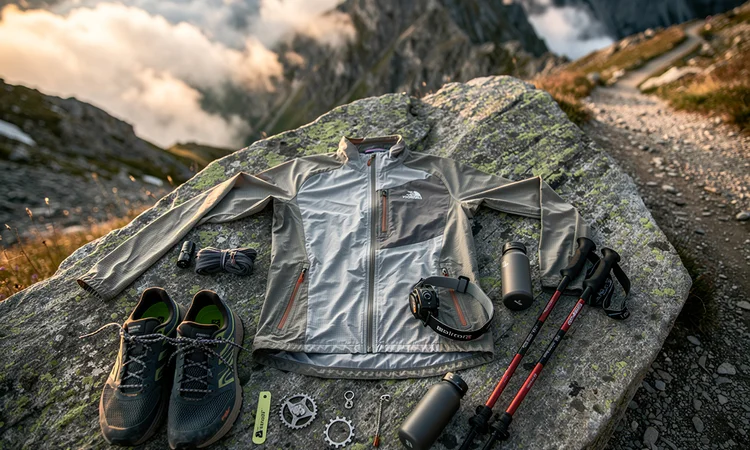
In the competitive world of outdoor apparel, where brands vie for attention with flashy innovations, Patagonia’s trail-running division under Global Product Line Director Jessica Rogers pursues a counterintuitive goal: gear so reliable it fades into the background. “Building a good product means it goes unnoticed. You don’t pay any attention to the gear you’re wearing, because you’re confident in it,” Rogers told Outside Online in a 2020 interview. This philosophy drives a line that prioritizes performance, durability and sustainability over showmanship.

Rogers, who joined Patagonia in 2016 after stints at Saucony and Adidas designing apparel for NBA stars, shifted her focus to the demands of wild terrain. Her path to trail running came via cross-country at Boston College following an ACL injury that derailed basketball dreams. At Patagonia, she leads categories blending trail running and hiking, emphasizing products that support athletes in climbing, backpacking and surfing as much as pure running. As of spring 2020, every item in the trail-running collection used recycled materials and was produced in Fair Trade Certified factories, a benchmark that persists today according to Patagonia’s site.

Philosophy of Unseen Reliability

The “invisibility” ethos extends to design choices that eliminate distractions. Rogers highlighted the Airshed Pro pullover in her Outside Online discussion, noting its packability and versatility. In a Backpacker interview, she praised the Airshed jacket as her first Patagonia trial upon joining: “It’s one of my favorite pieces to run with. It’s so tiny that it can pack in my bag and gives me that range of use that I want on the trail.” Breathability and moisture management, overlooked in indoor gym gear at Adidas, became central as she adapted to outdoor rigors.

Pockets pose ongoing challenges amid evolving smartphones, Rogers noted in Backpacker, underscoring the need for adaptable features. Patagonia avoids running shoes, allowing Rogers to endorse competitors like the Brooks Caldera: “When I’m gearing up for trail running, trail hiking, or anything, I bring my Brooks Caldera trail running shoes.” This focus on apparel lets the brand excel in uppers, shorts, vests and jackets tailored for ultras and singletrack.

Evolution from Endurance to Trail Focus

Patagonia’s trail-running roots trace to the 1990s endurance line for Nordic skiing and road running, evolving by the early 2000s as trail interest surged. “By the early 2000s, trail running was seeing a huge growth in interest and Patagonia changed its focus to cater more specifically to this sub-section of the running world,” Rogers explained in a Like the Wind Magazine feature. “We’ve had a lot of different folks work on these categories over the years.” Today, products blur lines between running, scrambling and hiking for versatile use, aiding sustainability by reducing specialized gear needs.

“In many ways, it’s people thinking about different types of gear they’re bringing as they’re going from single-track trails into more of a scrambling space,” Rogers added, reflecting adaptive designs. The line ties to activism; Rogers serves with Runners for Public Lands, where she is described as leading trail running and hike categories with 15 years of experience, per the organization’s about page . She highlights peers like Nnormal, founded by Kilian Jornet, sharing ambassador Peyton Thomas, who studies marine impacts.

Sustainability at the Core

Recycled fabrics and Fair Trade production define the collection, aligning with Patagonia’s 2025 Work in Progress Report, which details efforts to lessen environmental impact. Current offerings include the Slope Runner Trail Running Vest for organized storage on long efforts, as listed on Patagonia.com . Wool items and breathable layers cater to variable conditions, with new arrivals in fresh colors maintaining classics.

Men’s and women’s lines feature outerwear for messy trails, packs for ultras and technical tees. Rogers’ team tests rigorously; she endured ill-fitting shoes early in her career: “I’ve had a lot of discomfort that I’ve run through; that’s just the nature of testing product and trying to make it better,” per Backpacker. This real-world validation ensures gear withstands lifetimes of abuse.

Blurring Activity Boundaries

Modern users mix disciplines, prompting flexible products. Like the Wind notes Patagonia’s recognition of lateral movement through wild places, from singletrack to scrambles. Rogers’ leadership now as Global Product Line Director-Trail Run and Hike Categories, confirmed by profiles on RocketReach , builds on this, incorporating her Stanford GSB studies in 2024-2025.

Activism infuses the brand; trail running platforms change, as with ambassador Felipe Cancino’s runs against hydropower threats. Patagonia’s trail stories on its site feature redemption arcs and cultural reconnections, like Colombian runner Vanessa Chavarriaga Posada rediscovering roots. Gear enables these pursuits unnoticed.

Current Offerings and Future Outlook

Patagonia’s trail page emphasizes connection to nature and land protection, with packs, vests and wool for fast pursuits. As 2026 approaches, fresh styles emerge amid events like Patagonia Bariloche by UTMB. Rogers’ vision keeps evolution steady: reliable, sustainable, invisible. Industry watchers note this approach sustains loyalty in a market chasing trends, proving quiet confidence outlasts hype.

About the Author

Ivy Bailey
Ivy Bailey

Ivy Bailey specializes in product management and reports on the systems behind modern business. They work through trend monitoring with careful context and caveats to make complex topics approachable. They look for overlooked details that differentiate sustainable success from short‑term wins. Their perspective is shaped by interviews across engineering, operations, and leadership roles. Readers appreciate their ability to connect strategic goals with everyday workflows. They also highlight cultural factors that determine whether change sticks. They frequently translate research into action for engineering managers, prioritizing clarity over buzzwords. They are known for dissecting tools and strategies that improve execution without adding complexity. A recurring theme in their writing is how teams build repeatable systems and measure impact over time. They frequently compare approaches across industries to surface patterns that travel well. They avoid buzzwords, focusing instead on outcomes, incentives, and the human side of technology. They tend to favor small experiments over sweeping predictions. Readers return for the clarity, the caution, and the actionable takeaways.

Comments

Join the discussion and share your thoughts.

No comments yet. Be the first to comment.

Leave a Reply

Your email address will not be published.

Related Posts

Atlantic’s $1.2 Billion Staffing Power Play: F1 Tech Talent Fuels Transatlantic Surge

Atlantic’s $1.2 Billion Staffing Power Play: F1 Tech Talent Fuels Transatlantic Surge

Atlantic International Corp. acquires Circle8 Group in an all-stock deal, creating a $1.2 billion global staffing platform blending U.S. industrial and European IT talent. Circle8's Aston Martin F1 partnership highlights its elite capabilities amid cross-selling potential.

Posted on: by Liam Price
Bots at Work: Service Robotics’ $500 Billion Surge Reshapes Labor Markets

Bots at Work: Service Robotics’ $500 Billion Surge Reshapes Labor Markets

Service robotics rockets toward $498 billion by 2033 at 37% CAGR, automating logistics, healthcare, and hospitality amid AI advances and labor crunches. Deals like Serve's Diligent buy propel indoor expansions.

Posted on: by Layla Reed
Aspire-Deel Tie-Up Reshapes Global Hiring for Fintech Startups

Aspire-Deel Tie-Up Reshapes Global Hiring for Fintech Startups

Aspire integrates Deel's EOR services for seamless global hiring and finance management, targeting startups scaling internationally. The partnership addresses compliance hurdles, offering unified insights into workforce costs and cash flow.

Business
Deel’s Record-Breaking Hiring Spectacle: AI-Powered Push Reshapes Global Talent Wars

Deel’s Record-Breaking Hiring Spectacle: AI-Powered Push Reshapes Global Talent Wars

Deel shattered records with 6,848 attendees at its largest online hiring event, blending AI tools and global reach to fill 300+ sales roles. Amid growth to $17.3 billion valuation, the feat highlights innovations in HR and payroll but sparks debate on stunt versus substance.

Business
Deel’s $17 Billion Sprint: From Y Combinator to Global Payroll Powerhouse

Deel’s $17 Billion Sprint: From Y Combinator to Global Payroll Powerhouse

Deel rocketed to a $17.3 billion valuation in seven years by pioneering owned global payroll infrastructure, processing $22 billion annually for 37,000 firms. Amid IPO prep and DOJ scrutiny, COO Dan Westgarth reveals elite ops driving $1 billion revenue.

Business
HR’s AI Superagent Revolution: Reinventing the Workforce Engine

HR’s AI Superagent Revolution: Reinventing the Workforce Engine

Enterprise AI Superagents ignite HR's biggest transformation in decades, automating 30-40% of jobs while birthing full-stack roles and skills-first strategies. Josh Bersin leads the charge amid bias risks and tech trends reshaping hiring, experience, and leadership.

Business
AI’s HR Reckoning: 10 Pivotal Shifts Reshaping Workforce Strategies in 2026

AI’s HR Reckoning: 10 Pivotal Shifts Reshaping Workforce Strategies in 2026

As AI propels organizations into hybrid human-machine teams, HR must master fluency screening, skills-based shifts and agentic governance to thrive amid 2026's disruptions, blending tech efficiency with human resilience.

Business
The Upselling Paradox: How Retailers Walk the Tightrope Between Revenue Growth and Consumer Trust

The Upselling Paradox: How Retailers Walk the Tightrope Between Revenue Growth and Consumer Trust

New research reveals upselling's hidden risks as retailers balance revenue growth with customer trust. While upselling can boost transaction values by 10-30%, approximately 23% of consumers experience post-purchase regret, potentially damaging long-term profitability and brand reputation in an increasingly skeptical marketplace.

Business
Chrome Extensions’ Silent Siege on Enterprise HR Crown Jewels

Chrome Extensions’ Silent Siege on Enterprise HR Crown Jewels

Five malicious Chrome extensions hijacked sessions on Workday, NetSuite, and SAP SuccessFactors, stealing cookies, blocking admin pages, and enabling takeovers. Socket's discovery prompted Google takedowns after 2,300 installs, exposing enterprise browser risks.

Business
AI Proficiency Divide: HR’s Mounting Crisis

AI Proficiency Divide: HR’s Mounting Crisis

Corporate AI adoption surges, but superficial employee use creates a proficiency chasm now demanding HR intervention through targeted training, outcome metrics, and equity for overlooked workers.

Business