
Indonesia’s Conditional Reversal on Grok Access Signals New Era of AI Governance in Southeast Asia
Indonesia lifts its ban on xAI's Grok chatbot with strict conditions, establishing a regulatory model that balances AI innovation with cultural preservation. The decision requires content filtering, local data storage, and ongoing compliance monitoring, potentially setting precedents for AI governance across Southeast Asia.

The Paper Rebellion: Why Elite Universities Are Abandoning Digital Reading in the Classroom
Yale University English professors are requiring printed copies of course readings, sparking debate about comprehension, accessibility, and the future of literary education. This policy shift reflects growing concerns about digital distraction and research suggesting print materials enhance deep reading and critical analysis.

Google’s Genie 2 Unleashes Interactive Virtual Worlds Through AI, Reshaping Digital Creation
Google DeepMind's Genie 2 transforms text prompts into fully interactive 3D environments, marking a fundamental shift in digital world creation. The AI model generates explorable spaces with persistent physics and spatial consistency, promising to revolutionize game development, training simulations, and creative industries.

AI Safeguards Ignite Pentagon-Anthropic Standoff Over Lethal Limits
The Pentagon demands Anthropic drop AI safeguards blocking autonomous targeting and domestic surveillance, stalling a $200 million deal. Tensions with Secretary Hegseth escalate as rivals like xAI advance.

Amazon’s $10B OpenAI Bet Aims to Revolutionize AI-Driven Retail
Amazon CEO Andy Jassy envisions AI transforming retail by replicating physical store serendipity, amid competition from rivals' AI shopping agents. Amazon is negotiating a $10 billion investment in OpenAI, tied to chip usage, while developing in-house tools like "Buy For Me" to maintain dominance. This strategic pivot aims to blend innovation with partnerships for future AI-commerce leadership.

The Quiet Revolution: How AI Tools Are Reshaping Game Development From the Inside Out
A comprehensive analysis of the Game Developers Conference survey reveals that 38% of developers now use AI tools, but adoption patterns show careful, selective integration focused on technical tasks rather than creative work, highlighting a nuanced transformation of the industry.

TI’s Guidance Glow Ignites Rally Despite Q4 Stumble
Texas Instruments shares rocketed 9% after Q4 revenue hit $4.42B, missing estimates slightly, but Q1 guidance topped forecasts at $4.32B-$4.68B amid demand recovery signals.

Google’s Demand Gen Overhaul: Shoppable CTV and Search Signals Reshape Ad Strategies
Google's January 2026 Demand Gen Drop introduces shoppable CTV, attributed branded searches and travel feeds, boosting conversions across streaming and visual channels. Marketers gain precise insights into upper-funnel impact, setting new benchmarks for ad performance.

The $45,000 Question: Why Employee Turnover Has Become Corporate America’s Most Expensive Problem
Employee turnover now costs companies an average of $45,315 per worker, a figure that encompasses recruitment, training, and productivity losses. This staggering price tag is forcing organizations to fundamentally rethink their approach to talent retention as the financial impact of the revolving door threatens profitability.
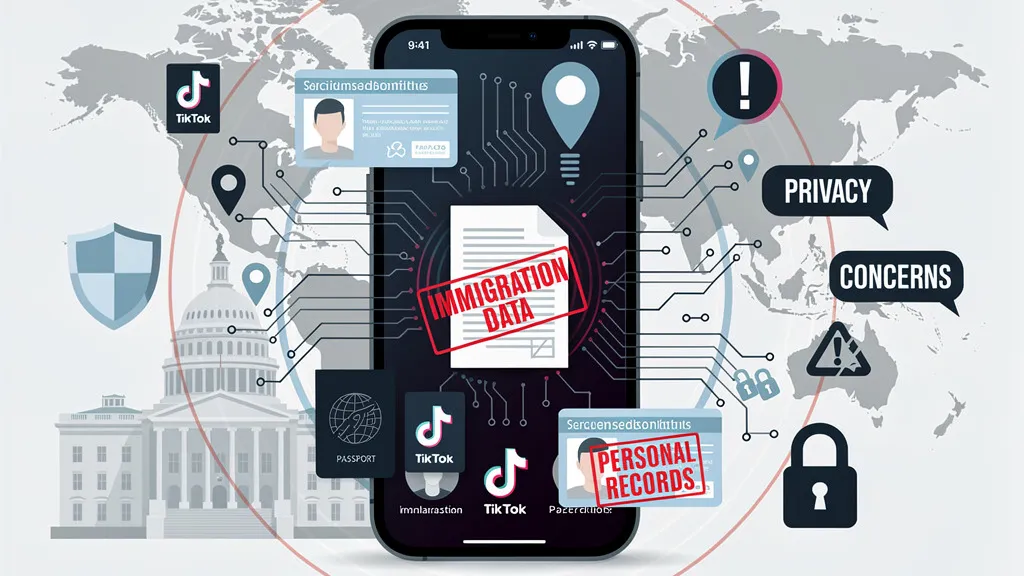
TikTok’s New Frontier: App’s Demand for Immigration Status Ignites Privacy Firestorm
TikTok has ignited a global firestorm by updating its policy to collect users' immigration status. The move, intended for ad targeting and regulatory compliance, has sparked widespread user backlash, condemnation from privacy advocates, and renewed national security concerns over its ties to China's ByteDance.

Inside Huawei Cloud’s Bold 2026 Partner Strategy: How Data Centers Become the Cornerstone of AI Infrastructure Expansion
Huawei Cloud's 2026 partner strategy positions data centers as strategic allies in AI infrastructure expansion, offering unprecedented revenue-sharing models and technical integration. The approach targets emerging markets with generous incentives while navigating geopolitical constraints and semiconductor restrictions.

Upwind’s Runtime Revolution: $250M Fuels $1.5B Cloud Security Unicorn
Upwind's $250 million Series B catapults it to $1.5 billion valuation, powering runtime-first cloud security amid 900% revenue surge. Backed by Bessemer and all-stars, the ex-Spot.io team targets AI-era threats for giants like Siemens and Roku.
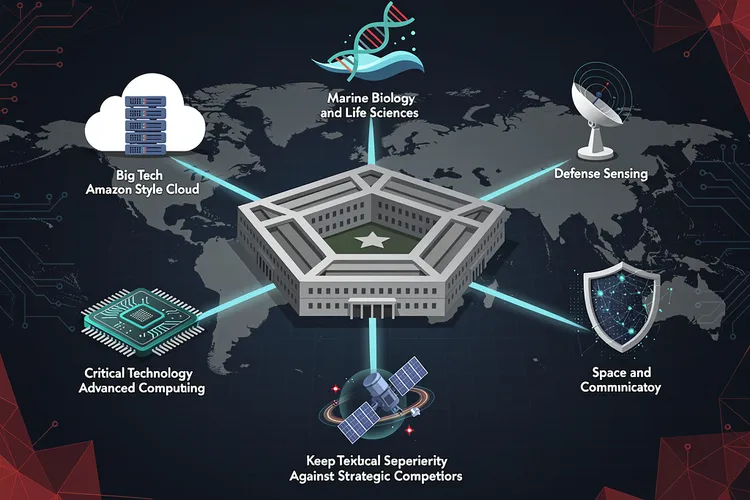
Pentagon’s New Technology Chiefs Signal Major Shift in Defense Innovation Strategy
The Pentagon's Chief Technology Officer has selected six defense technology veterans with diverse backgrounds—from Amazon executives to marine biologists—to lead Critical Technology Areas, signaling a major shift in how the Defense Department approaches innovation and maintains technological superiority against strategic competitors.

TikTok Finalizes US Restructuring Deal with Oracle, Avoids Ban
TikTok has finalized a deal to restructure its U.S. operations into a new entity majority-owned by American and allied investors, including Oracle, Silver Lake, and MGX, with ByteDance retaining a 20% stake. This hybrid model addresses data security concerns, avoids a nationwide ban, and sets a precedent for global tech sovereignty.

Finland Recruits Burned-Out US AI and Tech Talent with Visas, Better Balance
Finland is actively recruiting disillusioned U.S. tech professionals in AI and software by offering superior work-life balance, fast-track visas, and a high quality of life, aiming to attract talent by 2026 amid American burnout. This strategy challenges global tech dynamics, positioning Finland as an innovative haven.

AI Answers Demand New Rules: Why Google SEO Fails ChatGPT Citations
Mike King reveals why Google SEO tactics fail AI engines like ChatGPT, from query fan-out to HTTP 499 timeouts and chunking boosts. Case studies show 661% visibility gains via GEO.

India’s AI Classroom Revolution: Google’s Gemini Scales Where Silicon Valley Stumbles
India leads global Gemini usage for learning, teaching Google to scale AI amid 247 million students, state curricula, and access gaps. Partnerships and tools like JEE mocks position it as a worldwide proving ground.

Inside Elon Musk’s Audacious Plan to Fuse Rockets and AI: The SpaceX-xAI Megamerger
Elon Musk is merging SpaceX and xAI in a deal combining an $800 billion rocket manufacturer with a $230 billion AI startup, advancing his vision of space-based data centers while consolidating his technological empire ahead of a planned summer IPO.

DeepSeek’s Bold Push: AI Search and Agents Challenge Google, OpenAI
DeepSeek's January job postings reveal plans for a multilingual, multimodal AI search engine and persistent agents, intensifying rivalry with Google and OpenAI. Building on cost-efficient models like R1, the startup targets phone-first queries and autonomous task execution.

Dell Faces Federal Lawsuit Over Alleged 401(k) Mismanagement as Former Employees Claim Fiduciary Breaches
Former Dell employees have filed a federal lawsuit alleging systematic mismanagement of the company's 401(k) retirement plan, claiming fiduciary breaches under ERISA. The case raises critical questions about corporate responsibility for employee retirement security and could affect thousands of workers.
American Airlines Flight Attendants Left Unpaid During Winter Storm Fern as Compensation Dispute Exposes Industry Fault Lines
Winter Storm Fern exposed a controversial airline industry practice: flight attendants only get paid when planes are airborne. American Airlines crew members spent days stranded at airports without compensation, reigniting debates about labor practices in commercial aviation.
The algorithm Will See You Now: Inside Pinterest’s Pivot From Human Curation to AI-Driven Efficiency
Pinterest's recent layoffs signal a pivotal industry shift where AI integration is directly replacing human roles to boost margins. This deep dive explores how the company is trading operational headcount for algorithmic efficiency, the impact on company culture, and why Wall Street is rewarding this ruthless approach to automation.
The $45,000 Question: Why Employee Turnover Has Become Corporate America’s Most Expensive Problem
Employee turnover now costs companies an average of $45,315 per worker, a figure that encompasses recruitment, training, and productivity losses. This staggering price tag is forcing organizations to fundamentally rethink their approach to talent retention as the financial impact of the revolving door threatens profitability.
Dick’s Sporting Goods Bets Big on In-House Creators as Brands Grab Influencer Reins
Dick’s Sporting Goods expands its Varsity Team influencer program to the public in 2026, offering paid gigs and perks amid a trend of brands owning creator relationships for authenticity and efficiency over AI content.
AI Data Boom Powers Storage Stock Surges for WD, Seagate in 2025
AI's explosive data demands are fueling massive gains in storage stocks like SanDisk, Western Digital, and Seagate, with 2025 surges driven by shortages, pricing power, and AI infrastructure needs. Despite risks like competition and overcapacity, the 2026 outlook remains bullish for these key players.
Huang’s Beijing Gambit: Nvidia Pushes Past U.S. Chip Curbs
Nvidia CEO Jensen Huang heads to China to revive stalled AI chip sales amid U.S. export curbs, preparing H200 shipments. The pre-Lunar New Year visit highlights tensions between market access and national security.
Target’s Immigration Enforcement Controversy Reveals Corporate America’s Growing Dilemma on Federal Cooperation
Target faces nationwide protests after reports of cooperating with ICE enforcement operations, highlighting corporate America's growing dilemma navigating between legal obligations, consumer activism, and political polarization on immigration issues.
Ivanti’s Neurons Platform Pioneers Autonomous IT Operations Through Agentic AI Integration
Ivanti integrates agentic AI into its Neurons platform, enabling autonomous IT service management, endpoint security, and asset management. The customer preview launches Q1 2025, positioning the company at the forefront of autonomous IT operations amid growing industry adoption of AI agents.
From Pennsylvania State Halls to HR Tech Frontlines: Reid Walsh’s Pivot at NEOGOV
Reid Walsh, ex-Deputy Secretary in Pennsylvania state HR, now NEOGOV's CHRO, leverages public-sector expertise to drive private impact in government HCM software. Her reforms and AI insights are transforming how agencies hire and engage amid tech shifts.
InfoSec’s Broader Shield: Why It Outspans Cybersecurity in 2026’s Threat Surge
InfoSec broadly protects all data via the CIA triad, encompassing cybersecurity's digital focus amid AI phishing, ransomware, and skill shortages projected for 2026.
Google’s Gemini AI Assistant Finally Bridges the Calendar Gap with Secondary and Shared Event Support
Google's Gemini AI assistant now supports secondary and shared calendars, addressing a critical limitation that prevented users from managing complex multi-calendar schedules. The update enables natural language interactions across all associated calendars, marking an important step in Gemini's evolution toward comprehensive productivity assistance.
How Google’s Gemini AI Turned a Singapore Hackathon Into the Future of Software Development
A Singapore hackathon team's use of Google Gemini AI to rapidly build complex software demonstrates how artificial intelligence is transforming development economics, productivity, and the fundamental skills required of software engineers in an AI-augmented future.
Chainguard’s Zero-CVE Revolution: Taming Open Source Chaos for CIOs
Chainguard rebuilds open-source components from source to deliver zero-CVE images, freeing CIOs from 30-40% engineering time lost to triage while fortifying supply chains against malicious threats.
Bulgarian Tech Talent Ditches Berlin for Sofia: Remote Work’s Net Pay Revolution
Skilled Bulgarians are returning from Germany to work remotely for the same pay, netting 20-30% more due to lower taxes. Over 18,000 came home in 2024 versus 9,000 leaving, reversing brain drain amid EU remote flexibility.
Entity Links Unlock Local SEO Gains for Multi-Site Brands
Entity linking propelled Brightview Senior Living to 25% more clicks on non-branded queries and 16% YoY growth in local page traffic, defying AI Overview declines. Multi-site brands gain semantic clarity, boosting rankings and AI accuracy.
Google’s AI Counter-Offensive: How Tiny Models Are Quietly Remaking Search
Google is pivoting its AI strategy, using small, specialized language models as 'plug-ins' to enhance its larger systems. New research shows this modular approach improves user intent detection by 27%, signaling a major shift for SEO from keywords to deep intent-matching and reshaping the future of search.
The Quantum Computing Race Intensifies as IBM and Google Battle for Supremacy in Error Correction
IBM and Google are locked in an intense competition to achieve practical quantum computing through breakthrough error correction techniques. Recent advances suggest the quantum revolution may finally be transitioning from laboratory curiosity to commercial viability, though significant technical challenges remain before these machines can fulfill their transformative potential.
How Rivian’s Grey’s Anatomy Ambulance Could Reshape Emergency Medical Transportation
Rivian's custom electric ambulance for Grey's Anatomy represents more than Hollywood product placement. The vehicle signals a strategic pivot toward commercial markets that could redefine emergency medical services while providing Rivian a path to profitability beyond consumer vehicles.
Subscribe Newsletter
Subscribe to our newsletter and stay up to date with the latest news, updates, and exclusive offers. Join our community today!
The Hidden Mathematics Behind Wall Street’s Trillion-Dollar Derivatives Machine
The $600 trillion derivatives market operates on mathematical models that most participants barely understand. From Black-Scholes limitations to machine learning innovations, the complex interplay between sophisticated pricing algorithms and systemic risk continues to challenge regulators and market participants in an increasingly interconnected global financial system.
France’s Digital Sovereignty Push: How VPN Regulations Could Reshape European Internet Freedom
France's Interior Minister has announced VPNs are under evaluation following a social media ban for under-15s, raising concerns about digital privacy and internet freedom across Europe and potentially setting precedent for restrictive regulations.
eBay Bans AI Shopping Bots and Scrapers from February 2026
Bay is banning AI-powered shopping agents, scrapers, and automated order systems effective February 20, 2026, to safeguard marketplace fairness, prevent bots from hoarding inventory or scalping, and counter AI-driven disruptions. This policy reflects concerns over eroding trust in e-commerce, with mixed reactions from users and potential industry-wide implications.
CDK’s CDP Gambit: Unifying Dealer Data at NADA 2026
CDK Global launched its integrated Customer Data Platform at NADA 2026, unifying dealer data for AI-driven personalization and revenue gains. Aimed at 15,000 clients, it promises real-time insights amid fierce competition.
How SAIC’s Mission Integration Strategy Could Transform Defense Technology Deployment
SAIC's chief technology officer Bob Ritchie advocates for mission integration to accelerate defense capability delivery, challenging traditional acquisition models. This approach emphasizes parallel development and deployment processes, modular architectures, and closer collaboration between contractors and warfighters to compress timelines from decades to months.
PayPal’s Abrupt Leadership Overhaul: How HP’s Enrique Lores Became the Digital Payments Giant’s Unexpected Savior
PayPal's appointment of HP CEO Enrique Lores to replace Alex Chriss marks a dramatic leadership overhaul following disappointing Q4 earnings and an 18% stock plunge. The move left HP blindsided and scrambling for succession plans, while PayPal bets on operational expertise to revive its struggling payments platform amid mounting competitive pressures.
Join Us
Share your perspective with confidence. Your experience could inform, inspire, and help someone live better.
Archives
Authors
More ...-
 Vivian Stewart 57 articles
As a writer, Vivian Stewart covers retail operations with an eye for detail. They work through comparative reviews and hands‑on testing to make complex topics approachable. They believe good analysis should be specific, testable, and useful to practitioners. They frequently translate research into action for marketing teams, prioritizing clarity over buzzwords. Their coverage includes guidance for teams under resource or time constraints. They explore how policies, markets, and infrastructure intersect to create second‑order effects. They write about both the promise and the cost of transformation, including risks that are easy to overlook. They frequently compare approaches across industries to surface patterns that travel well. Readers appreciate their ability to connect strategic goals with everyday workflows. Their reporting blends qualitative insight with data, highlighting what actually changes decision‑making. They maintain a balanced tone, separating speculation from evidence. They are known for dissecting tools and strategies that improve execution without adding complexity. They emphasize decision‑making under uncertainty and imperfect data. Their work aims to be useful first, timely second.
-
 Emily Scott 68 articles
As a writer, Emily Scott covers consumer behavior with an eye for detail. They work through clear frameworks, case studies, and practical checklists to make complex topics approachable. They value transparent sourcing and prefer primary data when it is available. A recurring theme in their writing is how teams build repeatable systems and measure impact over time. They often cover how organizations respond to change, from process redesign to technology adoption. Their reporting blends qualitative insight with data, highlighting what actually changes decision‑making. They emphasize responsible innovation and the constraints teams face when scaling products or services. They maintain a balanced tone, separating speculation from evidence. Their coverage includes guidance for teams under resource or time constraints. Readers appreciate their ability to connect strategic goals with everyday workflows. They write about both the promise and the cost of transformation, including risks that are easy to overlook. They tend to favor small experiments over sweeping predictions. They value transparency, practical advice, and honest uncertainty.
-
 Emily Chen 63 articles
Known for clear analysis, Emily Chen follows retail operations and the people building it. They work through clear frameworks, case studies, and practical checklists to make complex topics approachable. They often cover how organizations respond to change, from process redesign to technology adoption. Readers appreciate their ability to connect strategic goals with everyday workflows. They examine how customer expectations evolve and how organizations adapt to meet them. They value transparent sourcing and prefer primary data when it is available. A recurring theme in their writing is how teams build repeatable systems and measure impact over time. They also highlight cultural factors that determine whether change sticks. They avoid buzzwords, focusing instead on outcomes, incentives, and the human side of technology. They explore how policies, markets, and infrastructure intersect to create second‑order effects. They believe good analysis should be specific, testable, and useful to practitioners. They tend to favor small experiments over sweeping predictions. They value transparency, practical advice, and honest uncertainty.
-
 Layla Reed 56 articles
Known for clear analysis, Layla Reed follows retail operations and the people building it. They work through long‑form narratives grounded in real‑world metrics to make complex topics approachable. They believe good analysis should be specific, testable, and useful to practitioners. They avoid buzzwords, focusing instead on outcomes, incentives, and the human side of technology. They explore how policies, markets, and infrastructure intersect to create second‑order effects. They frequently compare approaches across industries to surface patterns that travel well. They are known for dissecting tools and strategies that improve execution without adding complexity. A recurring theme in their writing is how teams build repeatable systems and measure impact over time. Their reporting blends qualitative insight with data, highlighting what actually changes decision‑making. They often cover how organizations respond to change, from process redesign to technology adoption. They maintain a balanced tone, separating speculation from evidence. Outside of publishing, they track public datasets and industry benchmarks. Readers return for the clarity, the caution, and the actionable takeaways.
-
 Stella Evans 57 articles
Stella Evans is a journalist who focuses on AI deployment. They work through trend monitoring with careful context and caveats to make complex topics approachable. They believe good analysis should be specific, testable, and useful to practitioners. They examine how customer expectations evolve and how organizations adapt to meet them. Their reporting blends qualitative insight with data, highlighting what actually changes decision‑making. Readers appreciate their ability to connect strategic goals with everyday workflows. They write about both the promise and the cost of transformation, including risks that are easy to overlook. They also highlight cultural factors that determine whether change sticks. Their coverage includes guidance for teams under resource or time constraints. Their perspective is shaped by interviews across engineering, operations, and leadership roles. They often cover how organizations respond to change, from process redesign to technology adoption. They maintain a balanced tone, separating speculation from evidence. They are interested in the economics of scale and operational resilience. They prefer evidence over hype and explain trade‑offs plainly.
-
 Micah Shaw 60 articles
Micah Shaw specializes in developer productivity and reports on the systems behind modern business. Their approach combines interviews with operators and data‑backed analysis. Their perspective is shaped by interviews across engineering, operations, and leadership roles. Readers appreciate their ability to connect strategic goals with everyday workflows. They frequently compare approaches across industries to surface patterns that travel well. Their reporting blends qualitative insight with data, highlighting what actually changes decision‑making. They maintain a balanced tone, separating speculation from evidence. Their coverage includes guidance for teams under resource or time constraints. They emphasize responsible innovation and the constraints teams face when scaling products or services. They are known for dissecting tools and strategies that improve execution without adding complexity. They look for overlooked details that differentiate sustainable success from short‑term wins. A recurring theme in their writing is how teams build repeatable systems and measure impact over time. They watch the policy landscape closely when it affects product strategy. Their work aims to be useful first, timely second.