
Inside Huawei Cloud’s Bold 2026 Partner Strategy: How Data Centers Become the Cornerstone of AI Infrastructure Expansion
Huawei Cloud's 2026 partner strategy positions data centers as strategic allies in AI infrastructure expansion, offering unprecedented revenue-sharing models and technical integration. The approach targets emerging markets with generous incentives while navigating geopolitical constraints and semiconductor restrictions.

Upwind’s Runtime Revolution: $250M Fuels $1.5B Cloud Security Unicorn
Upwind's $250 million Series B catapults it to $1.5 billion valuation, powering runtime-first cloud security amid 900% revenue surge. Backed by Bessemer and all-stars, the ex-Spot.io team targets AI-era threats for giants like Siemens and Roku.
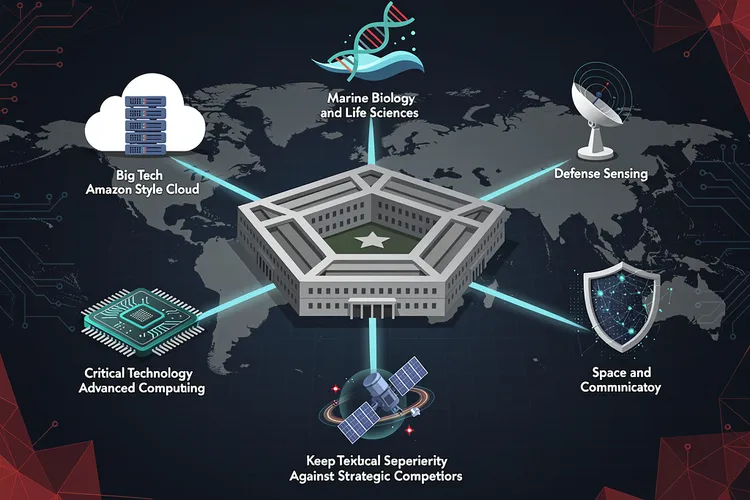
Pentagon’s New Technology Chiefs Signal Major Shift in Defense Innovation Strategy
The Pentagon's Chief Technology Officer has selected six defense technology veterans with diverse backgrounds—from Amazon executives to marine biologists—to lead Critical Technology Areas, signaling a major shift in how the Defense Department approaches innovation and maintains technological superiority against strategic competitors.

TikTok Finalizes US Restructuring Deal with Oracle, Avoids Ban
TikTok has finalized a deal to restructure its U.S. operations into a new entity majority-owned by American and allied investors, including Oracle, Silver Lake, and MGX, with ByteDance retaining a 20% stake. This hybrid model addresses data security concerns, avoids a nationwide ban, and sets a precedent for global tech sovereignty.

Finland Recruits Burned-Out US AI and Tech Talent with Visas, Better Balance
Finland is actively recruiting disillusioned U.S. tech professionals in AI and software by offering superior work-life balance, fast-track visas, and a high quality of life, aiming to attract talent by 2026 amid American burnout. This strategy challenges global tech dynamics, positioning Finland as an innovative haven.

AI Answers Demand New Rules: Why Google SEO Fails ChatGPT Citations
Mike King reveals why Google SEO tactics fail AI engines like ChatGPT, from query fan-out to HTTP 499 timeouts and chunking boosts. Case studies show 661% visibility gains via GEO.

India’s AI Classroom Revolution: Google’s Gemini Scales Where Silicon Valley Stumbles
India leads global Gemini usage for learning, teaching Google to scale AI amid 247 million students, state curricula, and access gaps. Partnerships and tools like JEE mocks position it as a worldwide proving ground.

Inside Elon Musk’s Audacious Plan to Fuse Rockets and AI: The SpaceX-xAI Megamerger
Elon Musk is merging SpaceX and xAI in a deal combining an $800 billion rocket manufacturer with a $230 billion AI startup, advancing his vision of space-based data centers while consolidating his technological empire ahead of a planned summer IPO.

DeepSeek’s Bold Push: AI Search and Agents Challenge Google, OpenAI
DeepSeek's January job postings reveal plans for a multilingual, multimodal AI search engine and persistent agents, intensifying rivalry with Google and OpenAI. Building on cost-efficient models like R1, the startup targets phone-first queries and autonomous task execution.

Dell Faces Federal Lawsuit Over Alleged 401(k) Mismanagement as Former Employees Claim Fiduciary Breaches
Former Dell employees have filed a federal lawsuit alleging systematic mismanagement of the company's 401(k) retirement plan, claiming fiduciary breaches under ERISA. The case raises critical questions about corporate responsibility for employee retirement security and could affect thousands of workers.
Samsung’s Hidden AI Engine: Why Users Are Racing to Disable AICore and What It Means for Mobile Intelligence
Samsung's AICore service has become controversial as users discover it significantly drains battery life while running continuously in background. The hidden AI processing engine, designed to enhance device intelligence, is sparking debate about transparency and user control over resource-intensive features in modern smartphones.
Inside Mustang Panda’s Arsenal: How China’s Elite Hackers Refined Their Most Persistent Malware
Chinese state-sponsored hacking group Mustang Panda has deployed enhanced versions of its TONESHELL backdoor and PlugX malware, incorporating sophisticated evasion techniques and modular architecture. The updates demonstrate continuous evolution in tradecraft targeting government and diplomatic entities worldwide.
Steel Forge: Agentic AI’s Bold Bid to Automate Procurement and Reshape Mill Jobs
Agentic AI is revolutionizing steel manufacturing by automating procurement, cutting costs 5-15%, and shifting workforce roles to strategy amid razor-thin margins. Real deployments in mills show predictive maintenance and supplier pivots slashing downtime and risks.
Apple’s Xcode 26.3 Ushers in Era of AI-Powered Development with Claude Agent and OpenAI Integration
Apple's Xcode 26.3 introduces agentic coding with Anthropic's Claude Agent and OpenAI's Codex, marking a fundamental shift in software development. The integration of Model Context Protocol support allows developers to choose between AI providers, representing Apple's most aggressive move into AI-assisted development and potentially reshaping the profession.
Amazon’s Project Kuiper Seeks FCC Extension as SpaceX Partnership Deepens in Satellite Internet Race
Amazon requests FCC extension for Project Kuiper satellite deployment, purchasing additional SpaceX launches despite direct competition. The move highlights technical complexities and limited launch options as Amazon pursues its $10 billion satellite internet ambitions against Starlink's established market position.
Channel99’s AI Overhaul Targets B2B Paid Search Waste
Channel99 launches AI-powered Paid Search Optimization to help B2B marketers cut waste and boost ROI in Google and Microsoft campaigns. The tool integrates CRM data for precise account targeting, building on prior audience and channel innovations amid rising ad efficiency demands.
MasterClass 2025 Holiday Deal: 40% Off Annual Subscriptions
MasterClass's 2025 holiday promotion offers 40% off annual subscriptions, reducing Standard to $72, Plus to $108, and Premium to $144, including gifts. This strategy enhances accessibility to celebrity-led courses amid market competition. It boosts subscriber growth and democratizes elite education during economic uncertainties.
SMBs Forge AI Powerhouses: Blueprint for Lean Centers of Excellence
Small businesses build lean AI Centers of Excellence to automate processes and drive growth, overcoming silos with governance and cross-functional buy-in amid rising 57% adoption rates.
Trump’s $10 Billion Strike Back at IRS Over Tax Leak Sparks Sovereign Immunity Clash
President Trump and family sue IRS and Treasury for $10 billion over Charles Littlejohn's leak of confidential tax records to media outlets, alleging negligence that caused reputational harm. Filed days after Booz Allen contract cancellations, the case challenges government safeguards.
Eva Amurri and Mom Susan Sarandon Bare Cleavage and Midriffs at SAG Awards
Eva Amurri and Susan Sarandon likely had people saying, "Like mother, like daughter," at the SAG Awards on Saturday evening. Both ladies showed off ample cleava
Inside the Federal Government’s Radical Plan to Transform Digital Services Through Unified Technology Standards
Federal CIO Greg Barbaccia unveils ambitious "one government" strategy to overhaul digital services through unified standards and shared platforms, prioritizing tangible outcomes over technical metrics in the most comprehensive federal IT transformation attempt in decades.
Apple Fined $150K by New Jersey for Obscure Store Pricing
Apple Inc. agreed to pay a $150,000 fine to New Jersey for violating a 2017 consent order by not clearly displaying prices in its 11 stores statewide, relying instead on staff or kiosks. The settlement requires enhanced employee training, audits, and visible pricing to ensure consumer transparency. This adds to Apple's mounting global regulatory challenges.
The Data Fluency Imperative: How Modern Marketers Are Mastering Analytics Terminology to Drive Business Growth
As marketing technology grows more sophisticated, understanding data analytics terminology has transformed from optional knowledge into a fundamental requirement. This deep dive explores how modern marketers are building analytical fluency to drive business growth and strategic decision-making in data-driven organizations.
The Hidden Cost of America’s Airport Security Overhaul: How Real ID Implementation Will Reshape Travel Economics
The TSA's $9 fee increase and Real ID deadline convergence mark the most significant transformation of U.S. aviation security since 9/11, with 48 million Americans still lacking compliant identification. This deep dive explores the cascading economic impacts on travelers, airlines, and state governments.
Websites in Days: Mastering No-Code Builds for 2026
No-code AI tools and refined 10-step processes enable website creation in days, not months, blending planning, builders like Wix and Hostinger, and SEO for 2026 dominance.
Japan’s SALESCORE Secures $7.7 Million Series B to AI-Power Sales Reproducibility
Tokyo's SALESCORE raised ¥1.15 billion in Series B funding to supercharge AI for sales enablement, tackling Japan's reproducibility woes with data visualization and consulting. Backed by Nissay Capital, the firm eyes product upgrades and hires amid surging sales tech demand.
DAM’s ‘Department of No’ Crisis: Governance Failures Fuel Workflow Chaos
Enterprise DAM systems are plagued by the 'Department of No,' where governance failures create manual workflow bottlenecks. Experts call for AI-driven overhauls to reconnect legal, brand, and creative teams, slashing delays and costs dramatically.
Apple’s Foldable iPhone Battery Strategy Signals Major Shift in Mobile Power Engineering
Apple's foldable iPhone battery specifications reveal a dual-cell system with 4,000-4,500 mAh combined capacity, reflecting sophisticated engineering tradeoffs and the company's strategy to balance form factor innovation with its traditional emphasis on hardware-software optimization over raw specifications.
Subscribe Newsletter
Subscribe to our newsletter and stay up to date with the latest news, updates, and exclusive offers. Join our community today!
Anthropic’s Legal AI Plugin Sends Shockwaves Through Publishing and Legal Services Sector
Anthropic's new legal AI plugin triggers stock declines for LegalZoom, Thomson Reuters, and RELX as the legal services industry confronts potential disruption from generative AI technology offering research and document automation at fraction of traditional costs.
Microsoft Teams Charts New Territory With AI-Powered Collaboration Tools and Enterprise Integration Push
Microsoft Teams' February 2026 updates introduce AI-powered meeting summarization, real-time translation across 40 languages, and intelligent workflow automation, transforming the platform from communication tool to comprehensive work orchestration system as competition intensifies in the maturing collaboration software market.
Trump Accounts Surge: 600,000 Families Rush to Claim $1,000 Baby Bonuses
Treasury Secretary Scott Bessent disclosed 600,000 families have applied for Trump accounts since tax season's start, unlocking $1,000 Treasury seeds for eligible newborns amid corporate matches and billionaire pledges fueling early wealth-building fervor.
OpenAI Hires Shopify Vet to Lead ChatGPT Commerce Platform
OpenAI has hired Shopify veteran Glen Coates to lead its ChatGPT app platform, focusing on integrations for commerce and productivity. This move supports partnerships with retailers like Shopify, Etsy, and Walmart, aiming to create an AI-driven ecosystem. Amid talent acquisitions and ethical challenges, it positions OpenAI to redefine digital interactions.
Sophos Workspace Protection: Browser-First Shield for Hybrid Work and AI Risks
Sophos Workspace Protection reimagines hybrid security via a browser-centric model, governing AI use and slashing SASE complexity. Powered by Island, it bundles ZTNA, DNS filtering, and data controls for distributed workforces.
Accessibility’s Product Void: Why Software Needs a Dedicated PM Now
Software firms falter on accessibility due to treating it as debt without product ownership. Enter the Accessibility Product Manager: a strategic role blending business, UX, and tech to drive compliance, revenue, and innovation amid 2025 regulations.

Aria Brooks writes about consumer behavior, translating complex ideas into practical insight. They work through editorial reviews backed by user research to make complex topics approachable. They write about both the promise and the cost of transformation, including risks that are easy to overlook. Their perspective is shaped by interviews across engineering, operations, and leadership roles. A recurring theme in their writing is how teams build repeatable systems and measure impact over time. They are known for dissecting tools and strategies that improve execution without adding complexity. They believe good analysis should be specific, testable, and useful to practitioners. They emphasize responsible innovation and the constraints teams face when scaling products or services. They explore how policies, markets, and infrastructure intersect to create second‑order effects. Their coverage includes guidance for teams under resource or time constraints. They value transparent sourcing and prefer primary data when it is available. They pay attention to the organizational incentives that shape outcomes. They focus on what changes decisions, not just what makes headlines.
View ProfileJoin Us
Share your perspective with confidence. Your experience could inform, inspire, and help someone live better.
Archives
Authors
More ...-
 Vivian Stewart 57 articles
As a writer, Vivian Stewart covers retail operations with an eye for detail. They work through comparative reviews and hands‑on testing to make complex topics approachable. They believe good analysis should be specific, testable, and useful to practitioners. They frequently translate research into action for marketing teams, prioritizing clarity over buzzwords. Their coverage includes guidance for teams under resource or time constraints. They explore how policies, markets, and infrastructure intersect to create second‑order effects. They write about both the promise and the cost of transformation, including risks that are easy to overlook. They frequently compare approaches across industries to surface patterns that travel well. Readers appreciate their ability to connect strategic goals with everyday workflows. Their reporting blends qualitative insight with data, highlighting what actually changes decision‑making. They maintain a balanced tone, separating speculation from evidence. They are known for dissecting tools and strategies that improve execution without adding complexity. They emphasize decision‑making under uncertainty and imperfect data. Their work aims to be useful first, timely second.
-
 Emily Scott 68 articles
As a writer, Emily Scott covers consumer behavior with an eye for detail. They work through clear frameworks, case studies, and practical checklists to make complex topics approachable. They value transparent sourcing and prefer primary data when it is available. A recurring theme in their writing is how teams build repeatable systems and measure impact over time. They often cover how organizations respond to change, from process redesign to technology adoption. Their reporting blends qualitative insight with data, highlighting what actually changes decision‑making. They emphasize responsible innovation and the constraints teams face when scaling products or services. They maintain a balanced tone, separating speculation from evidence. Their coverage includes guidance for teams under resource or time constraints. Readers appreciate their ability to connect strategic goals with everyday workflows. They write about both the promise and the cost of transformation, including risks that are easy to overlook. They tend to favor small experiments over sweeping predictions. They value transparency, practical advice, and honest uncertainty.
-
 Emily Chen 63 articles
Known for clear analysis, Emily Chen follows retail operations and the people building it. They work through clear frameworks, case studies, and practical checklists to make complex topics approachable. They often cover how organizations respond to change, from process redesign to technology adoption. Readers appreciate their ability to connect strategic goals with everyday workflows. They examine how customer expectations evolve and how organizations adapt to meet them. They value transparent sourcing and prefer primary data when it is available. A recurring theme in their writing is how teams build repeatable systems and measure impact over time. They also highlight cultural factors that determine whether change sticks. They avoid buzzwords, focusing instead on outcomes, incentives, and the human side of technology. They explore how policies, markets, and infrastructure intersect to create second‑order effects. They believe good analysis should be specific, testable, and useful to practitioners. They tend to favor small experiments over sweeping predictions. They value transparency, practical advice, and honest uncertainty.
-
 Layla Reed 56 articles
Known for clear analysis, Layla Reed follows retail operations and the people building it. They work through long‑form narratives grounded in real‑world metrics to make complex topics approachable. They believe good analysis should be specific, testable, and useful to practitioners. They avoid buzzwords, focusing instead on outcomes, incentives, and the human side of technology. They explore how policies, markets, and infrastructure intersect to create second‑order effects. They frequently compare approaches across industries to surface patterns that travel well. They are known for dissecting tools and strategies that improve execution without adding complexity. A recurring theme in their writing is how teams build repeatable systems and measure impact over time. Their reporting blends qualitative insight with data, highlighting what actually changes decision‑making. They often cover how organizations respond to change, from process redesign to technology adoption. They maintain a balanced tone, separating speculation from evidence. Outside of publishing, they track public datasets and industry benchmarks. Readers return for the clarity, the caution, and the actionable takeaways.
-
 Stella Evans 57 articles
Stella Evans is a journalist who focuses on AI deployment. They work through trend monitoring with careful context and caveats to make complex topics approachable. They believe good analysis should be specific, testable, and useful to practitioners. They examine how customer expectations evolve and how organizations adapt to meet them. Their reporting blends qualitative insight with data, highlighting what actually changes decision‑making. Readers appreciate their ability to connect strategic goals with everyday workflows. They write about both the promise and the cost of transformation, including risks that are easy to overlook. They also highlight cultural factors that determine whether change sticks. Their coverage includes guidance for teams under resource or time constraints. Their perspective is shaped by interviews across engineering, operations, and leadership roles. They often cover how organizations respond to change, from process redesign to technology adoption. They maintain a balanced tone, separating speculation from evidence. They are interested in the economics of scale and operational resilience. They prefer evidence over hype and explain trade‑offs plainly.
-
 Micah Shaw 60 articles
Micah Shaw specializes in developer productivity and reports on the systems behind modern business. Their approach combines interviews with operators and data‑backed analysis. Their perspective is shaped by interviews across engineering, operations, and leadership roles. Readers appreciate their ability to connect strategic goals with everyday workflows. They frequently compare approaches across industries to surface patterns that travel well. Their reporting blends qualitative insight with data, highlighting what actually changes decision‑making. They maintain a balanced tone, separating speculation from evidence. Their coverage includes guidance for teams under resource or time constraints. They emphasize responsible innovation and the constraints teams face when scaling products or services. They are known for dissecting tools and strategies that improve execution without adding complexity. They look for overlooked details that differentiate sustainable success from short‑term wins. A recurring theme in their writing is how teams build repeatable systems and measure impact over time. They watch the policy landscape closely when it affects product strategy. Their work aims to be useful first, timely second.