
Inside Huawei Cloud’s Bold 2026 Partner Strategy: How Data Centers Become the Cornerstone of AI Infrastructure Expansion
Huawei Cloud's 2026 partner strategy positions data centers as strategic allies in AI infrastructure expansion, offering unprecedented revenue-sharing models and technical integration. The approach targets emerging markets with generous incentives while navigating geopolitical constraints and semiconductor restrictions.

Upwind’s Runtime Revolution: $250M Fuels $1.5B Cloud Security Unicorn
Upwind's $250 million Series B catapults it to $1.5 billion valuation, powering runtime-first cloud security amid 900% revenue surge. Backed by Bessemer and all-stars, the ex-Spot.io team targets AI-era threats for giants like Siemens and Roku.
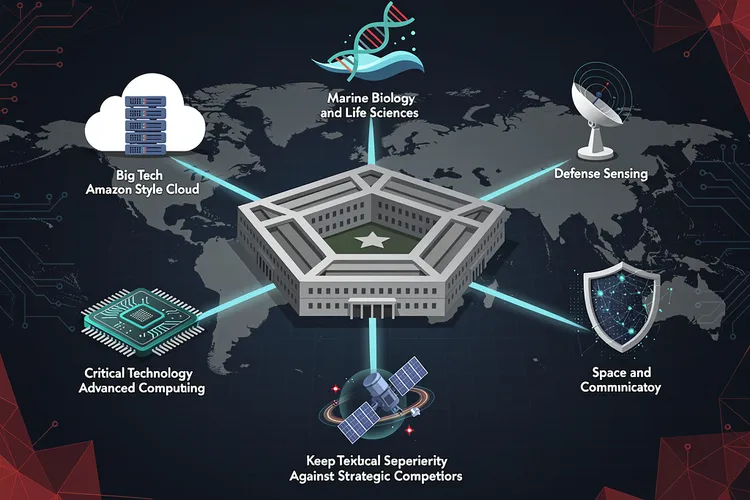
Pentagon’s New Technology Chiefs Signal Major Shift in Defense Innovation Strategy
The Pentagon's Chief Technology Officer has selected six defense technology veterans with diverse backgrounds—from Amazon executives to marine biologists—to lead Critical Technology Areas, signaling a major shift in how the Defense Department approaches innovation and maintains technological superiority against strategic competitors.

TikTok Finalizes US Restructuring Deal with Oracle, Avoids Ban
TikTok has finalized a deal to restructure its U.S. operations into a new entity majority-owned by American and allied investors, including Oracle, Silver Lake, and MGX, with ByteDance retaining a 20% stake. This hybrid model addresses data security concerns, avoids a nationwide ban, and sets a precedent for global tech sovereignty.

Finland Recruits Burned-Out US AI and Tech Talent with Visas, Better Balance
Finland is actively recruiting disillusioned U.S. tech professionals in AI and software by offering superior work-life balance, fast-track visas, and a high quality of life, aiming to attract talent by 2026 amid American burnout. This strategy challenges global tech dynamics, positioning Finland as an innovative haven.

AI Answers Demand New Rules: Why Google SEO Fails ChatGPT Citations
Mike King reveals why Google SEO tactics fail AI engines like ChatGPT, from query fan-out to HTTP 499 timeouts and chunking boosts. Case studies show 661% visibility gains via GEO.

India’s AI Classroom Revolution: Google’s Gemini Scales Where Silicon Valley Stumbles
India leads global Gemini usage for learning, teaching Google to scale AI amid 247 million students, state curricula, and access gaps. Partnerships and tools like JEE mocks position it as a worldwide proving ground.

Inside Elon Musk’s Audacious Plan to Fuse Rockets and AI: The SpaceX-xAI Megamerger
Elon Musk is merging SpaceX and xAI in a deal combining an $800 billion rocket manufacturer with a $230 billion AI startup, advancing his vision of space-based data centers while consolidating his technological empire ahead of a planned summer IPO.

DeepSeek’s Bold Push: AI Search and Agents Challenge Google, OpenAI
DeepSeek's January job postings reveal plans for a multilingual, multimodal AI search engine and persistent agents, intensifying rivalry with Google and OpenAI. Building on cost-efficient models like R1, the startup targets phone-first queries and autonomous task execution.

Dell Faces Federal Lawsuit Over Alleged 401(k) Mismanagement as Former Employees Claim Fiduciary Breaches
Former Dell employees have filed a federal lawsuit alleging systematic mismanagement of the company's 401(k) retirement plan, claiming fiduciary breaches under ERISA. The case raises critical questions about corporate responsibility for employee retirement security and could affect thousands of workers.
Pennsylvania’s Digital Sovereignty Play: How Alerify and Zadara Are Building America’s AI Infrastructure Fortress
Pennsylvania data center provider Alerify's partnership with AI cloud specialist Zadara signals a strategic shift toward sovereign AI infrastructure, offering enterprises localized computing capabilities that address mounting data residency and regulatory compliance concerns in artificial intelligence deployment.
America’s Ballooning Trade Gap: How Import Surge and Export Decline Signal Economic Turbulence Ahead
The U.S. trade deficit surged to $98.4 billion in December, its largest monthly increase since March 2022, as imports jumped while exports declined. The widening gap signals persistent economic imbalances and raises questions about American competitiveness.
SAP’s Cloud Backlog Stumble Ignites Selloff: AI Triumph or Growth Warning?
SAP's Q4 cloud revenue soared 26% at constant currencies, but a current cloud backlog miss at 25% growth triggered a 16% share plunge—the worst since 2020. Executives blame deal timing and geopolitics, guiding 23-25% cloud expansion in 2026 amid AI-driven wins.
AI Search Forces Agencies to Rethink SEO Playbooks
Digital agencies overhaul SEO, metrics and strategies as AI search cuts clicks and rewards brands. Insights from ten firms reveal answer-first content, new KPIs and GEO tactics driving visibility and revenue in zero-click era.
2025 RAM Prices Skyrocket Amid AI-Driven Shortages
In 2025, RAM prices have skyrocketed due to explosive AI demand for high-bandwidth memory in data centers, causing shortages and doubling or tripling costs for consumer DDR5 and DDR4 modules. This crisis disrupts PC building, smartphones, and industries, with experts forecasting prolonged volatility through 2027-2028 as production lags behind.
The Swoosh Sharpens Its Blade: Inside Nike’s High-Stakes Automation Gambit
Nike is cutting 775 jobs and closing a Memphis distribution center as part of a $2 billion cost-saving plan, accelerating its investment in automation. The move signals a major strategic shift to enhance its direct-to-consumer business and compete in a challenging market, highlighting an industry-wide pivot toward automated logistics.
Full-Stack Marketers: Key to Agile Success in 2025 Tech Shifts
Full-stack marketers, blending strategy, data analytics, SEO, and AI tools, are essential for agile business success amid 2025-2026 tech shifts and budget constraints. They navigate the entire marketing funnel, fostering innovation and efficiency. Their versatility positions them as key drivers of integrated, results-oriented campaigns.
OpenAI’s Iris-Gated Social Bet: Altman’s Push to Purge Bots
OpenAI explores a bot-free social network using Sam Altman's World Orbs or Face ID for iris verification, sparking WLD token surges and privacy debates amid X's spam woes.
The $149 Million Record Breach: How an Unsecured Database Became a Criminal’s Shopping Mall
A massive unsecured database containing 149 million usernames and passwords, including credentials for Gmail and Facebook, has been discovered freely accessible on the internet, representing what security researchers call a 'dream wish list for criminals' and highlighting persistent failures in cybersecurity practices.
Inside the Brinkmanship: How House Republicans Navigated a Razor-Thin Majority to End the Federal Shutdown
President Trump signed legislation ending a partial government shutdown after House Republicans navigated a razor-thin majority through procedural drama. The package funds most agencies through September but provides only two weeks for Homeland Security, setting up contentious immigration enforcement negotiations.
IBM’s AI Surge Fuels Record Earnings, $11 Billion Confluent Bet Reshapes Data Play
IBM's Q4 revenue beat estimates at $19.69 billion, driven by 14% software growth and $12.5 billion AI bookings. The $11 billion Confluent deal promises real-time data for AI, with 2026 guidance over 5% revenue rise.
US Lawmakers Strip Right-to-Repair from 2026 NDAA, Boosting Defense Contractors
U.S. lawmakers removed right-to-repair provisions from the 2026 NDAA, preventing military personnel from independently fixing equipment and preserving defense contractors' lucrative service contracts. Critics decry industry influence, citing potential cost savings and improved readiness. This setback fuels ongoing advocacy for repair reforms in military and civilian sectors.
APEX Benchmark Exposes AI Agents’ White-Collar Shortfalls
Mercor's APEX-Agents benchmark reveals leading AI models succeed on just 24% of real white-collar tasks from banking, consulting, and law, casting doubt on workplace readiness despite rapid progress.

Jack Chen specializes in workplace culture and reports on the systems behind modern business. Their approach combines comparative reviews and hands‑on testing. They often cover how organizations respond to change, from process redesign to technology adoption. They emphasize responsible innovation and the constraints teams face when scaling products or services. They also highlight cultural factors that determine whether change sticks. They frequently translate research into action for security leaders, prioritizing clarity over buzzwords. They believe good analysis should be specific, testable, and useful to practitioners. They explore how policies, markets, and infrastructure intersect to create second‑order effects. Readers appreciate their ability to connect strategic goals with everyday workflows. They are known for dissecting tools and strategies that improve execution without adding complexity. Their coverage includes guidance for teams under resource or time constraints. A recurring theme in their writing is how teams build repeatable systems and measure impact over time. Outside of publishing, they track public datasets and industry benchmarks. They focus on what changes decisions, not just what makes headlines.
View ProfileJoin Us
Share your perspective with confidence. Your experience could inform, inspire, and help someone live better.
Archives
Authors
More ...-
 Vivian Stewart 57 articles
As a writer, Vivian Stewart covers retail operations with an eye for detail. They work through comparative reviews and hands‑on testing to make complex topics approachable. They believe good analysis should be specific, testable, and useful to practitioners. They frequently translate research into action for marketing teams, prioritizing clarity over buzzwords. Their coverage includes guidance for teams under resource or time constraints. They explore how policies, markets, and infrastructure intersect to create second‑order effects. They write about both the promise and the cost of transformation, including risks that are easy to overlook. They frequently compare approaches across industries to surface patterns that travel well. Readers appreciate their ability to connect strategic goals with everyday workflows. Their reporting blends qualitative insight with data, highlighting what actually changes decision‑making. They maintain a balanced tone, separating speculation from evidence. They are known for dissecting tools and strategies that improve execution without adding complexity. They emphasize decision‑making under uncertainty and imperfect data. Their work aims to be useful first, timely second.
-
 Emily Scott 68 articles
As a writer, Emily Scott covers consumer behavior with an eye for detail. They work through clear frameworks, case studies, and practical checklists to make complex topics approachable. They value transparent sourcing and prefer primary data when it is available. A recurring theme in their writing is how teams build repeatable systems and measure impact over time. They often cover how organizations respond to change, from process redesign to technology adoption. Their reporting blends qualitative insight with data, highlighting what actually changes decision‑making. They emphasize responsible innovation and the constraints teams face when scaling products or services. They maintain a balanced tone, separating speculation from evidence. Their coverage includes guidance for teams under resource or time constraints. Readers appreciate their ability to connect strategic goals with everyday workflows. They write about both the promise and the cost of transformation, including risks that are easy to overlook. They tend to favor small experiments over sweeping predictions. They value transparency, practical advice, and honest uncertainty.
-
 Emily Chen 63 articles
Known for clear analysis, Emily Chen follows retail operations and the people building it. They work through clear frameworks, case studies, and practical checklists to make complex topics approachable. They often cover how organizations respond to change, from process redesign to technology adoption. Readers appreciate their ability to connect strategic goals with everyday workflows. They examine how customer expectations evolve and how organizations adapt to meet them. They value transparent sourcing and prefer primary data when it is available. A recurring theme in their writing is how teams build repeatable systems and measure impact over time. They also highlight cultural factors that determine whether change sticks. They avoid buzzwords, focusing instead on outcomes, incentives, and the human side of technology. They explore how policies, markets, and infrastructure intersect to create second‑order effects. They believe good analysis should be specific, testable, and useful to practitioners. They tend to favor small experiments over sweeping predictions. They value transparency, practical advice, and honest uncertainty.
-
 Layla Reed 56 articles
Known for clear analysis, Layla Reed follows retail operations and the people building it. They work through long‑form narratives grounded in real‑world metrics to make complex topics approachable. They believe good analysis should be specific, testable, and useful to practitioners. They avoid buzzwords, focusing instead on outcomes, incentives, and the human side of technology. They explore how policies, markets, and infrastructure intersect to create second‑order effects. They frequently compare approaches across industries to surface patterns that travel well. They are known for dissecting tools and strategies that improve execution without adding complexity. A recurring theme in their writing is how teams build repeatable systems and measure impact over time. Their reporting blends qualitative insight with data, highlighting what actually changes decision‑making. They often cover how organizations respond to change, from process redesign to technology adoption. They maintain a balanced tone, separating speculation from evidence. Outside of publishing, they track public datasets and industry benchmarks. Readers return for the clarity, the caution, and the actionable takeaways.
-
 Stella Evans 57 articles
Stella Evans is a journalist who focuses on AI deployment. They work through trend monitoring with careful context and caveats to make complex topics approachable. They believe good analysis should be specific, testable, and useful to practitioners. They examine how customer expectations evolve and how organizations adapt to meet them. Their reporting blends qualitative insight with data, highlighting what actually changes decision‑making. Readers appreciate their ability to connect strategic goals with everyday workflows. They write about both the promise and the cost of transformation, including risks that are easy to overlook. They also highlight cultural factors that determine whether change sticks. Their coverage includes guidance for teams under resource or time constraints. Their perspective is shaped by interviews across engineering, operations, and leadership roles. They often cover how organizations respond to change, from process redesign to technology adoption. They maintain a balanced tone, separating speculation from evidence. They are interested in the economics of scale and operational resilience. They prefer evidence over hype and explain trade‑offs plainly.
-
 Micah Shaw 60 articles
Micah Shaw specializes in developer productivity and reports on the systems behind modern business. Their approach combines interviews with operators and data‑backed analysis. Their perspective is shaped by interviews across engineering, operations, and leadership roles. Readers appreciate their ability to connect strategic goals with everyday workflows. They frequently compare approaches across industries to surface patterns that travel well. Their reporting blends qualitative insight with data, highlighting what actually changes decision‑making. They maintain a balanced tone, separating speculation from evidence. Their coverage includes guidance for teams under resource or time constraints. They emphasize responsible innovation and the constraints teams face when scaling products or services. They are known for dissecting tools and strategies that improve execution without adding complexity. They look for overlooked details that differentiate sustainable success from short‑term wins. A recurring theme in their writing is how teams build repeatable systems and measure impact over time. They watch the policy landscape closely when it affects product strategy. Their work aims to be useful first, timely second.