
Indonesia’s Conditional Reversal on Grok Access Signals New Era of AI Governance in Southeast Asia
Indonesia lifts its ban on xAI's Grok chatbot with strict conditions, establishing a regulatory model that balances AI innovation with cultural preservation. The decision requires content filtering, local data storage, and ongoing compliance monitoring, potentially setting precedents for AI governance across Southeast Asia.

The Paper Rebellion: Why Elite Universities Are Abandoning Digital Reading in the Classroom
Yale University English professors are requiring printed copies of course readings, sparking debate about comprehension, accessibility, and the future of literary education. This policy shift reflects growing concerns about digital distraction and research suggesting print materials enhance deep reading and critical analysis.

Google’s Genie 2 Unleashes Interactive Virtual Worlds Through AI, Reshaping Digital Creation
Google DeepMind's Genie 2 transforms text prompts into fully interactive 3D environments, marking a fundamental shift in digital world creation. The AI model generates explorable spaces with persistent physics and spatial consistency, promising to revolutionize game development, training simulations, and creative industries.

AI Safeguards Ignite Pentagon-Anthropic Standoff Over Lethal Limits
The Pentagon demands Anthropic drop AI safeguards blocking autonomous targeting and domestic surveillance, stalling a $200 million deal. Tensions with Secretary Hegseth escalate as rivals like xAI advance.

Amazon’s $10B OpenAI Bet Aims to Revolutionize AI-Driven Retail
Amazon CEO Andy Jassy envisions AI transforming retail by replicating physical store serendipity, amid competition from rivals' AI shopping agents. Amazon is negotiating a $10 billion investment in OpenAI, tied to chip usage, while developing in-house tools like "Buy For Me" to maintain dominance. This strategic pivot aims to blend innovation with partnerships for future AI-commerce leadership.

The Quiet Revolution: How AI Tools Are Reshaping Game Development From the Inside Out
A comprehensive analysis of the Game Developers Conference survey reveals that 38% of developers now use AI tools, but adoption patterns show careful, selective integration focused on technical tasks rather than creative work, highlighting a nuanced transformation of the industry.

TI’s Guidance Glow Ignites Rally Despite Q4 Stumble
Texas Instruments shares rocketed 9% after Q4 revenue hit $4.42B, missing estimates slightly, but Q1 guidance topped forecasts at $4.32B-$4.68B amid demand recovery signals.

Google’s Demand Gen Overhaul: Shoppable CTV and Search Signals Reshape Ad Strategies
Google's January 2026 Demand Gen Drop introduces shoppable CTV, attributed branded searches and travel feeds, boosting conversions across streaming and visual channels. Marketers gain precise insights into upper-funnel impact, setting new benchmarks for ad performance.

The $45,000 Question: Why Employee Turnover Has Become Corporate America’s Most Expensive Problem
Employee turnover now costs companies an average of $45,315 per worker, a figure that encompasses recruitment, training, and productivity losses. This staggering price tag is forcing organizations to fundamentally rethink their approach to talent retention as the financial impact of the revolving door threatens profitability.
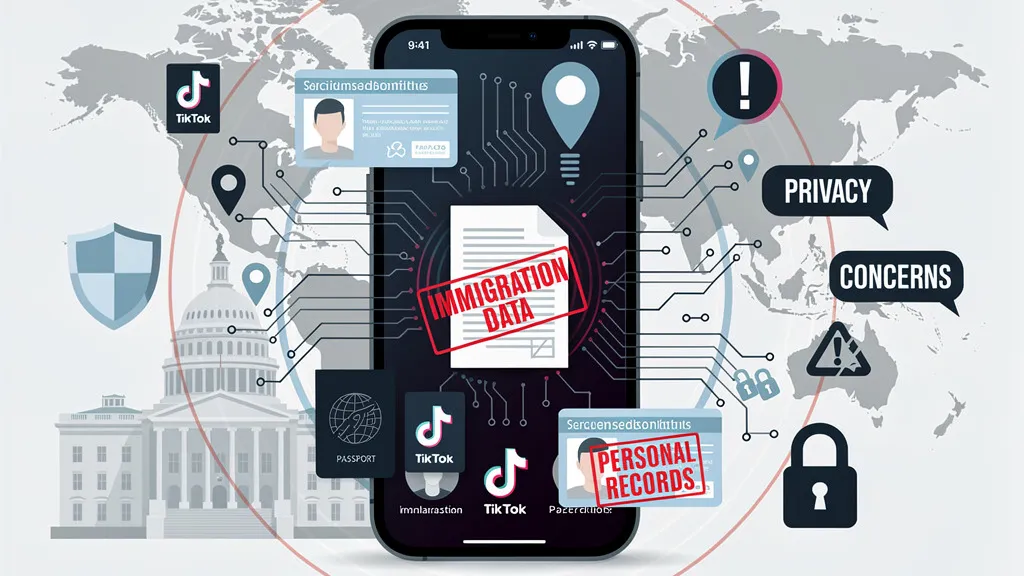
TikTok’s New Frontier: App’s Demand for Immigration Status Ignites Privacy Firestorm
TikTok has ignited a global firestorm by updating its policy to collect users' immigration status. The move, intended for ad targeting and regulatory compliance, has sparked widespread user backlash, condemnation from privacy advocates, and renewed national security concerns over its ties to China's ByteDance.

Inside Huawei Cloud’s Bold 2026 Partner Strategy: How Data Centers Become the Cornerstone of AI Infrastructure Expansion
Huawei Cloud's 2026 partner strategy positions data centers as strategic allies in AI infrastructure expansion, offering unprecedented revenue-sharing models and technical integration. The approach targets emerging markets with generous incentives while navigating geopolitical constraints and semiconductor restrictions.

Upwind’s Runtime Revolution: $250M Fuels $1.5B Cloud Security Unicorn
Upwind's $250 million Series B catapults it to $1.5 billion valuation, powering runtime-first cloud security amid 900% revenue surge. Backed by Bessemer and all-stars, the ex-Spot.io team targets AI-era threats for giants like Siemens and Roku.
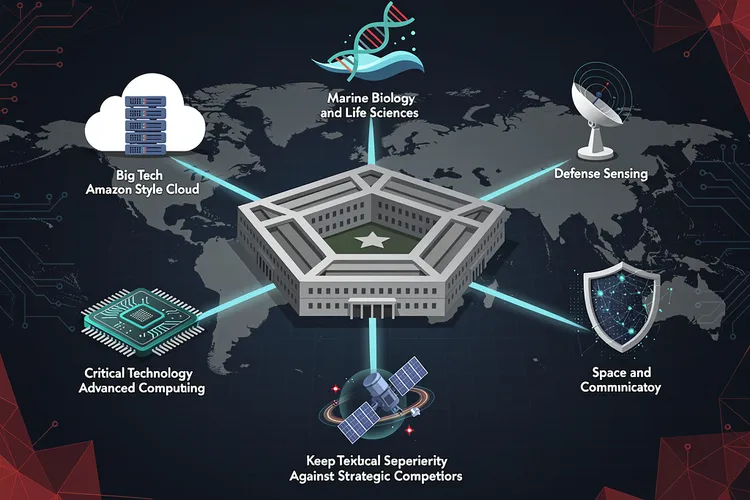
Pentagon’s New Technology Chiefs Signal Major Shift in Defense Innovation Strategy
The Pentagon's Chief Technology Officer has selected six defense technology veterans with diverse backgrounds—from Amazon executives to marine biologists—to lead Critical Technology Areas, signaling a major shift in how the Defense Department approaches innovation and maintains technological superiority against strategic competitors.

TikTok Finalizes US Restructuring Deal with Oracle, Avoids Ban
TikTok has finalized a deal to restructure its U.S. operations into a new entity majority-owned by American and allied investors, including Oracle, Silver Lake, and MGX, with ByteDance retaining a 20% stake. This hybrid model addresses data security concerns, avoids a nationwide ban, and sets a precedent for global tech sovereignty.

Finland Recruits Burned-Out US AI and Tech Talent with Visas, Better Balance
Finland is actively recruiting disillusioned U.S. tech professionals in AI and software by offering superior work-life balance, fast-track visas, and a high quality of life, aiming to attract talent by 2026 amid American burnout. This strategy challenges global tech dynamics, positioning Finland as an innovative haven.

AI Answers Demand New Rules: Why Google SEO Fails ChatGPT Citations
Mike King reveals why Google SEO tactics fail AI engines like ChatGPT, from query fan-out to HTTP 499 timeouts and chunking boosts. Case studies show 661% visibility gains via GEO.

India’s AI Classroom Revolution: Google’s Gemini Scales Where Silicon Valley Stumbles
India leads global Gemini usage for learning, teaching Google to scale AI amid 247 million students, state curricula, and access gaps. Partnerships and tools like JEE mocks position it as a worldwide proving ground.

Inside Elon Musk’s Audacious Plan to Fuse Rockets and AI: The SpaceX-xAI Megamerger
Elon Musk is merging SpaceX and xAI in a deal combining an $800 billion rocket manufacturer with a $230 billion AI startup, advancing his vision of space-based data centers while consolidating his technological empire ahead of a planned summer IPO.

DeepSeek’s Bold Push: AI Search and Agents Challenge Google, OpenAI
DeepSeek's January job postings reveal plans for a multilingual, multimodal AI search engine and persistent agents, intensifying rivalry with Google and OpenAI. Building on cost-efficient models like R1, the startup targets phone-first queries and autonomous task execution.

Dell Faces Federal Lawsuit Over Alleged 401(k) Mismanagement as Former Employees Claim Fiduciary Breaches
Former Dell employees have filed a federal lawsuit alleging systematic mismanagement of the company's 401(k) retirement plan, claiming fiduciary breaches under ERISA. The case raises critical questions about corporate responsibility for employee retirement security and could affect thousands of workers.
Britain’s NHS Launches Revolutionary Cancer Gene Database, Granting Families Direct Access to Hereditary Risk Data
The NHS in England is launching a revolutionary cancer gene database allowing thousands of families direct access to hereditary risk information. This unprecedented initiative transforms how genetic cancer risk is communicated, potentially saving lives through enhanced screening and prevention for at-risk relatives.
The Wikipedia Feed Revolution: How One Developer Is Reimagining Knowledge Consumption for the Algorithmic Age
Developer Amit Agarwal has transformed Wikipedia into a social media-style scrolling feed, creating WikiFeed—an experiment that applies addictive engagement mechanics to verified knowledge. The project raises fundamental questions about balancing information quality with modern attention patterns in the algorithmic age.
The Biological Paradox: How Cancer Cells May Hold the Key to Preventing Alzheimer’s Disease
Decades of research reveal a striking inverse relationship between cancer and Alzheimer's disease, with biological mechanisms protecting against one condition potentially increasing susceptibility to the other. This paradox is driving new investigations into cellular regulation, aging, and therapeutic approaches.
Meta’s Premium Pivot: Subscriptions Reshape Instagram, Facebook and WhatsApp
Meta readies premium subscriptions for Instagram, Facebook and WhatsApp, bundling AI tools like Manus integration and Instagram exclusives such as anonymous Story views. Core apps stay free amid tests in coming months.
Waymo’s $16 Billion War Chest: Inside the Robotaxi Giant’s Blueprint for Global Dominance
Waymo's $16 billion funding round at a $126 billion valuation marks a pivotal moment for autonomous vehicles, as the Alphabet subsidiary prepares to expand its robotaxi service internationally while operating over 400,000 weekly rides across American cities.
When the Watchdog Stumbles: Inside the ChatGPT Security Breach That Exposed Federal Cybersecurity Vulnerabilities
The acting director of CISA allegedly uploaded sensitive government documents to ChatGPT, exposing critical vulnerabilities in federal AI adoption policies. This incident reveals systemic gaps in cybersecurity protocols as agencies struggle to balance innovation with national security requirements.
The Great Interface Erosion: Why AI Agents Are Poised to Devour Enterprise SaaS
A deep dive into how AI agents from Anthropic and strategies from JPMorgan are signaling the end of the traditional SaaS interface. As AI moves from chatbots to autonomous workers, the seat-based software model faces an existential threat, shifting value from the application layer to data and intelligence.
Toys R Us: From 1948 Origins to Bankruptcy and 2025 Revival
Toys "R" Us began as a 1948 baby furniture store, evolving into a global toy giant through innovative retailing and expansion. A 2005 debt-heavy buyout led to its 2018 bankruptcy amid online competition. Revived via partnerships and new stores in 2025, it blends nostalgia with digital innovation to reclaim market share.
Atlas Awakens: Hyundai’s Humanoids Reshape Factory Floors
Hyundai's Boston Dynamics Atlas humanoids begin factory trials in Georgia, sorting parts autonomously with AI from DeepMind and Nvidia. Phased rollout eyes 30,000 units yearly by 2028, redefining industrial labor through RaaS models.
WhatsApp’s Enhanced Privacy Arsenal: How Meta’s Lockdown Mode Shields High-Risk Users From Digital Threats
WhatsApp's new Lockdown Mode transforms the messaging platform into a security fortress for high-risk users facing sophisticated cyber threats. The feature blocks unknown contacts, restricts media downloads, and implements comprehensive protections against state-sponsored attacks and advanced malware targeting vulnerable populations.
Britain’s Proposed VPN Age Verification System Sparks International Outcry and Technical Skepticism
The UK's proposed mandatory age verification for VPN services has triggered widespread criticism from privacy advocates, technology experts, and civil liberties organizations who argue the policy is technically unworkable and threatens fundamental digital rights while setting dangerous precedents for democratic internet regulation.
Microsoft’s PowerToys Experiment Signals Bold Rethinking of Windows 11 Interface Design
Microsoft is testing a macOS-style top menu bar for Windows 11 through PowerToys, marking a significant experiment in desktop interface design. This cautious approach to reimagining Windows' three-decade-old taskbar paradigm reflects lessons learned from past interface controversies.
Apple’s Silent Revolution: How Quantum AI Acquisition Signals Tech Giant’s Push Into Ambient Computing
Apple's acquisition of Paris-based Quantum AI brings advanced lip-reading technology into its product ecosystem, signaling a major shift toward ambient computing and multimodal interaction. The move positions Apple to revolutionize wearables, accessibility features, and human-computer interfaces across its entire product line.
Samsung to End SATA SSD Production in 2026, Triggering Price Hikes
Samsung is phasing out SATA SSD production starting early 2026 to focus on NVMe and AI-optimized storage, amid surging demand for high-performance tech. This could cause 18-month supply shortages and 20-30% price hikes for budget drives, mirroring recent industry disruptions. Consumers are urged to buy soon to avoid escalating costs.
Google’s Genie 2 Unleashes Interactive Virtual Worlds Through AI, Reshaping Digital Creation
Google DeepMind's Genie 2 transforms text prompts into fully interactive 3D environments, marking a fundamental shift in digital world creation. The AI model generates explorable spaces with persistent physics and spatial consistency, promising to revolutionize game development, training simulations, and creative industries.
AI Demand Triggers 2026 Smartphone Memory Shortage Crisis
The smartphone industry faces a 2026 memory shortage driven by AI demand diverting DRAM and NAND production, as seen in Xiaomi's 17 Ultra price hikes and spec adjustments. Analysts predict rising costs, reduced shipments, and potential downgrades for Samsung and Apple devices. This crisis may stifle innovation and reshape market strategies.
Tech’s Subscription Captivity: Backlash Over Locked Features and Ownership Loss
Tech products increasingly lock core features behind subscriptions, turning ownership into "subscription captivity" for recurring revenue. From alarm clocks to cars, this shift sparks consumer backlash, regulatory scrutiny, and calls for true ownership. Ultimately, balancing innovation with consumer rights will shape the future.
Samsung’s AI Memory Gold Rush: Profits Triple Amid Chip Crunch
Samsung Electronics tripled Q4 2025 profits to a record 20.1 trillion won, fueled by AI-driven HBM demand and memory shortages that surged prices 40-50%. The boom benefits giants like Samsung and SK Hynix, but risks loom for consumer segments.
Subscribe Newsletter
Subscribe to our newsletter and stay up to date with the latest news, updates, and exclusive offers. Join our community today!
Consulting’s 2026 Reckoning: AI, Niches and the Specialist Surge
Consulting faces 2026 upheaval with AI efficiencies, niche specialists eclipsing generalists, fractional roles booming and ESG mandates intensifying. Revenues climb to $375 billion amid competition from laid-off talent and internal groups.
Juspay’s $50 Million Infusion Crowns Bengaluru Fintech as 2026’s First Unicorn
Bengaluru's Juspay raises $50M from WestBridge Capital at $1.2B valuation, becoming 2026's first Indian unicorn. Funds target global expansion amid $1T annual payment volume and clients like Amazon and Flipkart.
Microsoft’s NTLM Retirement Marks End of Era for Three-Decade Authentication Protocol
Microsoft has begun phasing out NTLM authentication protocol after three decades, disabling it by default in Windows 11 Insider builds. This move forces enterprises to migrate to more secure authentication methods like Kerberos, addressing long-standing vulnerabilities that have enabled credential-based attacks.
Inside the Database Revolution: How Enterprise Data Management Transformed From Magnetic Tapes to AI-Powered Systems
From magnetic tapes to AI-powered cloud systems, databases have transformed from simple storage into sophisticated platforms managing billions of records. This deep dive explores how database technology evolved, the shift to cloud-native architectures, and emerging trends including vector databases and multimodel systems reshaping enterprise data management.
Deel’s $17 Billion Sprint: From Y Combinator to Global Payroll Powerhouse
Deel rocketed to a $17.3 billion valuation in seven years by pioneering owned global payroll infrastructure, processing $22 billion annually for 37,000 firms. Amid IPO prep and DOJ scrutiny, COO Dan Westgarth reveals elite ops driving $1 billion revenue.
Panama Court Ruling Ignites U.S.-China Clash Over Canal Ports
Panama's Supreme Court voided CK Hutchison's canal port concessions, aiding Trump's push against Chinese influence and jeopardizing a $23 billion global sale. Shares tumbled amid vows from Beijing to protect its firms.
Join Us
Share your perspective with confidence. Your experience could inform, inspire, and help someone live better.
Archives
Authors
More ...-
 Vivian Stewart 57 articles
As a writer, Vivian Stewart covers retail operations with an eye for detail. They work through comparative reviews and hands‑on testing to make complex topics approachable. They believe good analysis should be specific, testable, and useful to practitioners. They frequently translate research into action for marketing teams, prioritizing clarity over buzzwords. Their coverage includes guidance for teams under resource or time constraints. They explore how policies, markets, and infrastructure intersect to create second‑order effects. They write about both the promise and the cost of transformation, including risks that are easy to overlook. They frequently compare approaches across industries to surface patterns that travel well. Readers appreciate their ability to connect strategic goals with everyday workflows. Their reporting blends qualitative insight with data, highlighting what actually changes decision‑making. They maintain a balanced tone, separating speculation from evidence. They are known for dissecting tools and strategies that improve execution without adding complexity. They emphasize decision‑making under uncertainty and imperfect data. Their work aims to be useful first, timely second.
-
 Emily Scott 68 articles
As a writer, Emily Scott covers consumer behavior with an eye for detail. They work through clear frameworks, case studies, and practical checklists to make complex topics approachable. They value transparent sourcing and prefer primary data when it is available. A recurring theme in their writing is how teams build repeatable systems and measure impact over time. They often cover how organizations respond to change, from process redesign to technology adoption. Their reporting blends qualitative insight with data, highlighting what actually changes decision‑making. They emphasize responsible innovation and the constraints teams face when scaling products or services. They maintain a balanced tone, separating speculation from evidence. Their coverage includes guidance for teams under resource or time constraints. Readers appreciate their ability to connect strategic goals with everyday workflows. They write about both the promise and the cost of transformation, including risks that are easy to overlook. They tend to favor small experiments over sweeping predictions. They value transparency, practical advice, and honest uncertainty.
-
 Emily Chen 63 articles
Known for clear analysis, Emily Chen follows retail operations and the people building it. They work through clear frameworks, case studies, and practical checklists to make complex topics approachable. They often cover how organizations respond to change, from process redesign to technology adoption. Readers appreciate their ability to connect strategic goals with everyday workflows. They examine how customer expectations evolve and how organizations adapt to meet them. They value transparent sourcing and prefer primary data when it is available. A recurring theme in their writing is how teams build repeatable systems and measure impact over time. They also highlight cultural factors that determine whether change sticks. They avoid buzzwords, focusing instead on outcomes, incentives, and the human side of technology. They explore how policies, markets, and infrastructure intersect to create second‑order effects. They believe good analysis should be specific, testable, and useful to practitioners. They tend to favor small experiments over sweeping predictions. They value transparency, practical advice, and honest uncertainty.
-
 Layla Reed 56 articles
Known for clear analysis, Layla Reed follows retail operations and the people building it. They work through long‑form narratives grounded in real‑world metrics to make complex topics approachable. They believe good analysis should be specific, testable, and useful to practitioners. They avoid buzzwords, focusing instead on outcomes, incentives, and the human side of technology. They explore how policies, markets, and infrastructure intersect to create second‑order effects. They frequently compare approaches across industries to surface patterns that travel well. They are known for dissecting tools and strategies that improve execution without adding complexity. A recurring theme in their writing is how teams build repeatable systems and measure impact over time. Their reporting blends qualitative insight with data, highlighting what actually changes decision‑making. They often cover how organizations respond to change, from process redesign to technology adoption. They maintain a balanced tone, separating speculation from evidence. Outside of publishing, they track public datasets and industry benchmarks. Readers return for the clarity, the caution, and the actionable takeaways.
-
 Stella Evans 57 articles
Stella Evans is a journalist who focuses on AI deployment. They work through trend monitoring with careful context and caveats to make complex topics approachable. They believe good analysis should be specific, testable, and useful to practitioners. They examine how customer expectations evolve and how organizations adapt to meet them. Their reporting blends qualitative insight with data, highlighting what actually changes decision‑making. Readers appreciate their ability to connect strategic goals with everyday workflows. They write about both the promise and the cost of transformation, including risks that are easy to overlook. They also highlight cultural factors that determine whether change sticks. Their coverage includes guidance for teams under resource or time constraints. Their perspective is shaped by interviews across engineering, operations, and leadership roles. They often cover how organizations respond to change, from process redesign to technology adoption. They maintain a balanced tone, separating speculation from evidence. They are interested in the economics of scale and operational resilience. They prefer evidence over hype and explain trade‑offs plainly.
-
 Micah Shaw 60 articles
Micah Shaw specializes in developer productivity and reports on the systems behind modern business. Their approach combines interviews with operators and data‑backed analysis. Their perspective is shaped by interviews across engineering, operations, and leadership roles. Readers appreciate their ability to connect strategic goals with everyday workflows. They frequently compare approaches across industries to surface patterns that travel well. Their reporting blends qualitative insight with data, highlighting what actually changes decision‑making. They maintain a balanced tone, separating speculation from evidence. Their coverage includes guidance for teams under resource or time constraints. They emphasize responsible innovation and the constraints teams face when scaling products or services. They are known for dissecting tools and strategies that improve execution without adding complexity. They look for overlooked details that differentiate sustainable success from short‑term wins. A recurring theme in their writing is how teams build repeatable systems and measure impact over time. They watch the policy landscape closely when it affects product strategy. Their work aims to be useful first, timely second.